
Querant Petit de Paús
A cavity with 107 m of vertical drop in the municipality of Vilanova de Meià, known since ancient times and explored since 1963.
EspeleoWorld
Querant Petit de Paús
A cavity with 107 m of vertical drop in the municipality of Vilanova de Meià, known since ancient times and explored since 1963.
Vilanova de Meià · Noguera
Sviluppo: 140 m · Profondità: 107 m
Scheda aggiornata
https://espeleoworld.com/it/c/querant-petit-de-paus
Le informazioni possono cambiare. Verifica sempre coordinate, accesso, meteo e condizioni della cavità prima di partire.
A cavity with 107 m of vertical drop in the municipality of Vilanova de Meià, known since ancient times and explored since 1963.
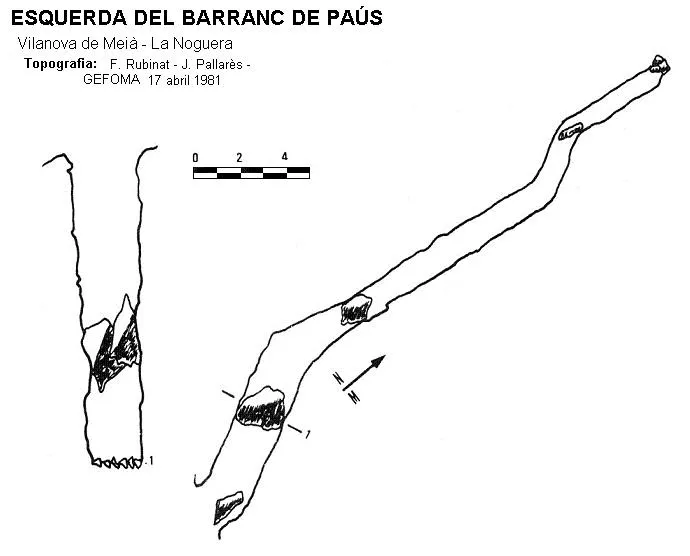
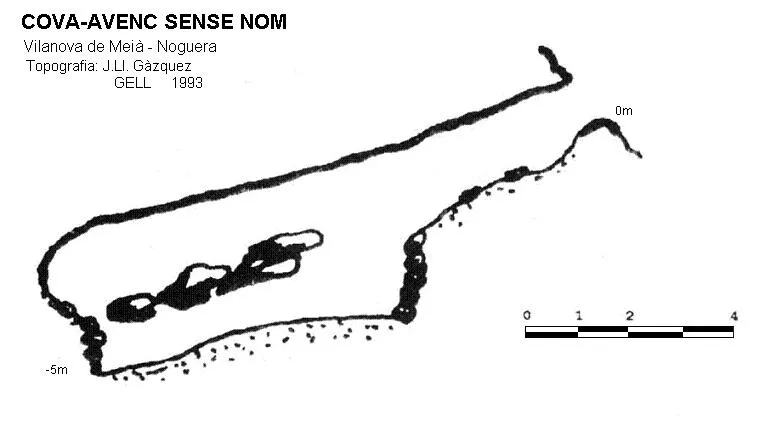
Topografia
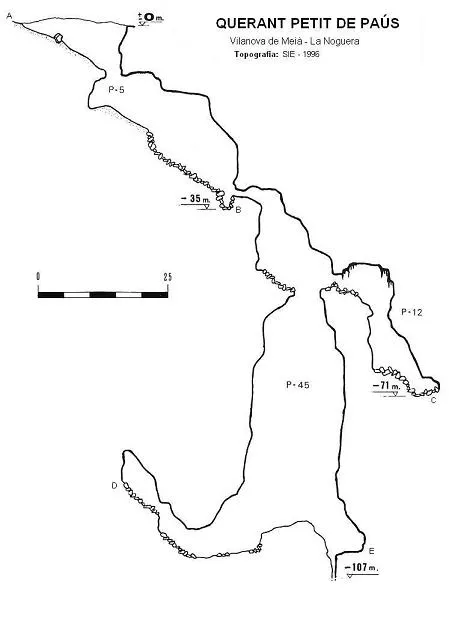
Espeleoindex · CC BY-NC 4.0, https://creativecommons.org/licenses/by-nc/4.0/ · Immagine © del suo autore.
Foto
Espeleoindex · CC BY-NC 4.0, https://creativecommons.org/licenses/by-nc/4.0/ · Immagine © del suo autore.
Descrizione
Morfologia
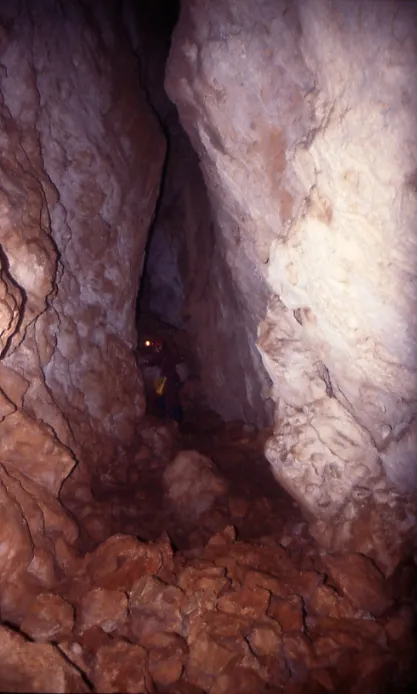
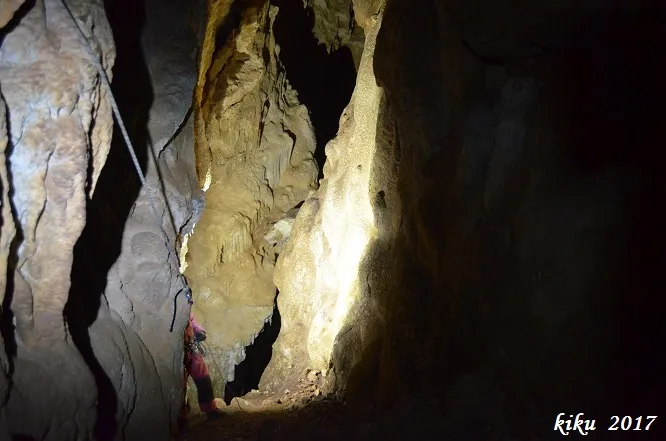
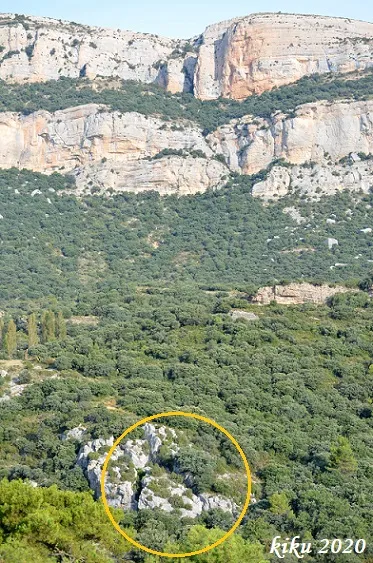
The entrance to the cavity opens in a depression 20 x 13 metres in diameter and 10 metres deep. At this point a 5-metre drop places us at the head of a ramp that will lead us to a chamber at -35 metres. Through a rather narrow passage we reach a fissure with an average section of 0.8 x 8 metres and a depth of 10 metres. At the bottom of the shaft we find a new gallery, which is closed on one side and on the other allows us to descend a few metres until we are at a depth of -107 metres.
Idrologia
At the foot of the two century-old plane trees there is a small spring that dries up in times of drought.
Progressione
At this point a 5-metre drop places us at the head of a ramp that will lead us to a chamber at -35 metres. At this point, and through a rather narrow passage, we reach a fissure with an average section of 0.8 x 8 metres and a depth of 10 metres, where we find a shaft; on the other side of this the gallery continues for a few metres and widens, at which point we find a -12-metre shaft, the continuation of this sector ending at a depth of -71 metres. Back in the first shaft, this descends 45 metres until we find a small ramp, after which the shaft continues descending with much smaller dimensions, so no rope is needed to continue descending. At the bottom of this shaft we find a new gallery, which is closed on one side, and on the other allows us to descend a few metres until we are at a depth of -107 metres.
Storia
A cavity known since ancient times, since the flat area next to the entrance was used as a charcoal kiln. The first speleological explorations date back to 1963 by the SIRE of the UEC. In 1980 GEFOMA carried out a survey revision of the cavity, giving it a depth of -35 metres and a length of 57 metres, but a possible connection with the nearby Querant Gran de Paús was always considered. In 1996, F. Rubinat, who was part of the GEFOMA exploration team in 1980, while carrying out a solo exploration of the cavity observed a small air current at a point in the chamber; a few days later he returned with companions from the SIE, of which he was a member, to carry out the clearing and exploration of this new section of the cavity.
Commenti degli utenti (0)
Nessun commento ancora.
Sii il primo a condividere la tua esperienza!
Esplorazioni registrate (0)
Nessuna esplorazione registrata.
Registra la tua visita a questa grotta!
Bibliografia
- Ullastre, J. (1969).-“Sobre dos simas de origen tectónico en la vertiente de Montsec de Rúbies” Boletín Puig Castellar (10):242-246. CE Puig Castellar. Barcelona.
- Escolà, O.(1970).-“Catálogo Espeleológico del Montsec” Espeleòleg (11-12):453-541. ERE-CE Catalunya. Barcelona.
- Rubinat, F.(1980).- “Revisiones topográficas” GOURS (7):47-54. GEFOMA. Barcelona.
- SIE(1998).- “Un nou -100 a Catalunya, El Querant de Paús (La Noguera)” Espeleosie (33):90-91. SIE-CE Àliga. Barcelona
- Actualització de coordenades el gener de 2017 facilitades per Juli Serrano i Montse Roca.
Grotte vicine


Fonte: Espeleoindex (espeleoindex.com), modificato. CC BY-NC 4.0, https://creativecommons.org/licenses/by-nc/4.0/