
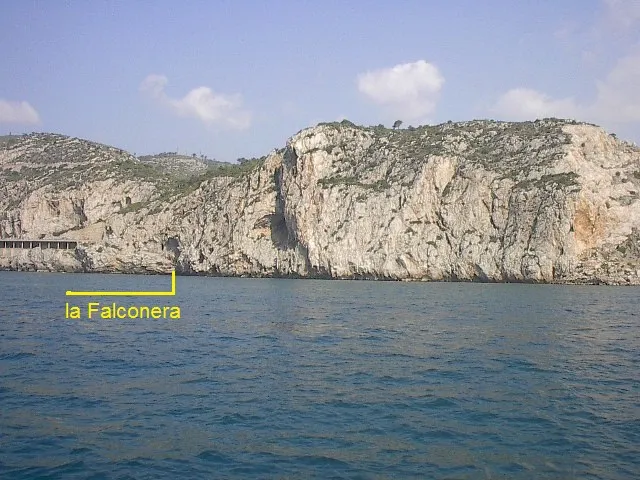
la Falconera
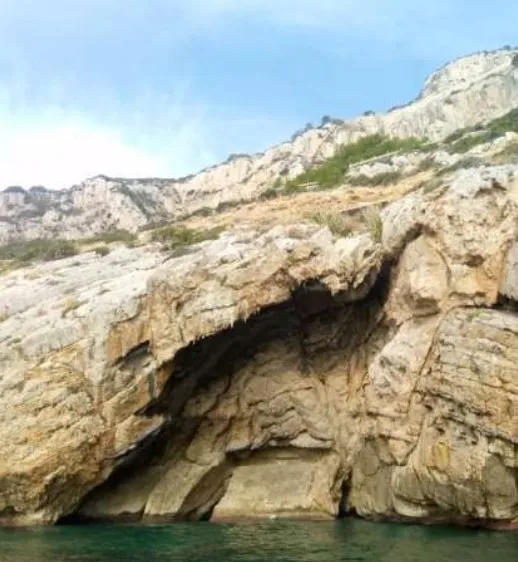
The main spring of the Garraf massif, known since ancient times, with natural and artificial galleries, and speleological and underwater explorations since 1899.
EspeleoWorld
la Falconera
The main spring of the Garraf massif, known since ancient times, with natural and artificial galleries, and speleological and underwater explorations since 1899.
Sitges · Garraf
Sviluppo: 600 m · Profondità: 81 m
Scheda aggiornata
https://espeleoworld.com/it/c/la-falconera
Le informazioni possono cambiare. Verifica sempre coordinate, accesso, meteo e condizioni della cavità prima di partire.
The main spring of the Garraf massif, known since ancient times, with natural and artificial galleries, and speleological and underwater explorations since 1899.
Topografia
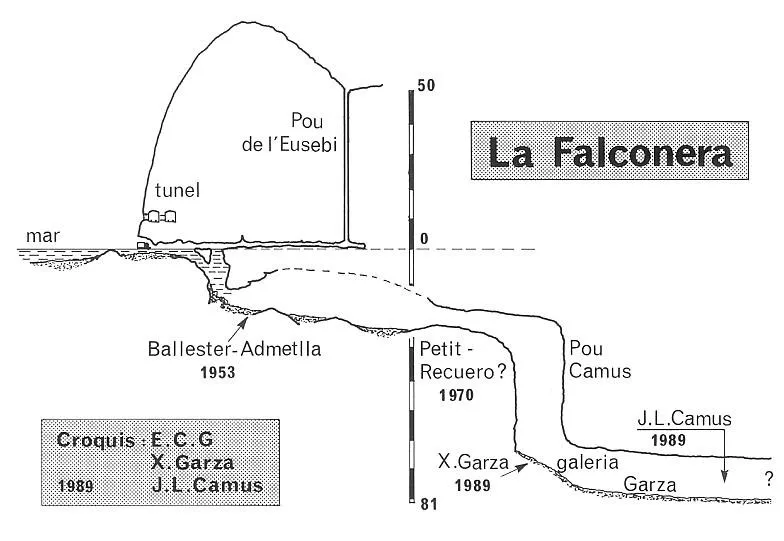
Espeleoindex · CC BY-NC 4.0, https://creativecommons.org/licenses/by-nc/4.0/ · Immagine © del suo autore.
Foto
Espeleoindex · CC BY-NC 4.0, https://creativecommons.org/licenses/by-nc/4.0/ · Immagine © del suo autore.
Descrizione
Morfologia
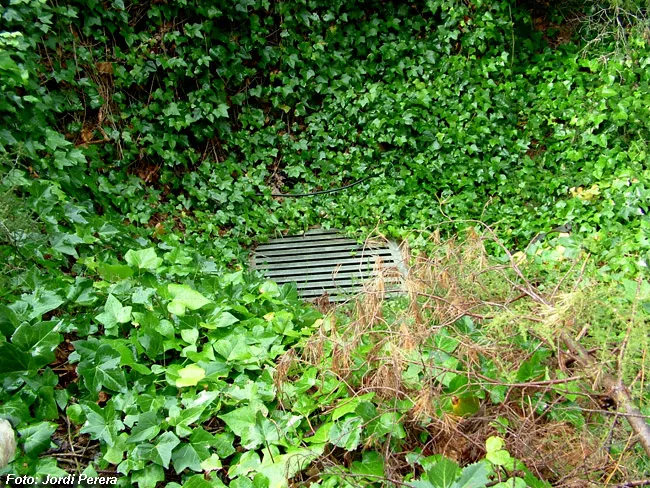
The mouth, still partially occupied by the remains of the cement platforms and stairs that were made in the 19th century, gives way to a flooded gallery that soon presents some bifurcations that interweave. On the right side the gallery continues and this is where the accesses to the main sump are found, which gives way to the submerged galleries where in 1989 it was possible to reach 81 metres of depth. On the west side of the entrance gallery are the artificially excavated galleries. The first stretch is a rectilinear gallery from which, further on, some perpendicular ramifications appear that cut the main gallery. In the left bifurcation there are, in its ceiling, two small chimneys that Amat i Carreras named Avenc Fumat and Avenc d'en Mas. A little further on from the bifurcation one reaches the base of the Pou de l'Eusebi (- 50 m.), the only one of the four that were excavated that connects with the galleries of la Falconera. It is currently totally closed by a grille placed by order of the quarry managers. At the end of the main gallery there is still a new bifurcation, on the left, of little length and that ends in a flooded pit (Estany Nou) and on the right, a longer one, also broken by another flooded pit (Clot del perill, according to Amat). The total route of 600 metres is estimated and includes the natural and artificial galleries.
Idrologia
The main spring of the Garraf massif. Known since ancient times by the fishermen of the area as the most important freshwater of the Garraf coast. In 1972 the construction of the Garraf rubbish dump began and within a few years the waters that came out through la Falconera were turbid and highly contaminated. Recently (2016), we have been told, from unconfirmed sources, that the volume of freshwater has dropped considerably and this leads to a more important intrusion of sea water, with the consequent dragging of sand towards the interior and the possible clogging of some conduits.
Progressione
The first properly speleological exploration was carried out on 15 September 1910 by Faura, Rosals and Llongueres. A survey of the cavity was made that remained unpublished until 2010 (Aragonès, E.). Rafael Amat i Carreras, at the start of his campaigns (1923) of explorations in Garraf, visited la Falconera and made a detailed topography of the natural and artificial galleries. It is not until May 1953 that the first underwater dive takes place. E. Admetlla (CRIS) and A. Ballester (ERE) explore 40 metres of route and 22 of depth. The following year, on 18 July 1954, the same explorers placed an image of the Mare de Déu de Montserrat at about 12 metres of depth. The image was made with the casting of the lead weights used by divers and once installed they helped the priest Malaquias Zayas to submerge to proceed in situ to its blessing. In 1956 and 1957, members of the ERE again made some dives but without achieving remarkable results. In 1961, the GEEB (Badalona) dedicated five weekends to the exploration of la Falconera. Ramon Canela and others carried out another dive with an aqualung built by himself. It is not, however, until 1970 that, promoted by the FEDAS (Federació Espanyola d'Activitats Subaquàtiques), the Operació Garraf-70 is carried out. This campaign had an important deployment, both of technical and human material. The leading team was formed by E. Petit and R. Recuero, who carried out an underwater exploration that lasted 90 minutes, while affirming to have covered 350 metres and to have reached a depth of 40 metres. In 1972 the construction of the Garraf rubbish dump began and within a few years the waters that came out through la Falconera were turbid and highly contaminated. That same year, Josep Castell (ERE-CEC) and collaborators carried out a detailed topography of the aerial and artificial galleries that had remained unpublished until now (Arxiu ERE). Despite these circumstances, members of the EC de Gràcia decide to undertake the underwater explorations again. On 10-12-1988, the French cave diver Jean Louis Camus and Xavier Garza make a first reconnaissance and although visibility is scarcely 2 metres, they realise the magnitude of the gallery. Shortly after, Garza installs 145 metres of guide line in order to prepare a forthcoming dive by J.L Camus with more sophisticated means. This is carried out on 14-1-1989 and surprisingly and contrary to what was known until then from the Petit-Recuero topography, the gallery closes totally at 200 metres; at this point, an enormous pit of about 20 metres in diameter represents the vertical continuation of the cavity. Camus descends to 50 metres of depth and has to turn back for lack of material suitable for these depths. From here on, members of the EC de Gràcia, captained by X. Garza, carry out new dives in order to prepare the definitive dive of J.L. Camus with a team prepared with gas mixture. During these preparations, Garza, with normal equipment, manages to reach 66 metres of depth. In a later dive that would last 180 minutes, Garza suffers a decompression accident that ends him up in the hyperbaric chamber, without serious consequences. Finally the day 4-3-1989 arrives, when J.L. Camus, with a spectacular equipment with gas mixture and with oxygen to carry out the decompression, begins the dive following the gallery found by Garza at the bottom of the pit and that, after the ramp becomes rigorously flat, reaching 81 metres of depth. The lack of visibility and a floor formed by a deep muddy sediment make him desist and he returns. Subsequently new dives have been carried out but they have not reached the importance of that of 1989 and basically all seeking the “mysterious” Petit-Recuero gallery, without results.
Storia
In 1899, Mr. Eusebi Güell i Bacigalupi, first count of Güell, commissioned the engineer Silvino Thos i Codina with the works of prospecting and study of la Falconera and adjacent reliefs. The purpose was a project to supply drinking water to the city of Barcelona. The works lasted 4 years and four pits and the artificial galleries of la Falconera were excavated. In competition with Eusebi Güell's project there was that of Manuel Duran, which aimed to supply Barcelona with water from the river Ter (more information at: Aymamí, G., 2007).
Commenti degli utenti (0)
Nessun commento ancora.
Sii il primo a condividere la tua esperienza!
Esplorazioni registrate (0)
Nessuna esplorazione registrata.
Registra la tua visita a questa grotta!
Bibliografia
- Amat i Carreras, R. (1924).- “Sota el massís de Garraf. Excursions espeleològiques als avencs de Begues. Campanya 1923”. Butlletí del Centre Excursionista de Catalunya (351): 109-137. CEC. Barcelona.
- Aragonès, E. (2010).- Marià Faura i Sans espeleòleg (1883-1941). 106 pp. Federació Catalana d'Espeleologia. Barcelona.
- Aymamí, G. (2007).- “El riu subterrani de la Falconera (Garraf). Notes sobre un projecte d'explotació de les aigües del finals del segle XIX.” Del Penedès (14): 89-93. Institut d'Estudis Penedesencs.
- Borràs, J. (1973).- Catálogo espeleológico del macizo de Garraf. Vol. III . 207 pp. Barcelona.
- Cardona, F. (1990).- Grans cavitats de Catalunya. Vol. 2: 207-484. Espeleo Club de Gràcia. Barcelona.
- Carreras, A. (1961).- “Macizo de Garraf”. Memoria 1961: 5-10. G.E.E.B. - Badalona.
- Faura i Sans, M. (1923).- Servei del Mapa Geològic de Catalunya. Explicació de la fulla nº 39 (Vilanova i la Geltrú). Junta de Ciències Natural de Barcelona. Mancomunitat de Catalunya.
- Ferrer, V. (2006).- Avencs de Garraf i d’Ordal. 152 pp. + llibret fitxes i topografies. Edició de l’autor. Barcelona.
- Marqués, F. (1988).- “La Falconera. El gran repte”. Exploracions (12): EC Gràcia. Barcelona.
- Montoriol, J. (1966).- “Las surgencias de les costas de Garraf”. III Cong. Intern. Espeleología. Viena. 1961.
- Ribera, A. (1958).- “L'espeleologia subaquàtica”. Inclòs dins del llibre: Avencs i coves, de Francesc Vicens. Editorial Selecta. Barcelona.
Grotte vicine
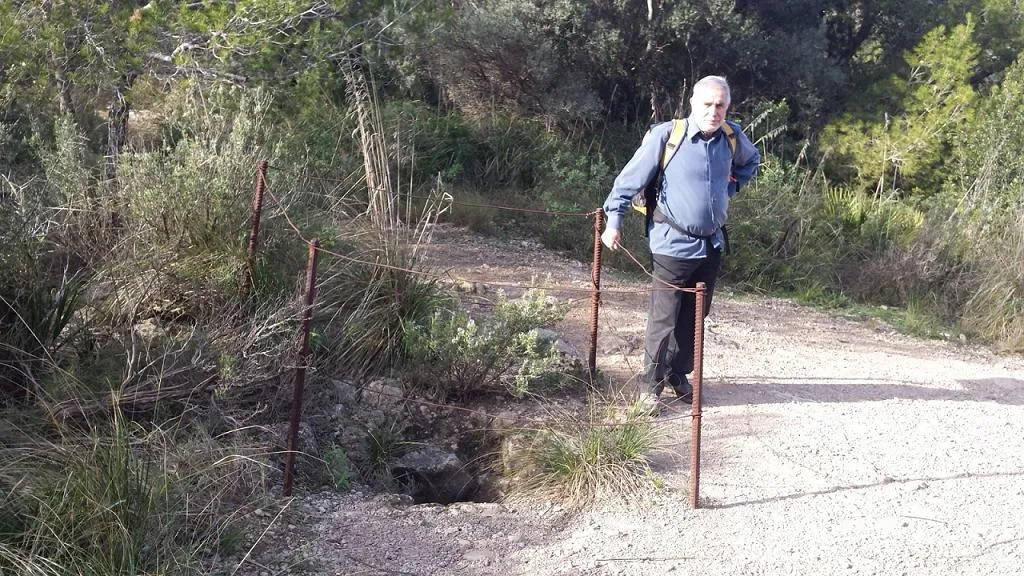
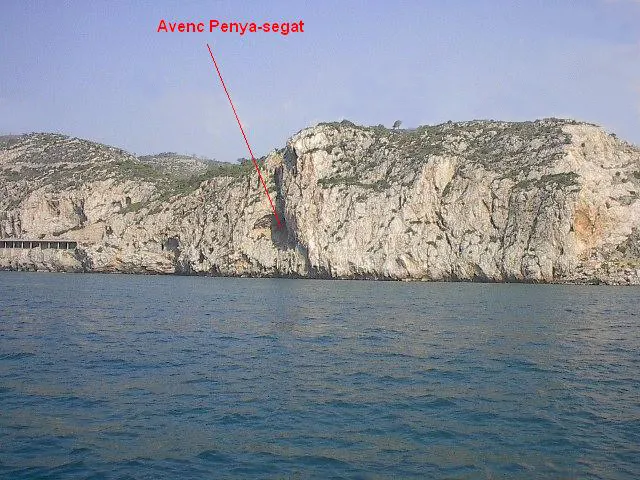


Fonte: Espeleoindex (espeleoindex.com), modificato. CC BY-NC 4.0, https://creativecommons.org/licenses/by-nc/4.0/