

König-Otto-Tropfsteinhöhle
The König-Otto-Tropfsteinhöhle is a cave near Velburg in the Oberpfalz, on the Fränkische Alb plateau, whose older, soot-blackened part contrasts with the Adventhalle discovered in 1972, known for its dogtooth spars, cave pearls and helictites.
EspeleoWorld
König-Otto-Tropfsteinhöhle
The König-Otto-Tropfsteinhöhle is a cave near Velburg in the Oberpfalz, on the Fränkische Alb plateau, whose older, soot-blackened part contrasts with the Adventhalle discovered in 1972, known for its dogtooth spars, cave pearls and helictites.
Velburg
Sviluppo: 450 m
Scheda aggiornata
https://espeleoworld.com/it/c/koenig-otto-tropfsteinhoehle-velburg
Le informazioni possono cambiare. Verifica sempre coordinate, accesso, meteo e condizioni della cavità prima di partire.
The König-Otto-Tropfsteinhöhle is a cave near Velburg in the Oberpfalz, on the Fränkische Alb plateau, whose older, soot-blackened part contrasts with the Adventhalle discovered in 1972, known for its dogtooth spars, cave pearls and helictites.
Foto
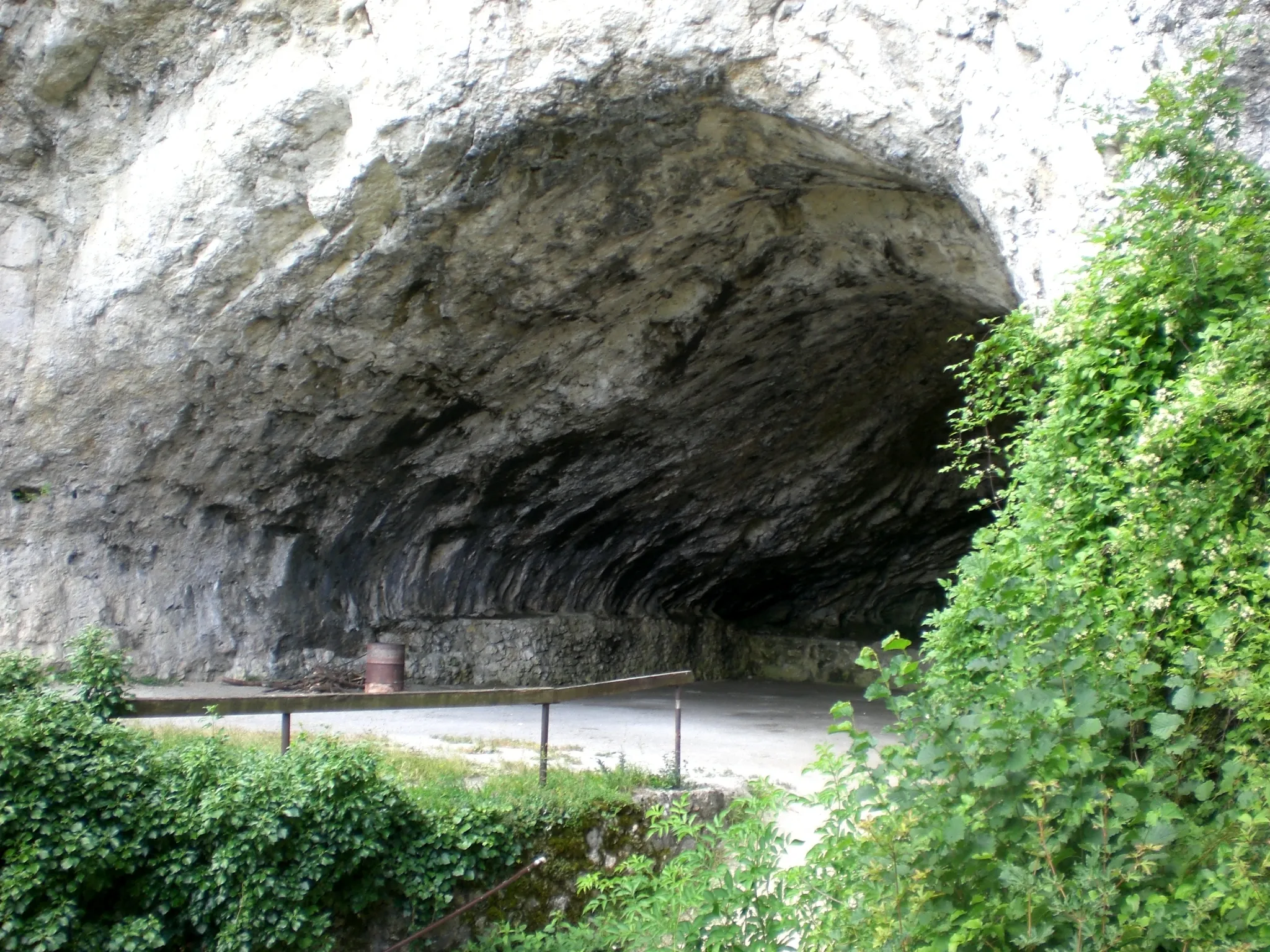
© Rainer Lippert · CC BY-SA 4.0, https://creativecommons.org/licenses/by-sa/4.0/ · Wikimedia Commons · https://commons.wikimedia.org/wiki/File:K%C3%B6nig-Otto-Tropfsteinh%C3%B6hle,_2.jpg
Descrizione
Morfologia
The cave was developed immediately after its discovery and opened to visitors. The works included the construction of paths and the widening of narrow passages. Also, as is typical for this area, some speleothems were crashed to make way for the path.
Concrezioni
After these works, the cave was visited using candles, torches and magnesia. Unfortunately all those light sources produce a decent amount of grime, which covered the whole cave including the speleothems. This part of the cave is today black and unappealing. But this gives an impressive contrast to the Adventhalle (Advent Chamber), newly discovered in 1972. It was named after its discovery on the first Advent. The special feature of this chamber are its speleothems, among them dogtooth spars, cave pearls and even some helictites.
The new chamber is extraordinary. It was covered by a cave lake for a very long time, and the water deposited calcite crusts all over. In opposition to dripstones with rather smooth surface, this calcite is formed of single growing crystals which are also called dogtooth spars. At the surface of the water the amount of deposited calcite is pretty high. This results in so-called water level marks, horizontal deposits of limestone marking the former water level. Stalagmites which grew on dry ground and then get partly covered by a cave lake get a certain look: they are covered by calcite crystals at the foot.
Progressione
In contrary to most other cave discoveries, this one was not by accident. This new parts was systematically sought after by Helmut Schlierf and Michael Kirnberger from Fürth, two members of the Nuremberg caving club Forschungsgruppe Höhle und Karst Franken. They explored the cave very intensive and then dug at the most promising places, at a time when this tactic was generally unknown in Germany.
Storia
The cave was named after the bavarian King Otto I., as it was discovered on his saint’s day, the 30-SEP-1895. The story goes that the shepherd Peter Federl hunted a fox. When this fox disappeared inside the hillside, he followed him and entered the cave. The legend does not tell much details, but it seems the entrance already existed, although it was probably never noticed.
Commenti degli utenti (0)
Nessun commento ancora.
Sii il primo a condividere la tua esperienza!
Esplorazioni registrate (0)
Nessuna esplorazione registrata.
Registra la tua visita a questa grotta!
Grotte vicine

Fonte: Geotopkataster Bayern (Bayerisches Landesamt für Umwelt) (www.umweltatlas.bayern.de), modificato. CC BY 4.0, https://creativecommons.org/licenses/by/4.0/ Datenquelle: Bayerisches Landesamt für Umwelt, www.lfu.bayern.de · https://www.umweltatlas.bayern.de/mapapps/resources/reports/sb_geotope/generateBericht.pdf?additionallayerfieldvalue=373H001 · dati aggiornati a 2026 · Contiene informazioni da Grottocenter (Wikicaves), grottocenter.org, rese disponibili con la Open Database License (ODbL 1.0, https://opendatacommons.org/licenses/odbl/1-0/), modificate. · sviluppo · ottenuti il 2026-11-13 · https://grottocenter.org/ui/entrances/23600 · dati aggiornati a 2026 · Fonte: Show Caves of the World (Jochen Duckeck) (www.showcaves.com), modificato. CC0 1.0, https://www.showcaves.com/english/TermsOfUse.html Show Caves of the World (showcaves.com), Jochen Duckeck · Testo di Jochen Duckeck (König-Otto-Tropfsteinhöhle mit Adventhalle) · adattato da Espeleoworld (normalizzato, tradotto); l'adattamento è rilasciato con licenza CC0 1.0, https://www.showcaves.com/english/TermsOfUse.html · nomi, descrizione · ottenuti il 2026-11-19 · dati aggiornati a 2026 · I dati derivati sono disponibili su richiesta con licenza ODbL: [email protected]