
Hohlenstein-Stadel
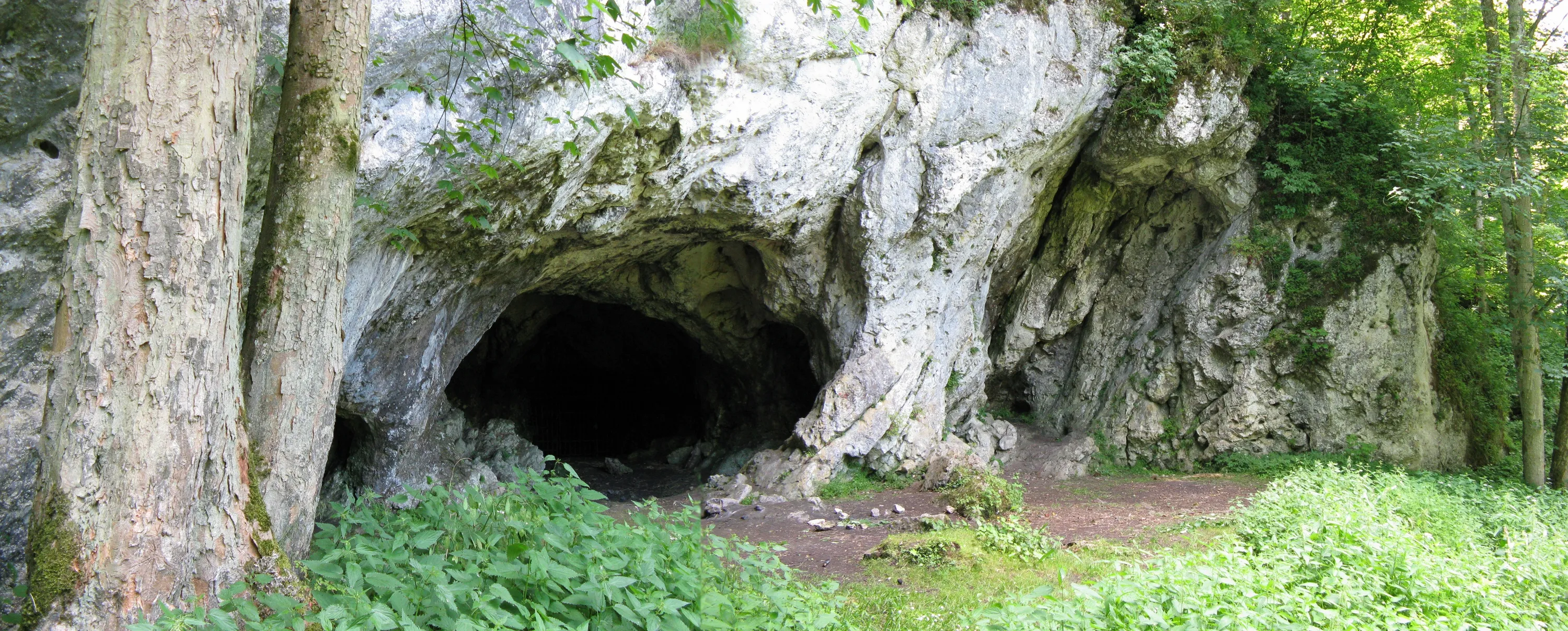
The Hohlenstein is a hollowed limestone cliff at the southern rim of the Lonetal, containing the caves Hohlenstein-Stadel, die kleine Scheuer and the Bärenhöhle.
EspeleoWorld
Hohlenstein-Stadel
The Hohlenstein is a hollowed limestone cliff at the southern rim of the Lonetal, containing the caves Hohlenstein-Stadel, die kleine Scheuer and the Bärenhöhle.
Asselfingen
Sviluppo: 60 m
Scheda aggiornata
https://espeleoworld.com/it/c/hohlenstein-stadel-asselfingen
Le informazioni possono cambiare. Verifica sempre coordinate, accesso, meteo e condizioni della cavità prima di partire.
The Hohlenstein is a hollowed limestone cliff at the southern rim of the Lonetal, containing the caves Hohlenstein-Stadel, die kleine Scheuer and the Bärenhöhle.
Foto
© Thilo Parg · CC BY-SA 3.0, https://creativecommons.org/licenses/by-sa/3.0/ · Wikimedia Commons · https://commons.wikimedia.org/wiki/File:H%C3%B6hle_Hohlenstein_Hohlensteinstadel.jpg
Descrizione
Morfologia
The Hohlenstein (literally Hollow Rock) is not a cave; it is a limestone cliff at the southern rim of the Lonetal (Lone valley). It is hollowed by numerous small caves, hence the name. The caves are Hohlenstein-Stadel (Barn), die kleine Scheuer (Small Barn) and the Bärenhöhle (Bear’s Cave). Stadel and Bärenhöhle are true caves, while the Kleine Scheuer is just an overhanging cliff face, a type of shelter called an abri by archaeologists.
Altri dettagli
All three caves are important palaeontological and archaeological locations. Like the other famous places along the Lonetal, they were excavated in the second half of the 19th and the first half of the 20th century. Today the cave sediments are almost completely removed.
Storia
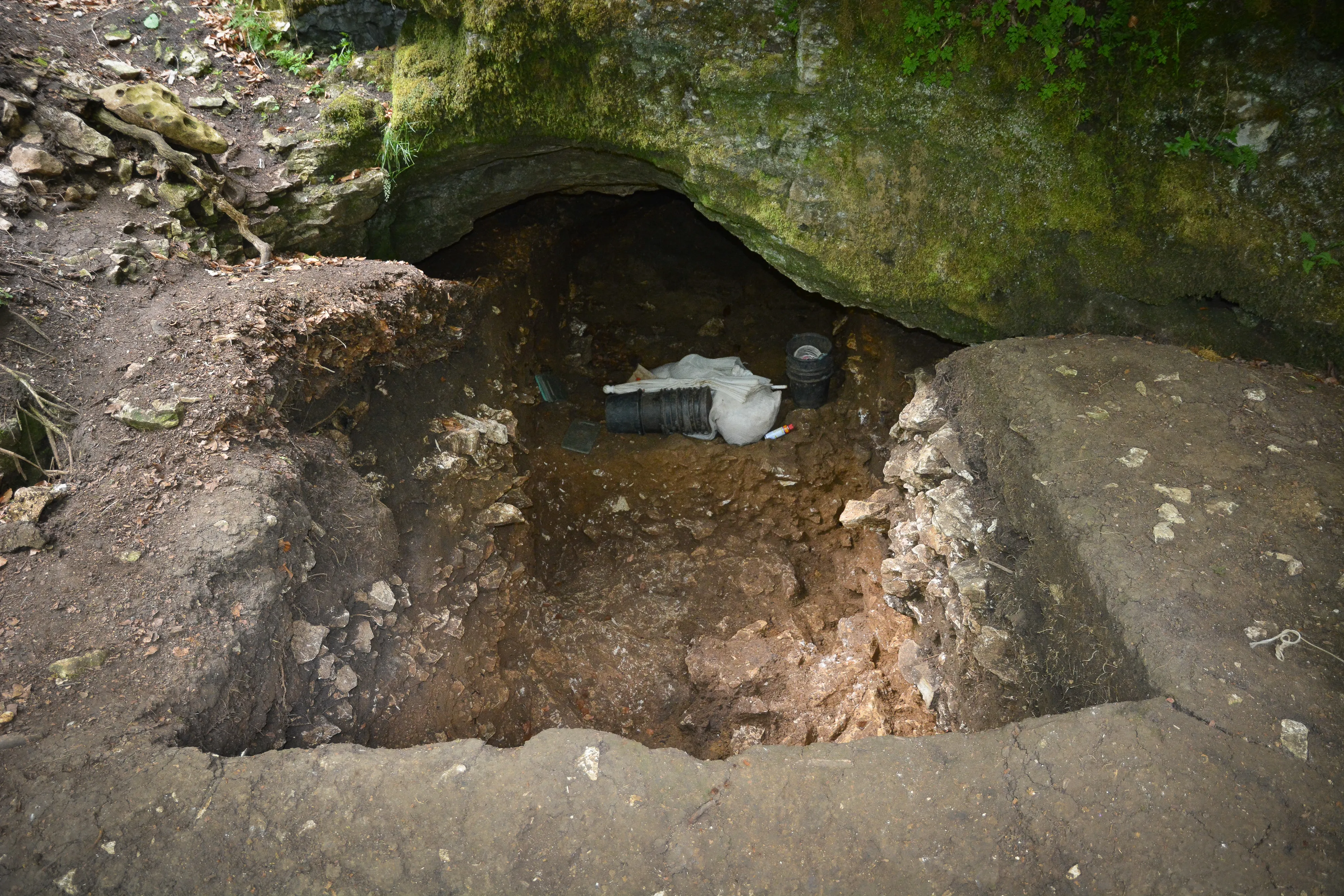
The first excavations were made by the former priest Oskar Fraas in the year 1861. He was in search of palaeologic remains, especially bear bones, and was very successful at the Bärenhöhle: he removed 88 skulls and more than 10,000 bone fragments. Because of this the formerly unnamed cave was dubbed Bärenhöhle (Bear’s Cave). But although he had this enormous success, the excavation was pure vandalism. He concentrated so much on bear bones but threw away anything else. Important archaeological sediments were dug out with shovels, the structure of the findings destroyed, anything but bear bones thrown on huge piles. He noticed this himself during his second excavation in 1866 and moaned about the destruction he created. And this is one of the milestones of modern archaeology: when he learned that the thousands of flint pieces he found were remains of man. This was the discovery of the Stone Age.
The second excavation was pretty short. In 1939 the archaeologist Robert Wetzel from the Institut für Ur- und Frühgeschichte from Tübingen started his excavation, but soon World War II started and the excavation was fast-paced shut down. This is the explanation why the most impressive finding of this excavation, a lionheaded figurine, was excavated but then stored in a paper box for decades and forgotten. After the war Robert Wetzel dedicated many findings, including many pieces of mammoth ivory, to the Museum Ulm (Museum of Ulm). There they were again forgotten until 30 years after the discovery Joachim Hahn discovered the traces of carving on the small pieces. He reconstructed the headless body of the figure from more than 200 pieces. Again 20 years later Elisabeth Schmid discovered more pieces of ivory, of course in the magazin of the museum, not in the cave, and completed the head.
Robert Wetzel returned to the Hohlenstein in 1954 and excavated the caves for several years. When he died rather young in 1961 the excavations ended again abruptly. But the findings of this excavations were spectacular. The femor, the thigh bone of a Neanderthal, is one of only very few bones ever found of those humans in southern Germany. The burial of three heads of people who suffered a violent dead, a man, a woman, and a child, originates from the Mesolithic, about 9,000 BP. The socalled Knochentrümmerstätte (bone fragment sanctuary) was a pit at the cave entrance which contained more than 1,000 bone fragments of at least 54 individuals. It is dated to the Neolithic, about 6,000 BP. Today this is interpreted as secondary burial; the first theory about canibalism is disproved by modern forensic methods. All those findings are shown in the Museum Ulm.
Commenti degli utenti (0)
Nessun commento ancora.
Sii il primo a condividere la tua esperienza!
Esplorazioni registrate (0)
Nessuna esplorazione registrata.
Registra la tua visita a questa grotta!
Grotte vicine

Contiene informazioni da Grottocenter (Wikicaves), grottocenter.org, rese disponibili con la Open Database License (ODbL 1.0, https://opendatacommons.org/licenses/odbl/1-0/), modificate. · https://grottocenter.org/ui/entrances/23727 · dati aggiornati a 2026 · Contiene informazioni da © OpenStreetMap contributors, www.openstreetmap.org, rese disponibili con la Open Database License (ODbL 1.0, https://opendatacommons.org/licenses/odbl/1-0/), modificate. · nomi · ottenuti il 2026-11-13 · https://www.openstreetmap.org/node/832831818 · dati aggiornati a 2026 · Fonte: Wikidata – cave items (Germany) (www.wikidata.org), modificato. CC0 1.0, https://creativecommons.org/publicdomain/zero/1.0/ Wikidata (CC0 1.0) · dati aggiornati a 2026 · Fonte: German Wikipedia – cave lists (length, type, alternative names) (de.wikipedia.org), modificato. CC BY-SA 4.0, https://creativecommons.org/licenses/by-sa/4.0/ Wikipedia contributors (de.wikipedia.org), CC BY-SA 4.0 · sviluppo · ottenuti il 2026-11-15 · https://de.wikipedia.org/wiki/Liste_von_H%C3%B6hlen_in_Deutschland · dati aggiornati a 2026 · Fonte: Show Caves of the World (Jochen Duckeck) (www.showcaves.com), modificato. CC0 1.0, https://www.showcaves.com/english/TermsOfUse.html Show Caves of the World (showcaves.com), Jochen Duckeck · Testo di Jochen Duckeck (Hohlenstein) · adattato da Espeleoworld (normalizzato, tradotto); l'adattamento è rilasciato con licenza CC0 1.0, https://www.showcaves.com/english/TermsOfUse.html · nomi, descrizione · ottenuti il 2026-11-19 · dati aggiornati a 2026 · I dati derivati sono disponibili su richiesta con licenza ODbL: [email protected]