
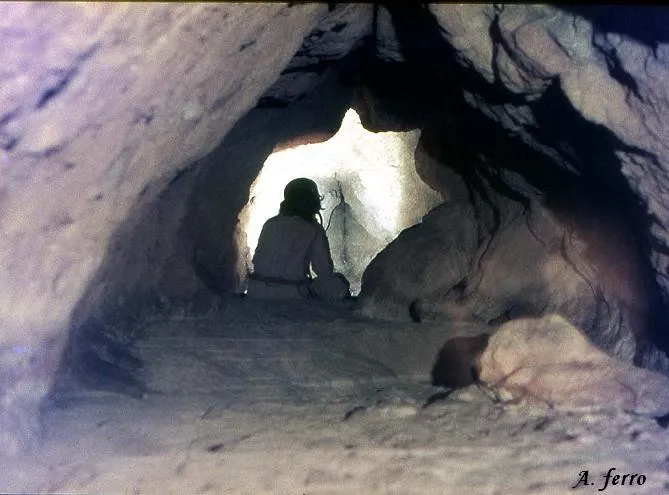
Forat del Toscà
A 1416-metre-long cave in Tremp, always known to the people of Gurp. First explored by the SIE of the CE Àliga on 9 and 23 September 1973.
EspeleoWorld
Forat del Toscà
A 1416-metre-long cave in Tremp, always known to the people of Gurp. First explored by the SIE of the CE Àliga on 9 and 23 September 1973.
Tremp · Pallars Jussà
Sviluppo: 1416 m
Scheda aggiornata
https://espeleoworld.com/it/c/forat-del-tosca
Le informazioni possono cambiare. Verifica sempre coordinate, accesso, meteo e condizioni della cavità prima di partire.
A 1416-metre-long cave in Tremp, always known to the people of Gurp. First explored by the SIE of the CE Àliga on 9 and 23 September 1973.
Topografia


Espeleoindex · CC BY-NC 4.0, https://creativecommons.org/licenses/by-nc/4.0/ · Immagine © del suo autore.
Foto

Espeleoindex · CC BY-NC 4.0, https://creativecommons.org/licenses/by-nc/4.0/ · Immagine © del suo autore.
Descrizione
Morfologia
Entrance Gallery-Gallery of the Meanders. The entrance is a flat passage about 0.35 metres high and 1 metre wide, with pebbles on the floor. This first stretch has an almost triangular section, where at 7 metres we find a chamber 3x5 metres and 1.5 metres high. After a narrow squeeze we begin to see stepped plunge pools and flowstone covering the floor. At 60 metres the gallery rises over powerful flowstone where the ceiling remains horizontal and the section changes, a small side gallery 10 metres long being found on the left; next the gallery bifurcates and rejoins, and immediately afterwards we pass through the zone of blocks, following a slightly meandering stretch with important sedimentary accumulations that leads to the chamber of the Dunes, about 5 metres in diameter. From the chamber of the Dunes to the Bifurcation we are in the Gallery of the Meanders, about 250 metres long with pronounced meanders and an average width of 2 metres by 1 metre high; this gallery comes to form abandoned parallel branches. Then one reaches the Bifurcation, on the right is the Active Gallery or Gallery of the Drops, and on the left the Fossil Gallery or Gallery of the Joints.
Active Gallery or Gallery of the Drops. The entrance lies on the convex bank of a meander and, because of its cramped dimensions, may go unnoticed, since the most feasible itinerary is to continue towards the Fossil Gallery. It has a development of about 400 metres with a section notably smaller than that of the entrance, since it does not exceed one metre in width. Its most notable feature is the frequent drops of opposite sign, which give it a very particular slide-like appearance. The walls are fairly smooth; in the last stretches powerful accumulations of black pebbles cemented to the floor appear and the walls are more irregular. The last 30 metres are very narrow, leading to a small terminal pit 2 metres deep, beyond which a very reduced crawlway, totally submerged under water, prevents any continuation.
Fossil Gallery or Gallery of the Joints. Back at the Bifurcation and following to the left one enters the Fossil Gallery or Gallery of the Joints, about 500 metres long, with sections elongated in the vertical plane. At some points the sedimentation comes to fill the normal gallery, making it necessary to overcome it by upper passages. After a heavily decorated zone about 10 metres long, one reaches a chimney formed by a dome 10 metres high, through which abundant infiltration enters. From this point the height decreases until it becomes a crawlway 0.4 metres at its start, ending 25 metres further on by becoming impenetrable.
Concrezioni
Flowstone covering the floor and powerful flowstone where the gallery rises. A heavily decorated zone about 10 metres long in the Fossil Gallery or Gallery of the Joints.
Idrologia
Stepped plunge pools. The Active Gallery or Gallery of the Drops ends in a very reduced crawlway, totally submerged under water, which prevents any continuation. The cave is a temporary spring with torrential behaviour.
Progressione
To explore the cave precautions must be taken, since it is a temporary spring with torrential behaviour.
Altri dettagli
Since we do not know the real drop of the cavity, as it has never been mentioned in the articles published to date, we have thought it appropriate to indicate the drop as “0”, awaiting someone to provide more information.
Storia
Always known to the people of Gurp, the first exploration was carried out by the SIE of the CE Àliga on 9 and 23 September 1973.
Commenti degli utenti (0)
Nessun commento ancora.
Sii il primo a condividere la tua esperienza!
Esplorazioni registrate (0)
Nessuna esplorazione registrata.
Registra la tua visita a questa grotta!
Bibliografia
- Victoria,JM; Iñigo, G.; Rovira,J.(1974).-“Karstificación en los conglomerados del margen derecho de la Conca de Tremp (Lérida)” Espeleosie (16): 71-120. SIE-CE Àliga. Barcelona.
- Borràs,J.; Miñarro, JM.; Talavera, F.(1979).-”El Pallars Jussà” Catàleg Espeleològic de Catalunya (3):187-189. Políglota. Barcelona.
- Cardona i Oliván, Ferran.(1989).-”La serralada Pirinenca”. Grans Cavitats de Catalunya (Primer Volum):164-167. EC Gràcia. Barcelona.
Grotte vicine
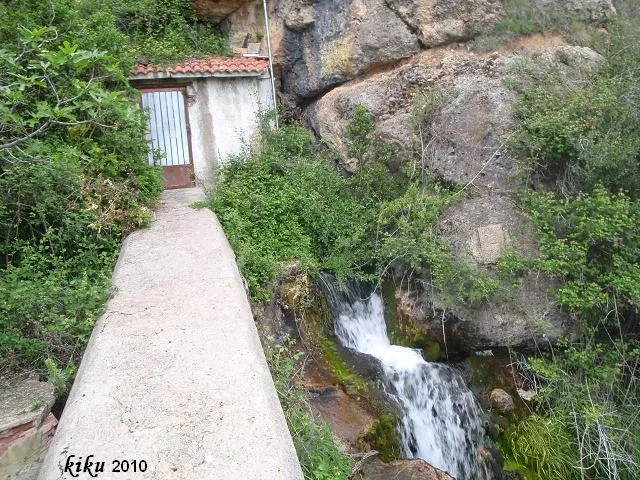
Cova de la Font del Molí
0.0 km · N
Tremp (Pallars Jussà)
1 topo.2 foto
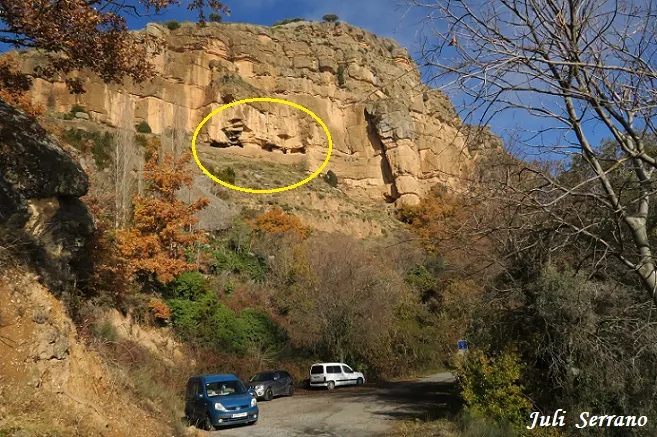
Espluga Nº10 dels Corrals de Gurp
0.4 km · SO
Tremp (Pallars Jussà)
1 topo.8 foto
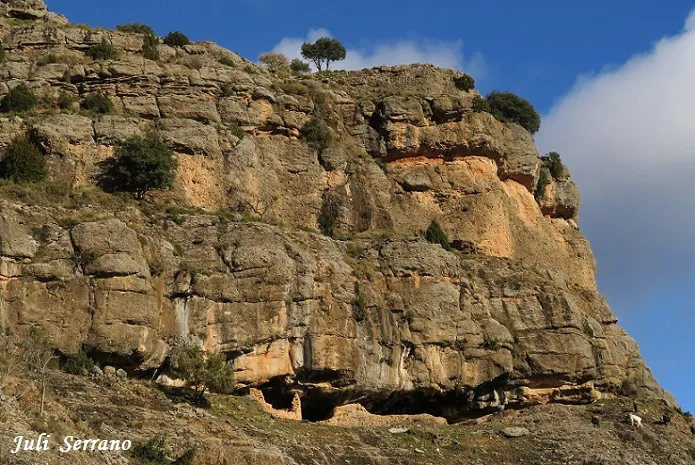
Espluga Nº9 dels Corrals de Gurp
0.6 km · SO
Tremp (Pallars Jussà)
1 topo.7 foto
Espluga Nº8 dels Corrals de Gurp
0.6 km · SO
Tremp (Pallars Jussà)
1 topo.6 foto
Fonte: Espeleoindex (espeleoindex.com), modificato. CC BY-NC 4.0, https://creativecommons.org/licenses/by-nc/4.0/