
Dienstedter Höhle
The Karsthöhle Dienstedt is one of three Oberfeldhöhlen caves near Dienstedt, with impressive erosional forms and former river passages 23 m above today's Ilm river.
EspeleoWorld
Dienstedter Höhle
The Karsthöhle Dienstedt is one of three Oberfeldhöhlen caves near Dienstedt, with impressive erosional forms and former river passages 23 m above today's Ilm river.
Stadtilm
Sviluppo: 340 m
Scheda aggiornata
https://espeleoworld.com/it/c/dienstedter-hoehle-stadtilm
Le informazioni possono cambiare. Verifica sempre coordinate, accesso, meteo e condizioni della cavità prima di partire.
The Karsthöhle Dienstedt is one of three Oberfeldhöhlen caves near Dienstedt, with impressive erosional forms and former river passages 23 m above today's Ilm river.
Foto

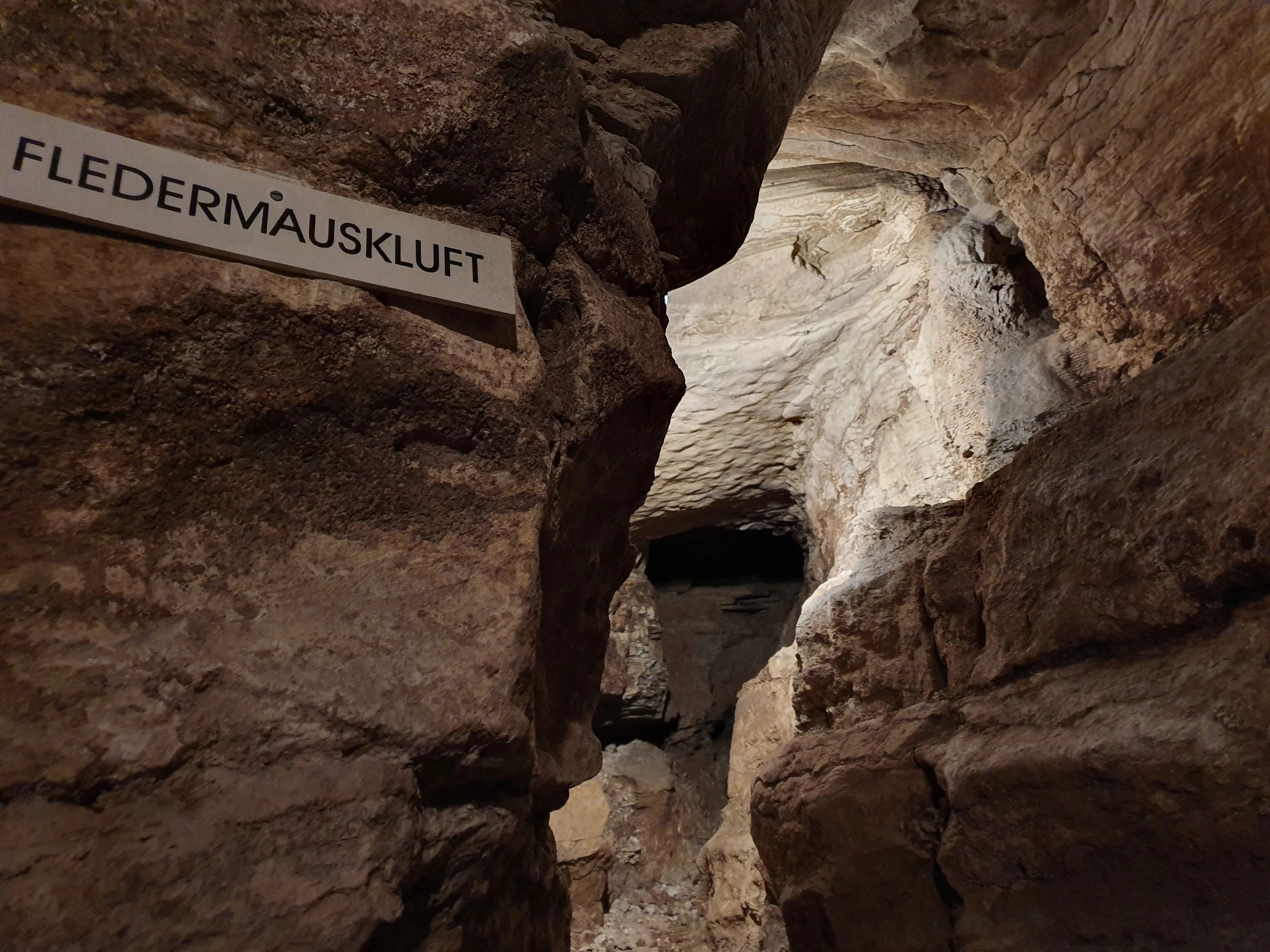
Aschroet · CC0 1.0, https://creativecommons.org/publicdomain/zero/1.0/ · Wikimedia Commons · https://commons.wikimedia.org/wiki/File:Dienstedter_Karsth%C3%B6hle_12.jpg
Descrizione
Morfologia
The cave shows impressive erosional forms. Very nice solutional profiles were unfortunately partly destroyed by improper development works such as artificial tunnels and brick walls.
Idrologia
The caves are former river caves, located 23 m above the niveau of today's Ilm river. The cave rivers were tributaries to the Ilm, two to five million years ago.
Altri dettagli
A petrified part of a jawbone of a dinosaur was found in the cave. It originates from the limestone in which the cave is located. This limestone is called Muschelkalk in German, a fossil-rich Middle Triassic limestone.
Storia
The cave was used about 4,000 years ago by people from a Celtic culture locally known as Bandkeramiker. This translates as Linear Band Pottery, a name given to the people after a pottery style by which they are identified. They left the remains of fireplaces, animal bones, bone tools, and pottery shards. Of special interest are nice findings of awls, needles and a well-preserved cup made of burnt clay.
The exploration of the cave was originally initiated by Felix Gebser (*1907-✝1988) from Dienstedt. He was Bodendenkmalpfleger, an honorary position similar to a park ranger in the USA. In the early 1950s he searched around Dienstedt for archaeological remains. After several fruitless excavations, he discovered in 1953 the cave, in which he soon found prehistoric remains. During 25 years the cave was excavated by the Museum für Ur- und Frühgeschichte Weimar, always supported by Mr Gerbser and many other honorary workers. After the archaeological excavations were completed, the cave was developed as a show cave.
Commenti degli utenti (0)
Nessun commento ancora.
Sii il primo a condividere la tua esperienza!
Esplorazioni registrate (0)
Nessuna esplorazione registrata.
Registra la tua visita a questa grotta!
Grotte vicine
Contiene informazioni da Grottocenter (Wikicaves), grottocenter.org, rese disponibili con la Open Database License (ODbL 1.0, https://opendatacommons.org/licenses/odbl/1-0/), modificate. · https://grottocenter.org/ui/entrances/23577 · dati aggiornati a 2026 · Fonte: Show Caves of the World (Jochen Duckeck) (www.showcaves.com), modificato. CC0 1.0, https://www.showcaves.com/english/TermsOfUse.html Show Caves of the World (showcaves.com), Jochen Duckeck · Testo di Jochen Duckeck (Karsthöhle Dienstedt) · adattato da Espeleoworld (normalizzato, tradotto); l'adattamento è rilasciato con licenza CC0 1.0, https://www.showcaves.com/english/TermsOfUse.html · nomi, descrizione · ottenuti il 2026-11-21 · dati aggiornati a 2026 · I dati derivati sono disponibili su richiesta con licenza ODbL: [email protected]