
Cova Picasso
Small cave of historical interest in Horta de Sant Joan, in the Ports Natural Park, known as cova dels Ullals de Morago and linked to Picasso.
EspeleoWorld
Cova Picasso
Small cave of historical interest in Horta de Sant Joan, in the Ports Natural Park, known as cova dels Ullals de Morago and linked to Picasso.
Horta de Sant Joan · Terra Alta
Sviluppo: 3 m
Scheda aggiornata
https://espeleoworld.com/it/c/cova-picasso
Le informazioni possono cambiare. Verifica sempre coordinate, accesso, meteo e condizioni della cavità prima di partire.
Small cave of historical interest in Horta de Sant Joan, in the Ports Natural Park, known as cova dels Ullals de Morago and linked to Picasso.
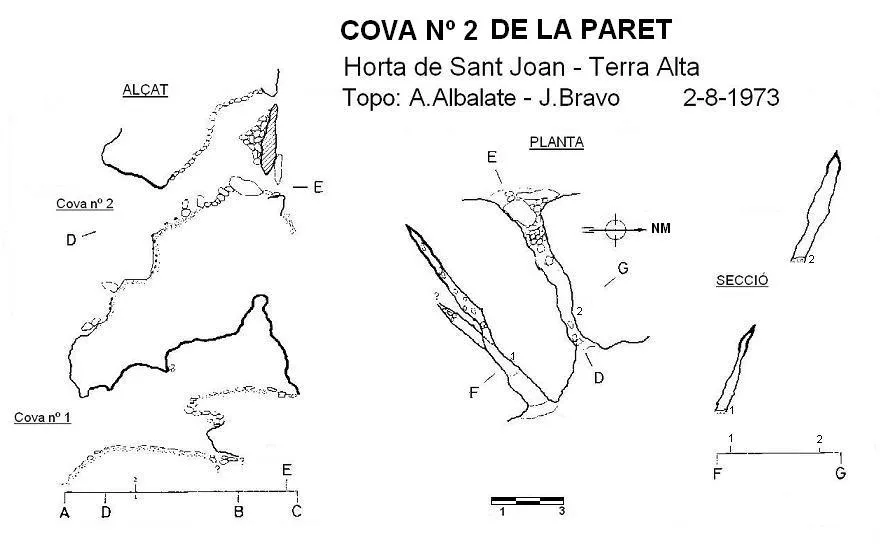
Topografia
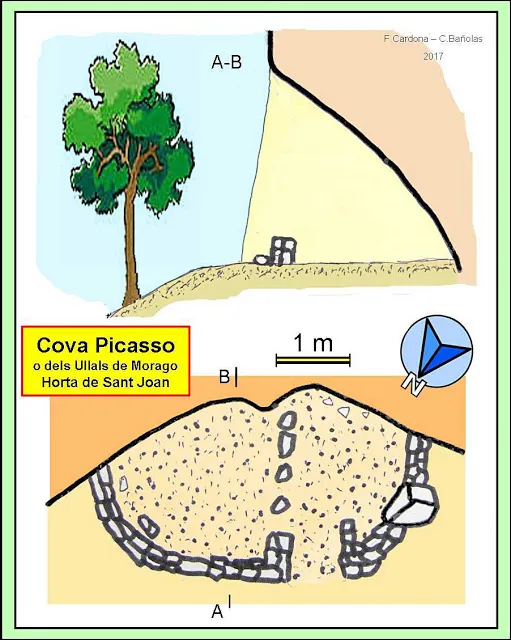
Espeleoindex · CC BY-NC 4.0, https://creativecommons.org/licenses/by-nc/4.0/ · Immagine © del suo autore.
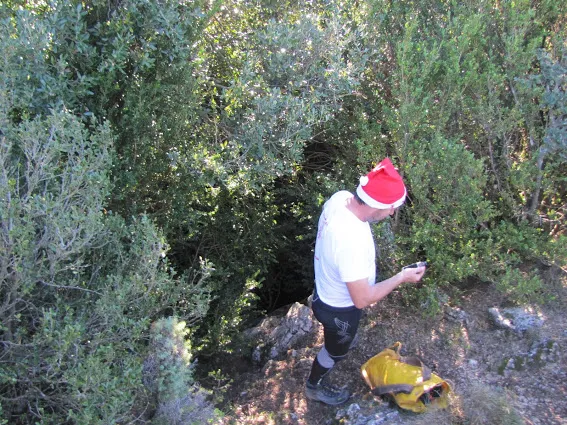
Foto
Espeleoindex · CC BY-NC 4.0, https://creativecommons.org/licenses/by-nc/4.0/ · Immagine © del suo autore.
Descrizione
Morfologia
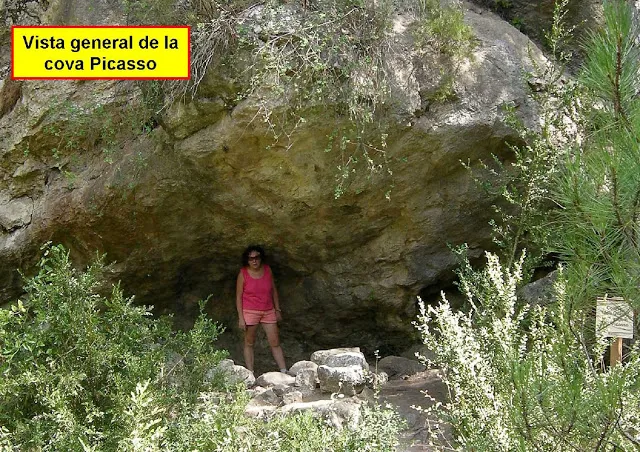
It is a small rock shelter. About 5 metres wide by a maximum depth of 3 metres, with a sloping ceiling that loses height so that one cannot stand upright in its innermost half. The sheltered surface is surrounded by a low stone wall, so that it forms an “abode” of almost semicircular shape. A line of stones broadly divides the abode into two “chambers”, the NE “chamber” being the flattest, where three people could sleep without too much comfort.
Idrologia
The cave's original name comes from a spring located in the bed of the Estrets river, about 200 metres upstream of the cave. These are the ullals de Morago. Its flow has been captured to supply drinking water to the village of Arnes. For this reason, there is a conduit made of concrete that is very visible along the entire course of the river. In the stretch that concerns us, the conduit has been used to route part of the path along which the “Itinerari de Picasso” runs. Wooden railings prevent us from falling into the river.
Altri dettagli
It is still surprising that this cave was chosen by Picasso as a precarious habitat to spend long periods of time. Probably, the proximity of the river and the water played an important role in making the decision.
Storia
This cavity, traditionally known as cova dels Ullals de Morago and used in other times by shepherds for shelter, would have passed without fanfare or glory given that its meagre dimensions would probably mean that speleologists would not even consider it for cataloguing.
But one event was to give it unusual prominence. Pablo Ruiz Picasso chose this cave to make long stays in nature, it being his dwelling and refuge. This prominence has reached the point where the Park has set up a signposted route, “Itinerari de Picasso”, which passes by the cave, which means that it is much visited, being one of the points of tourist interest offered by the municipality of Horta de Sant Joan, since it is a “Picassian place”.
Commenti degli utenti (0)
Nessun commento ancora.
Sii il primo a condividere la tua esperienza!
Esplorazioni registrate (0)
Nessuna esplorazione registrata.
Registra la tua visita a questa grotta!
Bibliografia
- Totes les dades, topografia i fotografies han estat extretes del blog: cavitatsdecatalunya.blogspot (de Jordi de Valles). Apunt del 29-8-2017. Autors fitxa: Ferran Cardona i Carme Bañolas
Grotte vicine


Fonte: Espeleoindex (espeleoindex.com), modificato. CC BY-NC 4.0, https://creativecommons.org/licenses/by-nc/4.0/