
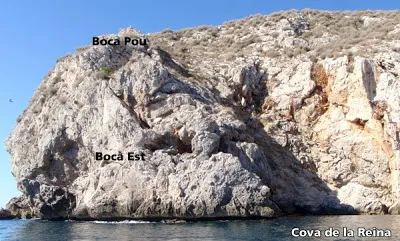
Cova de la Reina
Cave at the Meda Gran (l'Estartit) with four entrances that connect the racó de la Reina with the coast, known since ancient times and visited by the SIE-CEA in October 2008.
EspeleoWorld
Cova de la Reina
Cave at the Meda Gran (l'Estartit) with four entrances that connect the racó de la Reina with the coast, known since ancient times and visited by the SIE-CEA in October 2008.
Torroella de Montgrí · Baix Empordà
Sviluppo: 57 m · Profondità: 20 m
Scheda aggiornata
https://espeleoworld.com/it/c/cova-de-la-reina
Le informazioni possono cambiare. Verifica sempre coordinate, accesso, meteo e condizioni della cavità prima di partire.
Cave at the Meda Gran (l'Estartit) with four entrances that connect the racó de la Reina with the coast, known since ancient times and visited by the SIE-CEA in October 2008.
Topografia
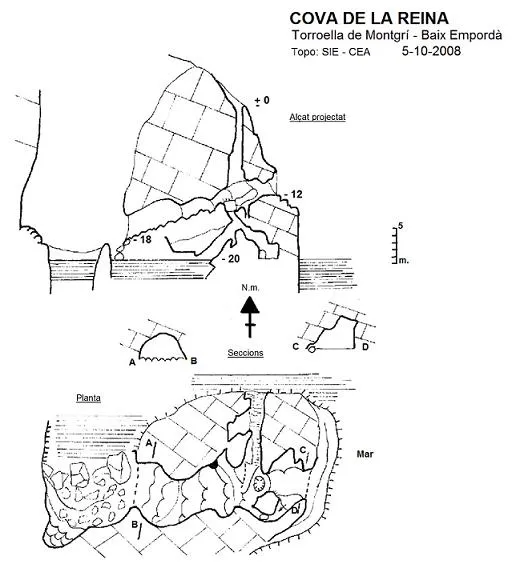
Espeleoindex · CC BY-NC 4.0, https://creativecommons.org/licenses/by-nc/4.0/ · Immagine © del suo autore.
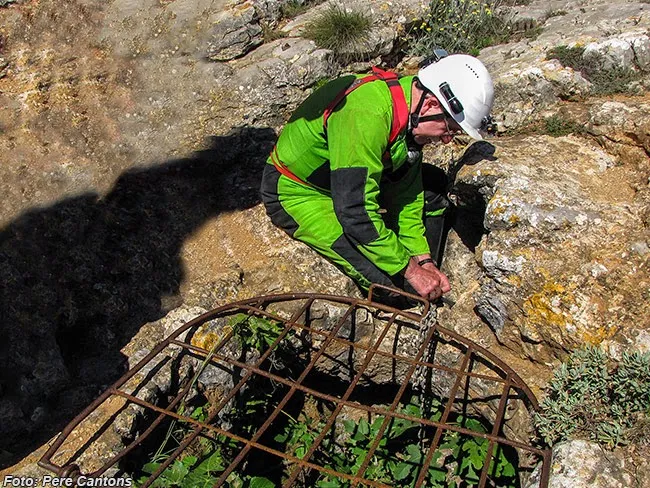
Foto
Espeleoindex · CC BY-NC 4.0, https://creativecommons.org/licenses/by-nc/4.0/ · Immagine © del suo autore.
Descrizione
Morfologia
Cave with four entrances that, through a series of passages, connect the racó de la Reina with the coastline of the Meda Gran. The upper entrance is a shaft open to the exterior due to the evolution of the slope that connected a primitive infiltration point in the form of an old chimney. These are the remains of a karstic cavity of larger dimensions that has been dismantled by the evolution of the landscape and marine erosion.
Concrezioni
The stalagmitic infilling has been very significant. Notable is the large flowstone that occupies the floor of the central part of the cavity (16 m), descending to the O entrance itself. We also find columns, stalagmites and small stalactites that have survived looting and the corrosive action of marine action. In the lower section a re-excavated stalagmitic thickness is the indication of a total infilling of parts of the gallery. In the exterior prolongation of the cavity, a few metres further on, precisely at the end of the cove, we find more layers of stalagmitic coating of what constituted part of the same network.
Storia
Cave known since ancient times by sailors and fishermen. There are various inscriptions engraved on the walls, among them one from 1835 "Salbador Comas" and two from 1886 by "A Cubas" and "Policarpo"; it would be necessary to know whether this frequentation is due to simple visitors, are vestiges of wrongdoers, or of those who seek treasures. Despite being a very well-known cavity, there was no concrete data until the visit carried out by members of the SIE-CEA in October 2008.
Commenti degli utenti (0)
Nessun commento ancora.
Sii il primo a condividere la tua esperienza!
Esplorazioni registrate (0)
Nessuna esplorazione registrata.
Registra la tua visita a questa grotta!
Bibliografia
- Valles, Jordi de (2010).- Catàleg Espeleològic de Catalunya. Volum 4. 397 pp. Espeleo Club de Gràcia / Federació Catalana d'Espeleologia. Barcelona.
- Totes les dades, topografia i fotografies han estat extretes del blog: espeleobloc.blogspot (Apunt del 7-10-2008)
Grotte vicine
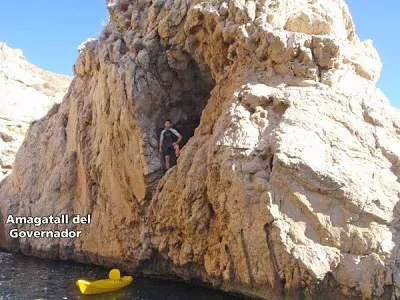
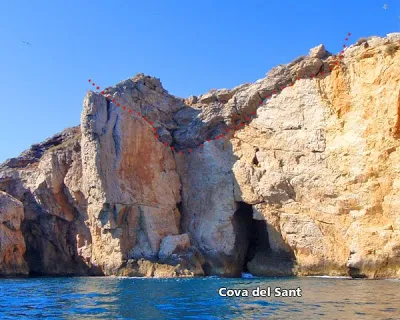


Fonte: Espeleoindex (espeleoindex.com), modificato. CC BY-NC 4.0, https://creativecommons.org/licenses/by-nc/4.0/