
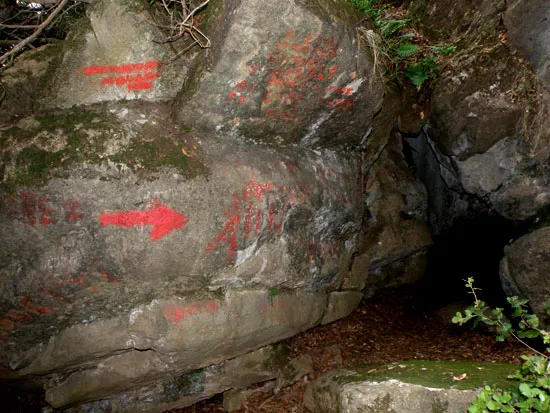
Bora Tuna
Cave with a 403 m route in Llorà (Gironès), known since ancient times and archaeologically excavated in 1922.
EspeleoWorld
Bora Tuna
Cave with a 403 m route in Llorà (Gironès), known since ancient times and archaeologically excavated in 1922.
Sant Martí de Llémena · Gironès
Sviluppo: 403 m · Profondità: 17 m
Scheda aggiornata
https://espeleoworld.com/it/c/bora-tuna
Le informazioni possono cambiare. Verifica sempre coordinate, accesso, meteo e condizioni della cavità prima di partire.
Cave with a 403 m route in Llorà (Gironès), known since ancient times and archaeologically excavated in 1922.
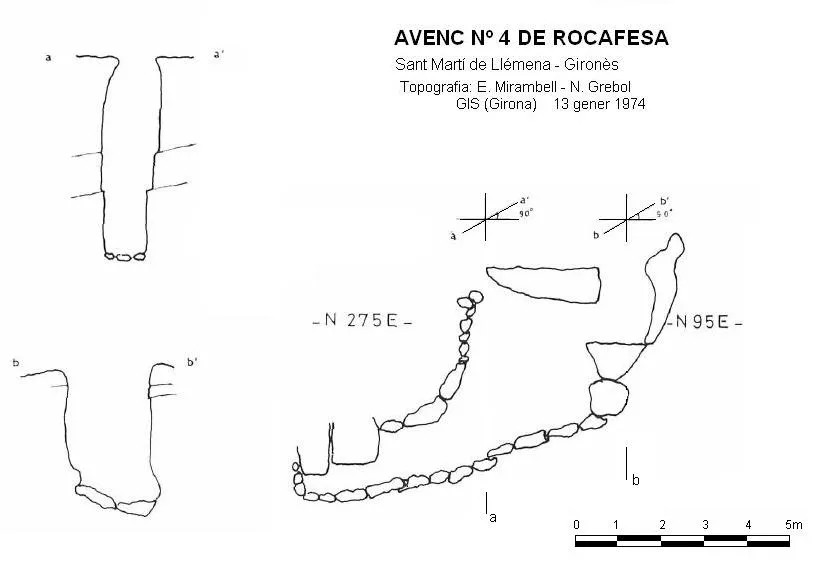
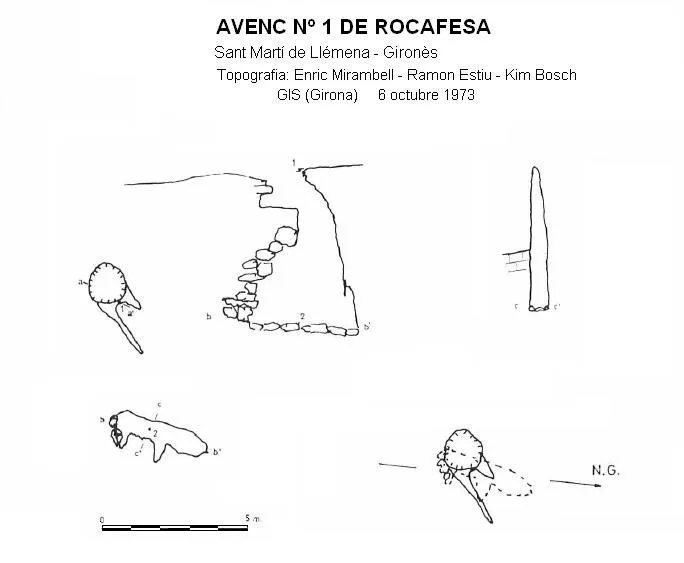
Topografia
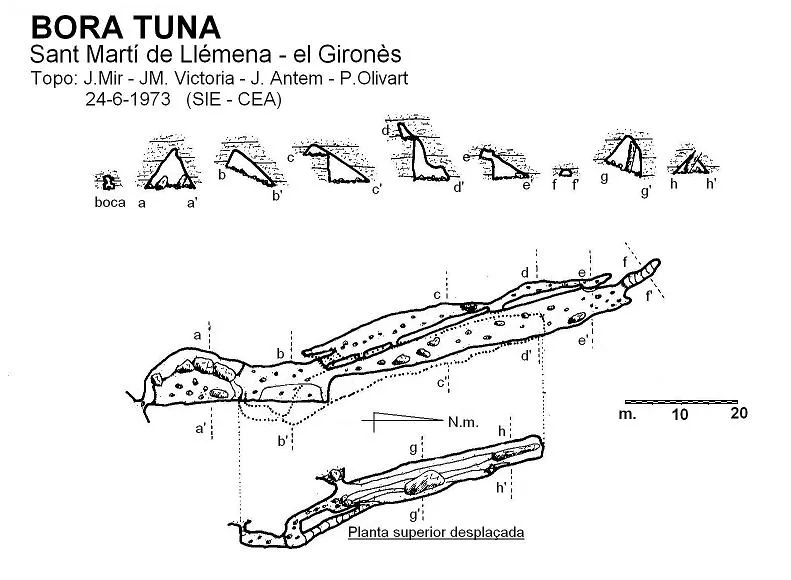
Espeleoindex · CC BY-NC 4.0, https://creativecommons.org/licenses/by-nc/4.0/ · Immagine © del suo autore.
Foto
Espeleoindex · CC BY-NC 4.0, https://creativecommons.org/licenses/by-nc/4.0/ · Immagine © del suo autore.
Descrizione
Morfologia
An entrance of approximately 2.5 by 1.5 metres followed by a short gallery and a small step that allow access to a wide gallery 33 metres long oriented S-N, with a clearly triangular section. From here the gallery changes direction slightly with the western wall vertical and the floor flat, the inclined ceiling being what closes the triangle. Along the western wall an upper gallery develops, which has some windows of contact with the one described above. From this upper level yet another gallery emerges, developed just above the lower one, slightly inclined and a little more than 50 metres in length.
Storia
Known since ancient times by the people of the region. The first report of which we are aware comes from the archaeological excavations carried out in 1922 by Maties Pallarès. Archaeological work continued punctually by different authors over the years, with remains from the Eneolithic being found. The cavity had been used as a dwelling, although by a small number of inhabitants, and remains have also been found as a sepulchral cave.
Speleologically we have few reports until a first visit by the SIE-CEA in 1971. In recent years it has become very popular among people from the region and surroundings, which has notably degraded its appearance, especially because of the graffitis.
The first survey of the cavity is the one made by members of the SIE – CEA in 1973, where they estimated a route of 235 metres. More recently, in March 2011, members of the GE de Badalona make a new survey that, very meticulously, calculates a total route of 403 metres.
Commenti degli utenti (0)
Nessun commento ancora.
Sii il primo a condividere la tua esperienza!
Esplorazioni registrate (0)
Nessuna esplorazione registrata.
Registra la tua visita a questa grotta!
Bibliografia
- Borràs, J.; Miñarro, JM.; Talavera, F. (1980).- Catàleg Espeleològic de Catalunya (vol. 6): el Baix Empordà, el Gironès, la Selva, l'Osona, el Vallès Oriental i el Maresme: 290 pp. Ed. Políglota. Barcelona.
- Martín, R. (1960-61).- “Observaciones y resultado de un corte estratigráfico de la Bora Tuna (Llorà)” Ampurias (XXII-XXIII): 282-288. Barcelona
- Pallarès, M.; Pericot, L (1921-26).- “La cova de Bora Tuna de Llorà” Anuari de l'Institut d'Estudis Catalans: 62-64. Barcelona
- Coordenades, fotografies, topografia i altres dades extretes del blog: Espeleobloc (post del dia 14 desembre del 2011)
Grotte vicine
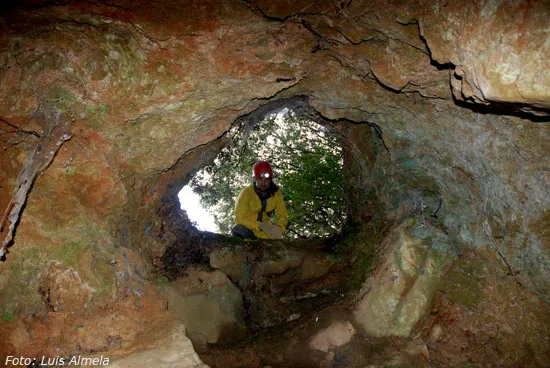
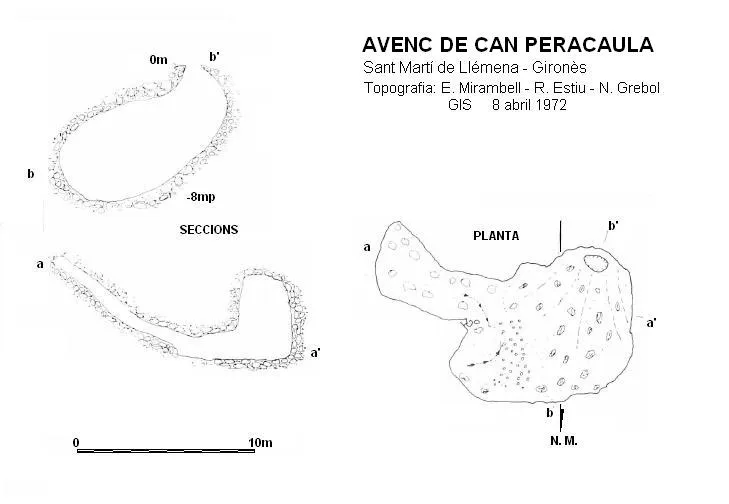


Fonte: Espeleoindex (espeleoindex.com), modificato. CC BY-NC 4.0, https://creativecommons.org/licenses/by-nc/4.0/