
Balma de l'Espluga
A rock shelter worked in the Serra de l'Obac, with opus spicatum walls and remains of an old farmhouse, known since time immemorial.
EspeleoWorld
Balma de l'Espluga
A rock shelter worked in the Serra de l'Obac, with opus spicatum walls and remains of an old farmhouse, known since time immemorial.
Mura · Bages
Sviluppo: 7 m
Scheda aggiornata
https://espeleoworld.com/it/c/balma-de-l-espluga-mura
Le informazioni possono cambiare. Verifica sempre coordinate, accesso, meteo e condizioni della cavità prima di partire.
A rock shelter worked in the Serra de l'Obac, with opus spicatum walls and remains of an old farmhouse, known since time immemorial.
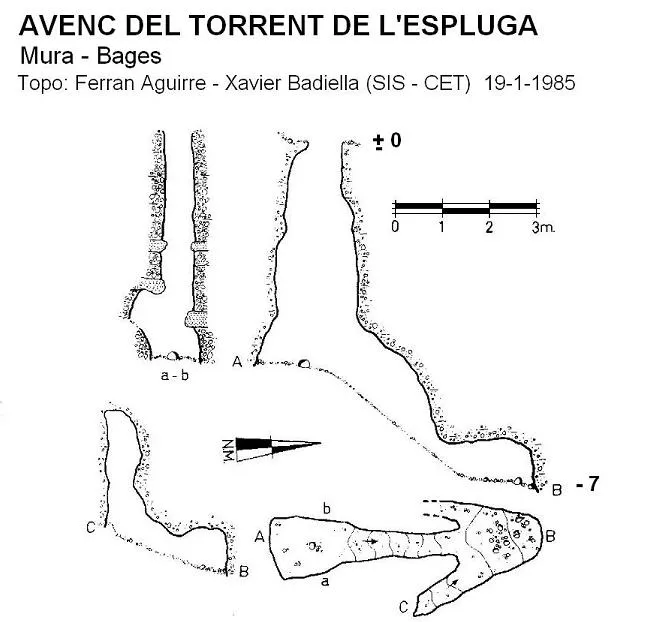
Topografia
Espeleoindex · CC BY-NC 4.0, https://creativecommons.org/licenses/by-nc/4.0/ · Immagine © del suo autore.
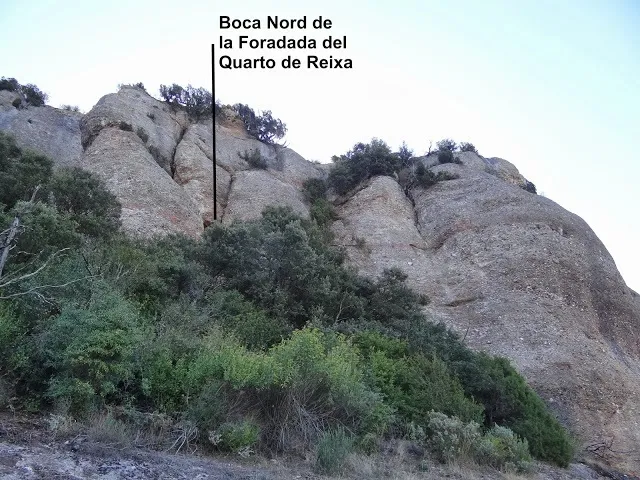
Foto
Espeleoindex · CC BY-NC 4.0, https://creativecommons.org/licenses/by-nc/4.0/ · Immagine © del suo autore.
Descrizione
Morfologia
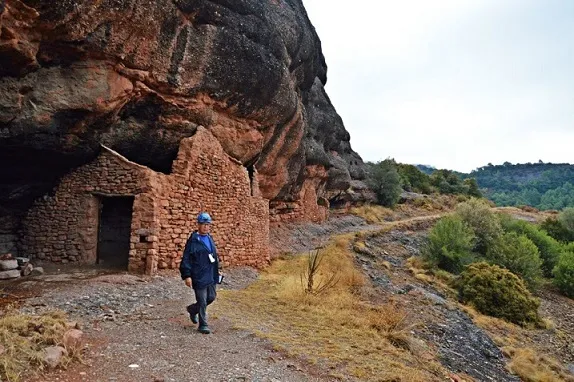
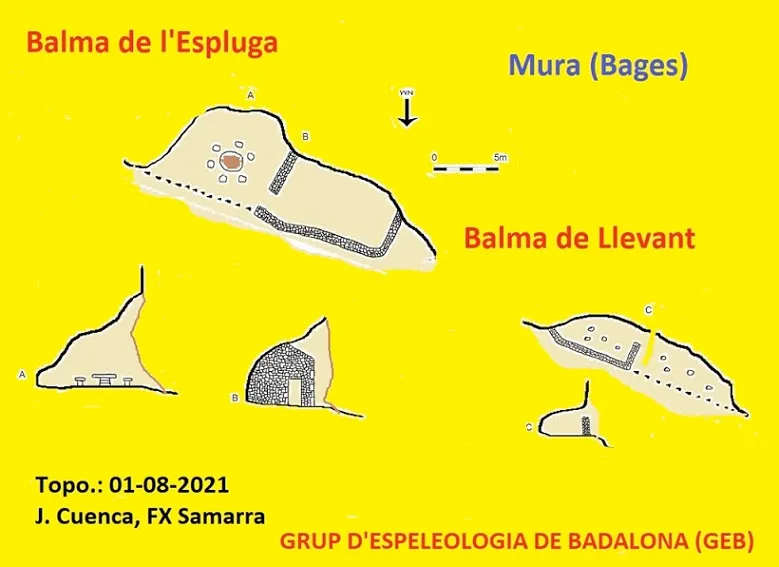
It is a rock shelter worked in ancient times that still preserves walls in opus spicatum, remains of an old farmhouse that was later renovated to keep horses. The rock shelter has a length of 22 m by 7 m deep and a maximum height of 7 m.
About 20 m to the E there is another worked rock shelter, of smaller dimensions and that forms part of the complex (Balma de Llevant) that would have served as an enclosure for the animals.
Storia
Known since time immemorial.
The historian of Sant Llorenç, Antoni Ferrando, refers to a document from the year 1336 that speaks of the balma de l'Espluga, as a dependency at that time of the mas de La Mata. Probably its origins are even older given its small sample of opus spicatum.
But its historical value did not prompt any rehabilitation action, as Antoni Ferrando demanded, but, on the contrary, the original ruins were allowed to be damaged in order to make the stables for two perxerons and mules.
It is not known when its abandonment as a farmhouse occurred, but later it had been temporarily occupied by the peasants who took care of their fields, by the managers of the nearby pitch oven or by the hikers who went through those parts. But at the beginning of the 1980's there was a great renovation of the walls to house the animals during about two years that the massive felling of trees lasted before the estate was bought by the Diputació de Barcelona.
Commenti degli utenti (0)
Nessun commento ancora.
Sii il primo a condividere la tua esperienza!
Esplorazioni registrate (0)
Nessuna esplorazione registrata.
Registra la tua visita a questa grotta!
Bibliografia
- Dades, topografia i fotografies extretes del web: geb.cat (del Grup d'Espeleologia de Badalona). Apunt del
- Altres dades consultades al blog: trailsantllorenc.blogspot (de Lluís R. Hernández, Matadepera)
Grotte vicine


Fonte: Espeleoindex (espeleoindex.com), modificato. CC BY-NC 4.0, https://creativecommons.org/licenses/by-nc/4.0/