
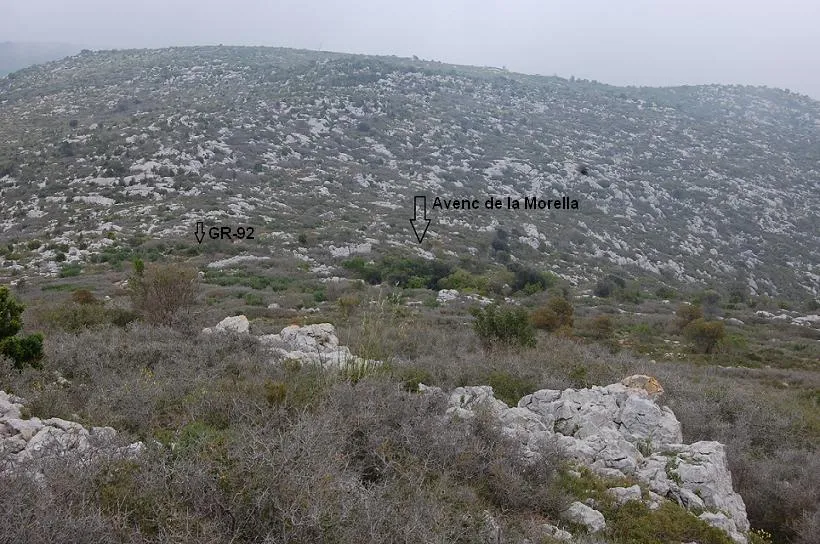
Avenc Carles Selicke
A pit in Garraf with a drop of about 135 metres, with two entrances and a large main shaft.
EspeleoWorld
Avenc Carles Selicke
A pit in Garraf with a drop of about 135 metres, with two entrances and a large main shaft.
Begues · Baix Llobregat
Sviluppo: 300 m · Profondità: 135 m
Scheda aggiornata
https://espeleoworld.com/it/c/avenc-carles-selicke
Le informazioni possono cambiare. Verifica sempre coordinate, accesso, meteo e condizioni della cavità prima di partire.
A pit in Garraf with a drop of about 135 metres, with two entrances and a large main shaft.
Topografia
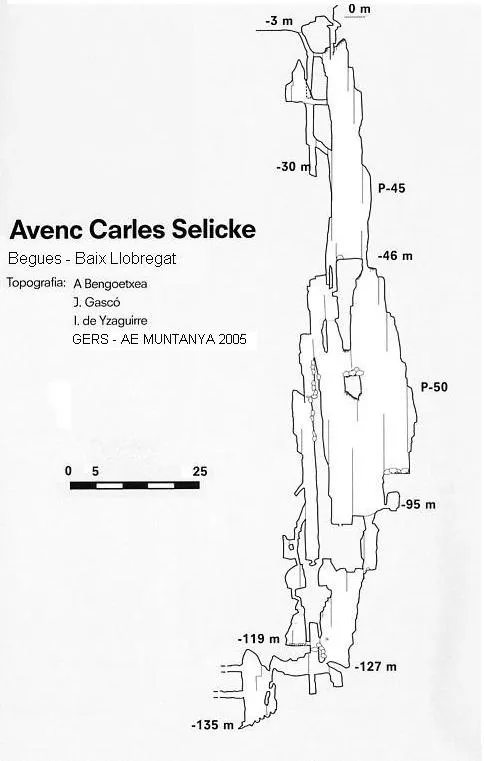
Espeleoindex · CC BY-NC 4.0, https://creativecommons.org/licenses/by-nc/4.0/ · Immagine © del suo autore.
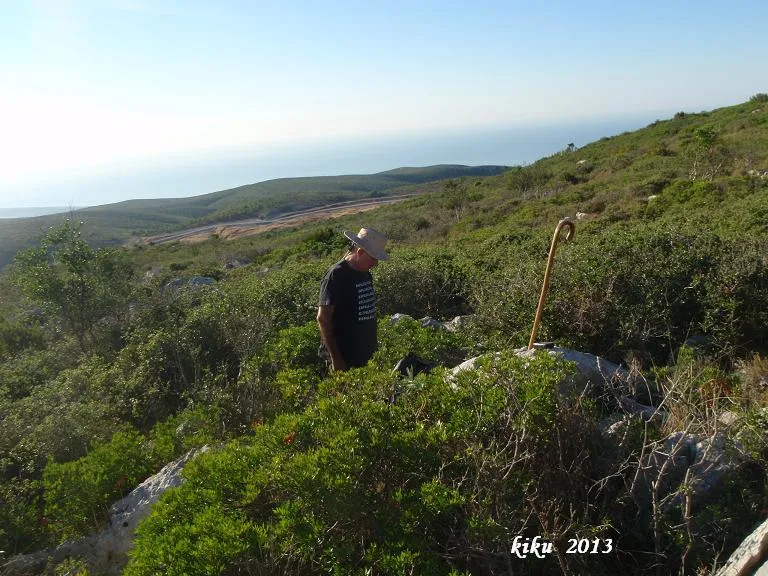
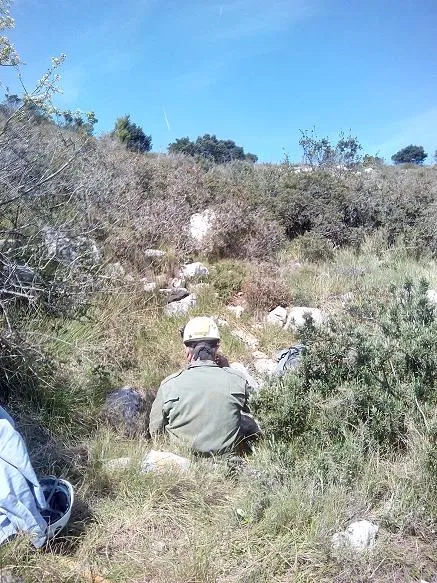
Foto
Espeleoindex · CC BY-NC 4.0, https://creativecommons.org/licenses/by-nc/4.0/ · Immagine © del suo autore.
Descrizione
Morfologia
The cavity has two entrances. The upper entrance is a short crawl that leads into a pit of 8 metres, which connects with a pit of about 35 metres deep with a width of up to 5x8 metres. Through the lower entrance we find a first drop of 3 metres, followed by another of 7 metres; the base of this latter pit communicates laterally with a small chamber, the base of which is slightly lower; from this base a pit of 14 metres opens, ending in a cul-de-sac. At the start of this pit there is a crawl that communicates with the large main pit, and in its middle it also has a narrow communication with the same pit. The base of the main pit is located at -46 metres, forming a large ledge of 5x5 metres. At this point several openings begin; the smallest is 0.75 m. The main pit, on one side, ends at 10 metres, while on the other we descend 6 metres to a ledge where through a window we access the aforementioned large pit. From the window one can see on the other side and about 4 metres lower another window. Once the main pit is descended we are at the level of -95 metres; the cavity continues with more modest dimensions: first a pit of 8 metres, followed by another of 17 metres; from here we climb about 4 metres among blocks to access a window that leads into another pit, as well as a dome. At the head of the Via ERE we find a descending traverse followed by a pit of 4 metres that leads to a chamber where the floor is formed by very unstable blocks; at this point a pit of 30 metres begins, at the base of 4x2 metres. Shortly before finishing the descent of the 30-metre pit we find a window that gives access to the Via GERS. Once past the connection, halfway down this pit we find a horizontal gallery, at the end of which and by means of a narrow crawl we access the last pit of 9 metres.
Progressione
The upper entrance is a short crawl that leads into a pit of 8 metres. Accessing through the lower entrance, a first drop of 3 metres and another of 7 metres. The base of the main pit is located at -46 metres, which is accessed by means of a small pendulum. If we access through the smallest entrance (0.75 m), this gives way to a direct vertical of -52 metres. From the window one can access another window by performing a traverse, which is located at the head of the Via ERE. Located again at the head of the Via ERE, we find a descending traverse followed by a pit of 4 metres. The Via GERS is formed by a series of small pits and narrow passages that end up linking with the main route. The drop of the five known surveys has a maximum difference between them of 10 metres: the ERE-CEC gives it -125 m, the ECG -129, the SIE-CEA -130, the GES-CMB -134 and the GERS-AEM -135 metres; the difference is basically from -95 metres onwards, since up to this level all the measurements are quite similar.
Storia
At the end of 1962 members of the Unió Excursionista de Catalunya – Cornellà de Llobregat began the clearing work that allowed the two entrances of the cavity to be opened. It is not until March 1963 that they manage to reach the bottom of the pit (accompanied by Oleguer Escolà, ERE - CEC), baptising it with the name of one of its members. They attribute a depth of 140 metres to it and publish a linear sketch.
At the end of 1970, the SIE – CEA made the first survey, which was published the following year and which set the maximum depth level at 130 metres.
In 1971 the ERE – CEC explored the lateral route (Via ERE).
In March 1973 members of the GES – CMB made a new survey that set the maximum depth at – 134 metres (Published in the Garraf catalogue, Borràs – 1973).
During different trips in 1978/79, members of the ERE – CEC tried to finish the clearing at the bottom of the Via ERE. They made a new survey that gives a maximum depth level of 125 metres.
A new survey was made by the EC de Gràcia in 1983, attributing a depth of 129 metres.
Finally, in 2005, members of the GERS – AE Muntanya, on the wall of the final section of the Via ERE located a window through which they accessed a series of pits and narrows that at level – 119 communicates with the final sector of the main route of the pit. They re-surveyed the whole cavity and calculated that the maximum depth level is at 135 metres.
Note biospeleologiche
Troglocharinus Ferreri Reitt
Castell, 8 specimens, 12-XII-1964
Casado, 4 specimens, ?
Escolà, 1 specimen, 27-II-1977
Escolà, 4 specimens, 29-VII-1979
Commenti degli utenti (0)
Nessun commento ancora.
Sii il primo a condividere la tua esperienza!
Esplorazioni registrate (0)
Nessuna esplorazione registrata.
Registra la tua visita a questa grotta!
Bibliografia
- Amenós i Vidal, Antoni. (1982).- “Avenc Carles Selicke”. Espeleòleg (33): 173-175. ERE del Centre Excursionista de Catalunya. Barcelona.
- Borràs Xavier, Joan. (1973). Catálogo Espeleológico del macizo de Garraf (1-155)
- Cardona i Oliván, Ferran.(1990).-”El sistema mediterrani i la depressió central” Grans Cavitats de Catalunya (segon volum):1-484. Espeleo Club de Gràcia. Barcelona.
- Ferrer Rico, Victor. (2006).-”Fitxes i topografies” Avencs de Garraf i d'Ordal (monogràfic).
- Iñigo, Gregori. (1971).-”Avenc Carles Selicke”. EspeleoSie (10):71-74. SIE-CE Àliga. Barcelona
- Fotografies exteriors facilitades per Josep Maria Cervelló (ERE – CEC).
Grotte vicine
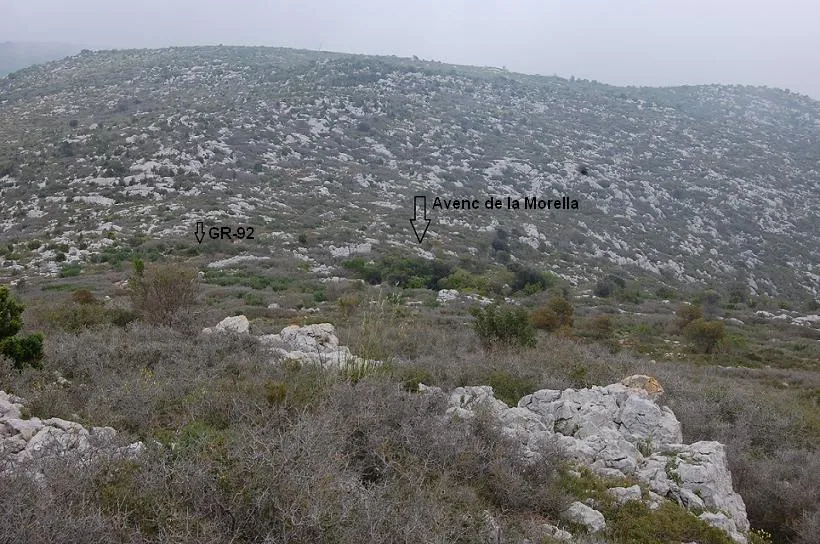
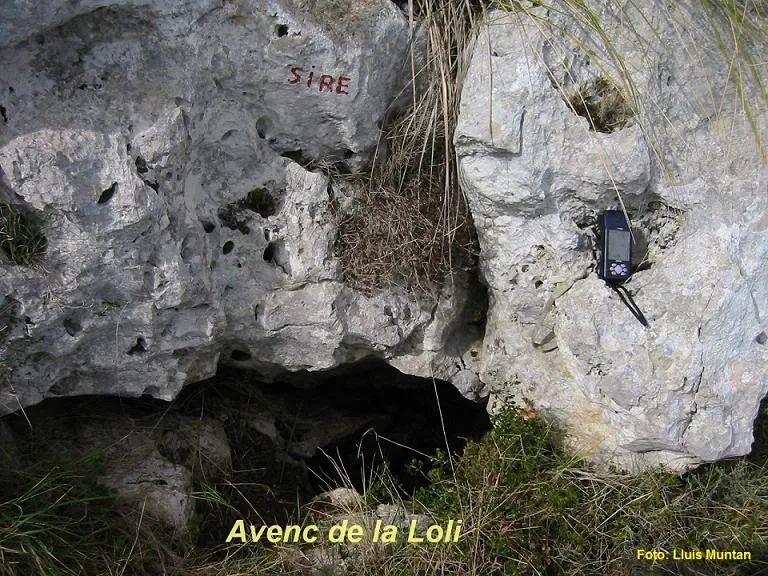


Fonte: Espeleoindex (espeleoindex.com), modificato. CC BY-NC 4.0, https://creativecommons.org/licenses/by-nc/4.0/