
Cova del Túnel de l'argentera
Cova de 58 metres de recorregut a l'interior del túnel del tren a Pradell de la Teixeta.
EspeleoWorld
Cova del Túnel de l'argentera
Cova de 58 metres de recorregut a l'interior del túnel del tren a Pradell de la Teixeta.
Pradell de la Teixeta · Priorat
Length: 58 m
Updated record
https://espeleoworld.com/en/c/cova-del-tunel-de-l-argentera
Information can change. Always verify coordinates, access, weather, and cave conditions before setting out.
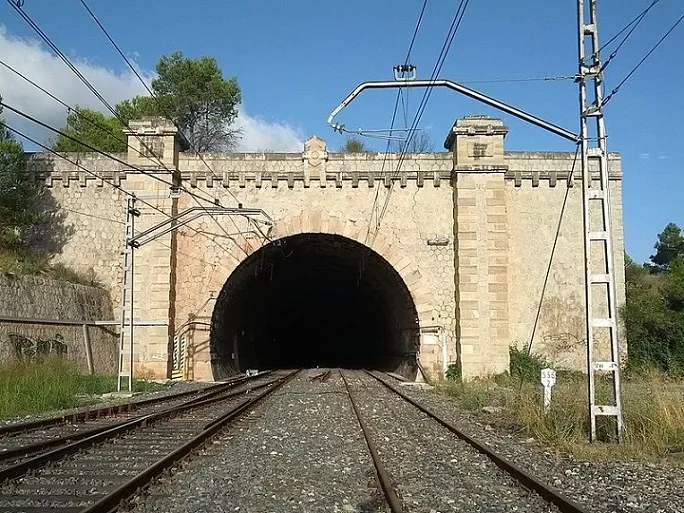
A 58-metre-long cave inside the railway tunnel at Pradell de la Teixeta, on the Barcelona-Flix line.
Topographic
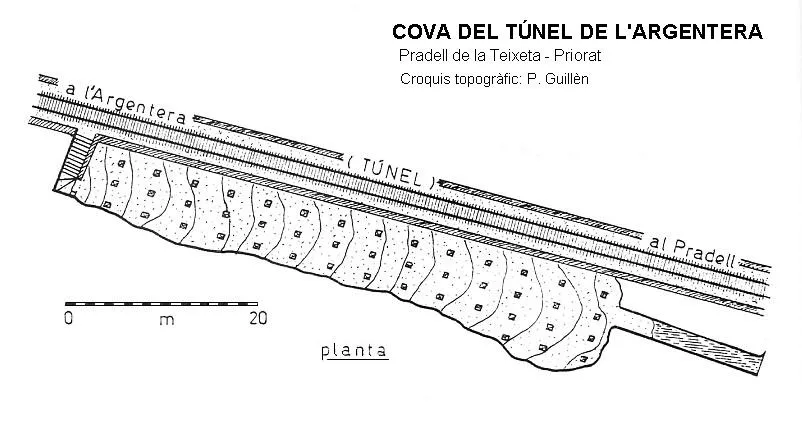

Espeleoindex · CC BY-NC 4.0, https://creativecommons.org/licenses/by-nc/4.0/ · Image © its author.
Photos

Espeleoindex · CC BY-NC 4.0, https://creativecommons.org/licenses/by-nc/4.0/ · Image © its author.
Description
Morphology
The cavity keeps a fairly uniform height, approximately between three and four metres. The widths are somewhat more variable, but overall the whole cavity is comfortable to traverse. The cavity was heavily modified by the works: widening was necessary and earth was dumped, so it is difficult to know what the original morphology was like.
Speleothems
In some places, the floor is concretioned by water trickles. Elsewhere, the floor consists of a dark-coloured sediment, a consequence of the accumulation of washed-in soot. Likewise, the area of the access stairs and the first metres of the cavity have black walls from the soot accumulated when steam trains ran.
Hydrology
Along the whole length of the cave runs a small watercourse, until it reaches the final semicircular arch channel, where it pools.
Progression
Access is via an opening in the left wall of the tunnel, about 2 m wide by 2.7 m high. Steps follow that place us at the start of the cave, all of it descending, until reaching the lower part, where it ends in a kind of channel with a half-arch vault where the water flowing through the cavity accumulates. The total route from the railway tunnel would be about 90 metres according to the survey that appears in the book El Túnel de Argentera, or 58 metres according to the GES-CMB survey.
Other details
Along the whole route we see the various works that were carried out to consolidate the cavity, especially the large number of columns present so that the ceiling does not collapse. If we have not miscounted, we can find:
- 42 columns
- 6 buttresses to support the walls
- 2 retaining walls on the south side, in order to secure the abutments of the tunnel lining.
- The channel with a half-arch vault, which is 22 m long.
- The access stair and the walls that bound it.
History
This cavity was discovered during the drilling works of the railway tunnel (called the Torreta tunnel), which began in 1883 and, after many financial problems, achieved the joining of the two mouths in 1890. The works were directed by the engineer Eduard Maristany.
The appearance of the cave meant a budget overrun, since they had to reinforce with 48 pillars the ceiling of the cave that passes just below the tunnel, and this work cost about 19,000 pesetas of that time.
It is not until 1918, however, that Joan Ferraté reports the cave in his work Espeleologia de les comarques tarragonines.
We have news of different explorations by speleologists from Reus and Barcelona mainly during the 50s and 60s of the 20th century, but nothing was published about them. It is not until 1981 that members of GES - CMB publish a record card and a sketch made shortly before.
User Comments (0)
No comments yet.
Be the first to share your experience!
Registered Explorations (0)
No explorations registered yet.
Register your visit to this cave!
Bibliography
- Borràs, J.; Miñarro, J.M.; Talavera, F.(1984).-”el baix camp, el priorat i la ribera d'ebre”. Catàleg Espeleològic de Catalunya (vol.7):1-283. Ed. Políglota.Barcelona.
- Ferraté, J.(1918).-Espeleologia de les comarques tarragonines. Pp:1-133.
- Guillèn, P. Borràs, J.(1981).-”Arxiu GES de cavitats”. Sota Terra (2):58-61. GES-CMB. Barcelona.
- Maristany Gibert, Eduardo.(1891-1892).-El Túnel de Argentera (3Volums.). Imprenta de Henrich. Barcelona
- Dades i fotografies extretes del web:geb.cat (del Grup d'Espeleologia de Badalona). Apunt del 7-09-2017. Recopilació i informació, J. Cuenca, F. Cardona, F. Miret i Ratpenat de l’Argentera.
Nearby caves
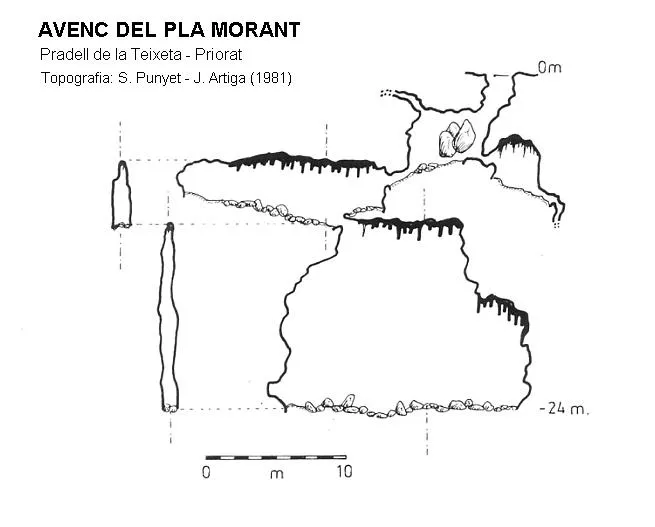
Avenc del Pla Morant
0.9 km · N
Pradell de la Teixeta (Priorat)
1 topo.
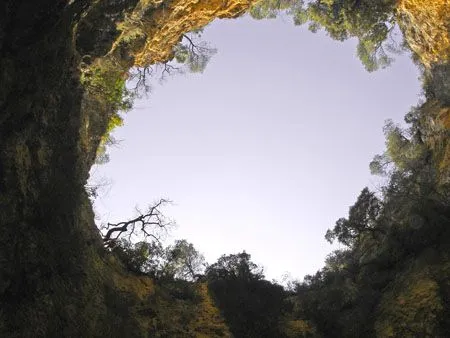
Avenc de Fontaubella
1.0 km · SW
Torre de Fontaubella, La (Priorat)
3 topo.5 photos
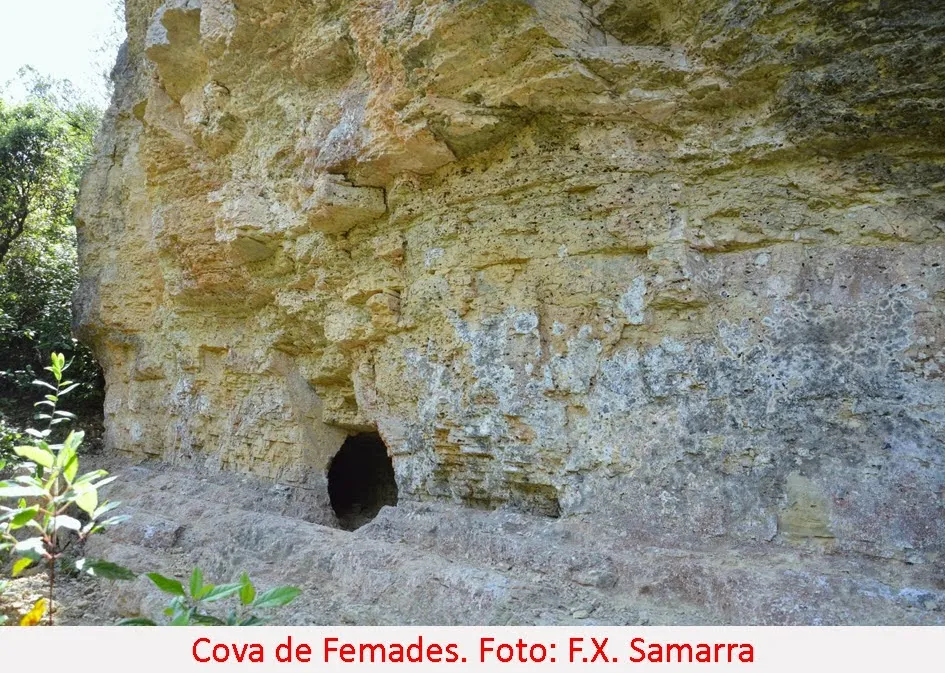
Cova de les Femades
1.3 km · S
Torre de Fontaubella, La (Priorat)
1 topo.4 photos
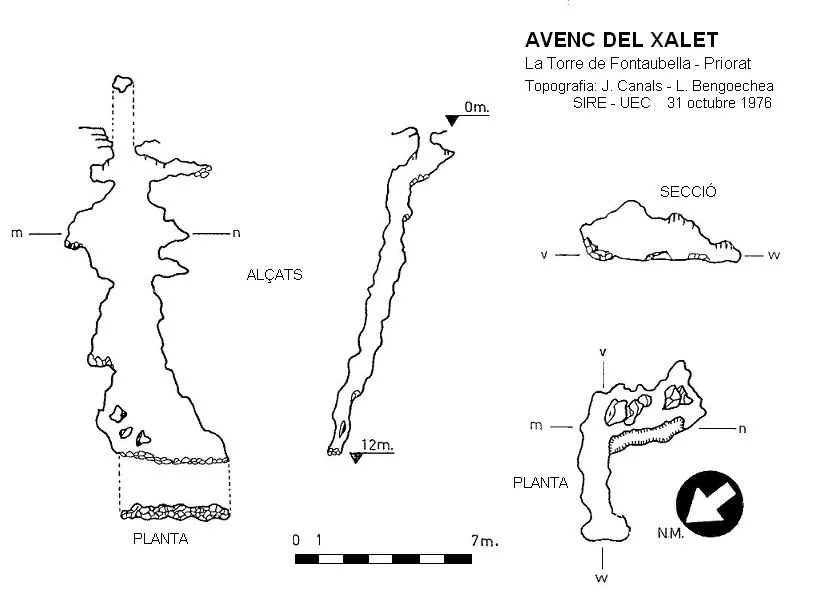
Avenc del Xalet
1.6 km · SE
Torre de Fontaubella, La (Priorat)
2 topo.
Source: Espeleoindex (espeleoindex.com), modified. CC BY-NC 4.0, https://creativecommons.org/licenses/by-nc/4.0/