
Cova de la Font de la Tosca
Cave with a spring in Castellcir (Moianès), located at the roca de la Tosca, in front of the chapel of the Mare de Déu de la Tosca, on the other side of the stream.
EspeleoWorld
Cova de la Font de la Tosca
Cave with a spring in Castellcir (Moianès), located at the roca de la Tosca, in front of the chapel of the Mare de Déu de la Tosca, on the other side of the stream.
Castellcir · Moianès
Length: 11 m
Updated record
https://espeleoworld.com/en/c/cova-de-la-font-de-la-tosca
Information can change. Always verify coordinates, access, weather, and cave conditions before setting out.
Cave with a spring in Castellcir (Moianès), located at the roca de la Tosca, in front of the chapel of the Mare de Déu de la Tosca, on the other side of the stream.
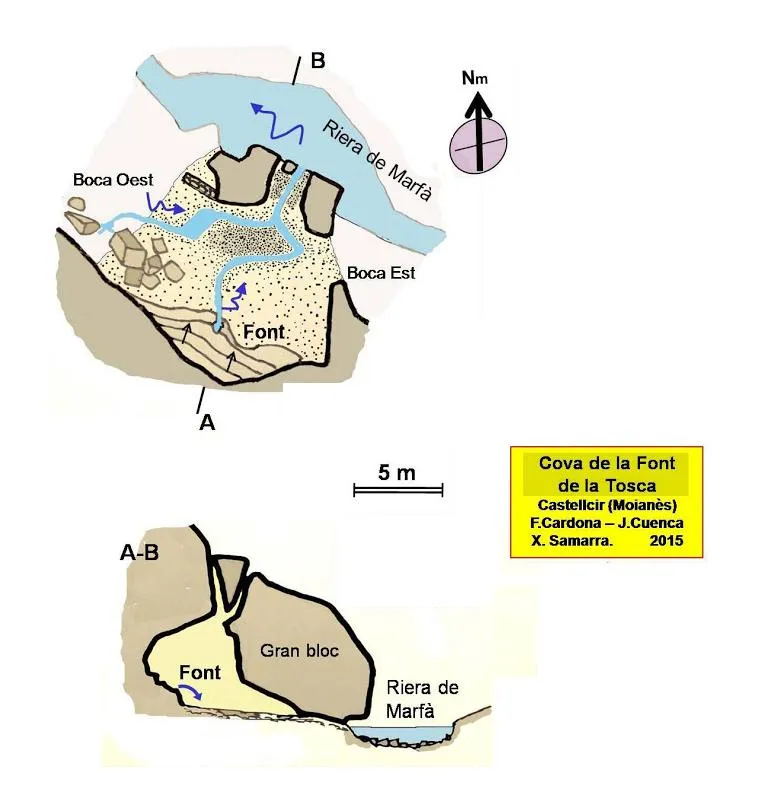
Topographic
Espeleoindex · CC BY-NC 4.0, https://creativecommons.org/licenses/by-nc/4.0/ · Image © its author.
Photos
Espeleoindex · CC BY-NC 4.0, https://creativecommons.org/licenses/by-nc/4.0/ · Image © its author.
Description
Morphology
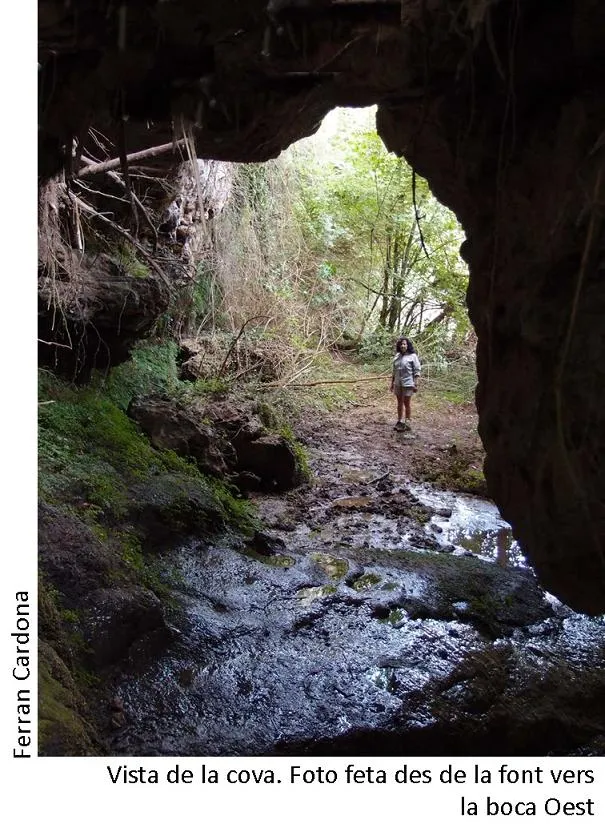
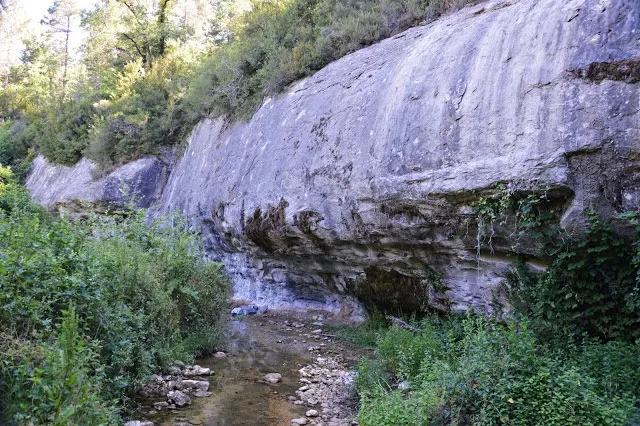
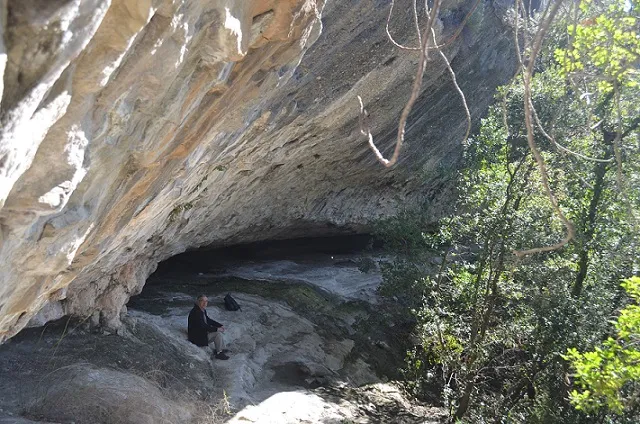
The cave, in fact, is nothing other than the space that has formed between the roca de la Tosca and the cliff on which it rests at its upper part. In this way, one can enter the space from one side and leave from the other. On the side opposite the cliff, the roca de la Tosca is in direct contact with the water of the stream, which here forms a rather large and deep pool.
The main mouth of the cave - the western one - is about 8 metres wide and has a more or less triangular shape. The eastern mouth is notably smaller and one must stoop to pass through it.
Speleothems
The water springs directly from the rock, without a spout, and after passing through a limestone concretion that it has itself created, it continues along the floor of the cave forming meanders until it exits outside.
Hydrology
On the side opposite the cliff, the roca de la Tosca is in direct contact with the water of the stream, which here forms a rather large and deep pool. In fact, during great floods the water can inundate the whole cave.
And in the middle of the cave, in a beautiful corner, is the spring. Wild, generally abundant although the flow can diminish considerably in summer. The water springs directly from the rock, without a spout, and after passing through a limestone concretion that it has itself created, it continues along the floor of the cave forming meanders until it exits outside. And it does so not through one of the two mouths, but through the low-ceilinged space that remains between the rock and the floor, draining directly into the pool that the stream forms here. In rainy periods, other streams can form there, as there are other temporary springs around the mouth.
Progression
In this way, one can enter the space from one side and leave from the other. The eastern mouth is notably smaller and one must stoop to pass through it.
Other details
Around the main entrance some low stretches of stone wall are still preserved, but at another time there were other walls, as can be deduced from the observation of old photos. We do not know the purpose of these walls (to make stone benches?, to make an enclosure?).
History
Known since ancient times, as the postcards by the photographer Lucien Roisin made in 1913 already attest. The area was rehabilitated in 2015. Currently the floor of the cave is a muddy mess and the vegetation grows luxuriantly right up to the mouth, giving a somewhat neglected appearance. When it was much visited, in times past, the cave seemed cared for and would surely have been more welcoming.
User Comments (0)
No comments yet.
Be the first to share your experience!
Registered Explorations (0)
No explorations registered yet.
Register your visit to this cave!
Bibliography
- Totes les dades, topografia i fotografies han estat extretes del blog de Jordi de Valles (cavitatsdecatalunya.blogspot.com.es) (Apunt del 1-10-2015). Autors fitxa: Ferran Cardona (ECG);- Josep Cuenca (GEB);Xavier Samarra (GEB); Carme Bañolas.
Nearby caves


Source: Espeleoindex (espeleoindex.com), modified. CC BY-NC 4.0, https://creativecommons.org/licenses/by-nc/4.0/