
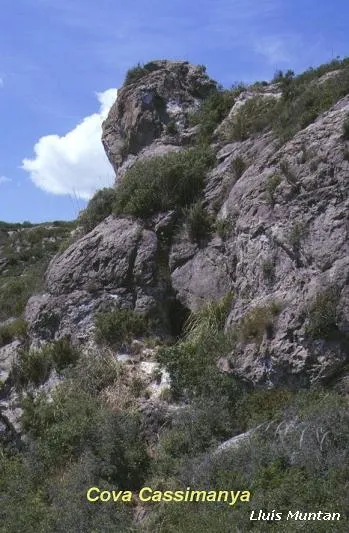
Cova Cassimanya
Coveta de 18 metres de recorregut a Begues
EspeleoWorld
Cova Cassimanya
Coveta de 18 metres de recorregut a Begues
Begues · Baix Llobregat
Length: 18 m · Depth: 5 m
Updated record
https://espeleoworld.com/en/c/cova-cassimanya
Information can change. Always verify coordinates, access, weather, and cave conditions before setting out.
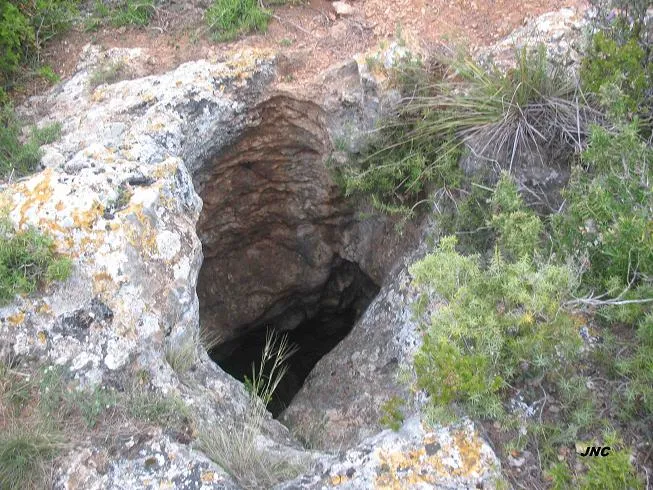
An 18-metre-long coveta in Begues, formed by a single elliptical chamber measuring 13 metres along its longest axis and 5 metres along the transverse axis.
Topographic
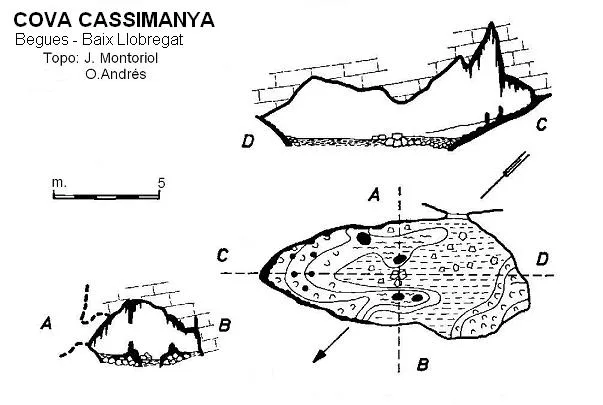
Espeleoindex · CC BY-NC 4.0, https://creativecommons.org/licenses/by-nc/4.0/ · Image © its author.
Photos
Espeleoindex · CC BY-NC 4.0, https://creativecommons.org/licenses/by-nc/4.0/ · Image © its author.
Description
Morphology
Made up of a single chamber, elliptical in plan and measuring 13 metres along its longest axis and 5 metres along the transverse axis. At the NE end of the hall there is a small vault that rises to a height of 5 metres.
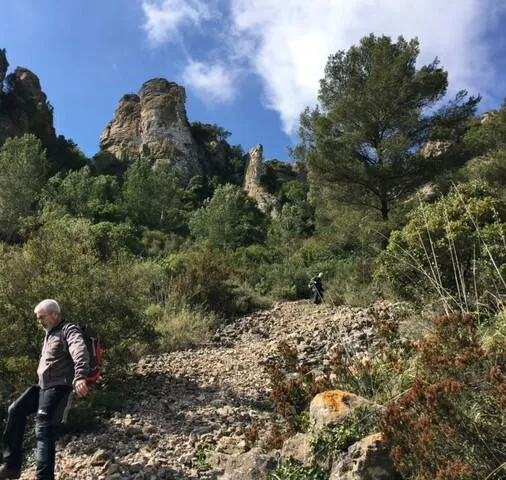
It is a periglacial edge cavity, parallel to the crag, on which a normal karstic action was superimposed. The opening of the entrance is due to the degradation of the crag, which, as it retreated, intersected with the preformed cavity.
Speleothems
In general there are few reconstructive forms, except in the area of the raised vault where the chemolithogenic process is highly evolved.
History
The first speleological exploration was carried out by N. Font i Sagué on 20 July 1898. On that first visit he already recorded its archaeological interest with the discovery of human and ceramic remains. It has subsequently been the subject of interesting archaeological work.
User Comments (0)
No comments yet.
Be the first to share your experience!
Registered Explorations (1)
Exploration date: September 28, 2025
Bibliography
Montoriol, J. (1964).- “Estudio de las formas cársticas hipogeas desarrolladas en los bordes del Polje de Begues (Macizo de Garraf, Barcelona)” Speleon Tomo XV (1-4): 3-38. Universidad de Oviedo.
Nearby caves
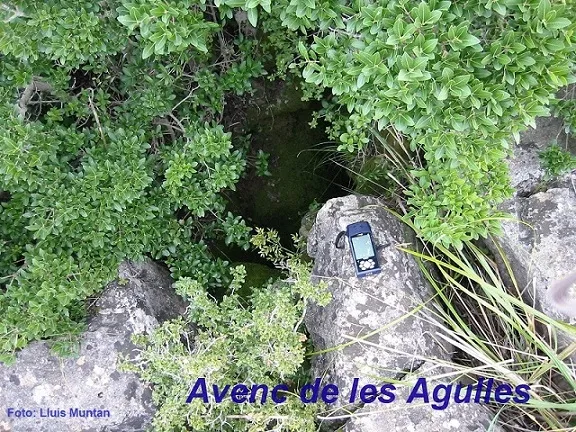
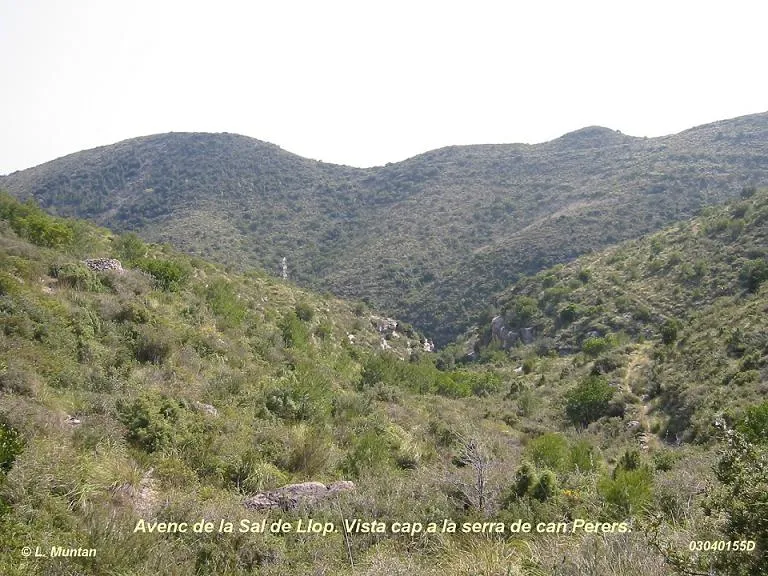


Source: Espeleoindex (espeleoindex.com), modified. CC BY-NC 4.0, https://creativecommons.org/licenses/by-nc/4.0/