
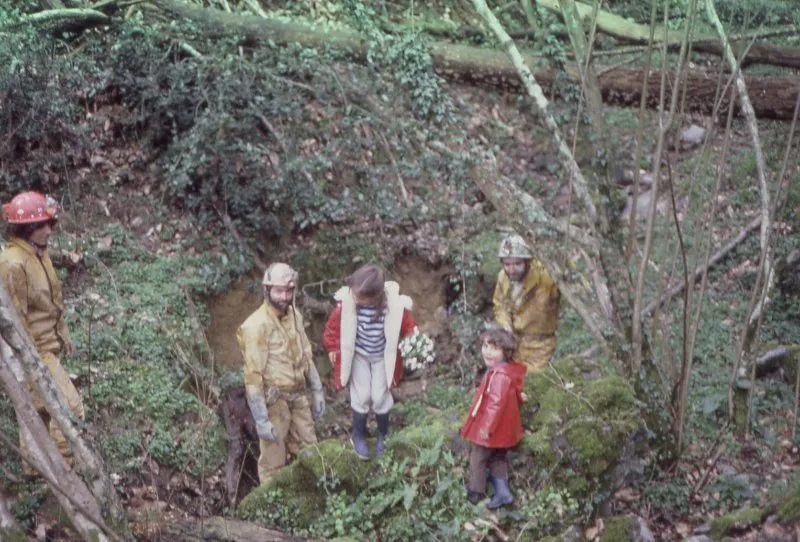
Meandro de Calero
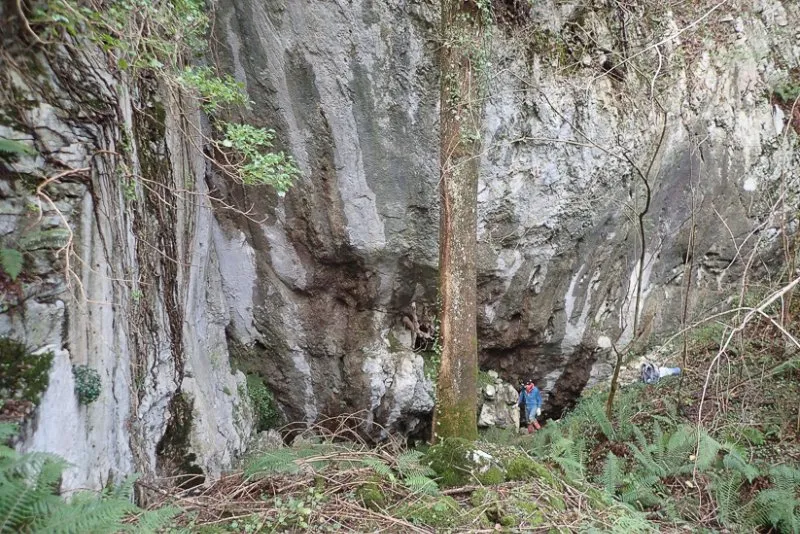
Entrance now filled in, in a small doline in the vallon d'Ancillo, whose initial drain, about a hundred metres long, is lost in an impassable conduit.
EspeleoWorld
Meandro de Calero
Entrance now filled in, in a small doline in the vallon d'Ancillo, whose initial drain, about a hundred metres long, is lost in an impassable conduit.
Ruesga
Länge: 100 m · Tiefe: 15 m
Aktueller Datensatz
https://espeleoworld.com/de/c/meandro-de-calero-ruesga
Informationen können sich ändern. Koordinaten, Zugang, Wetter und Höhlenbedingungen vor dem Aufbruch immer prüfen.
Ungefähre Lage: Für diese Höhle werden weder Karte noch Koordinaten gedruckt. Die Quelle kennzeichnet diese Eingangsposition als nicht verifiziert.
Entrance now filled in, in a small doline in the vallon d'Ancillo, whose initial drain, about a hundred metres long, is lost in an impassable conduit.
Topografie
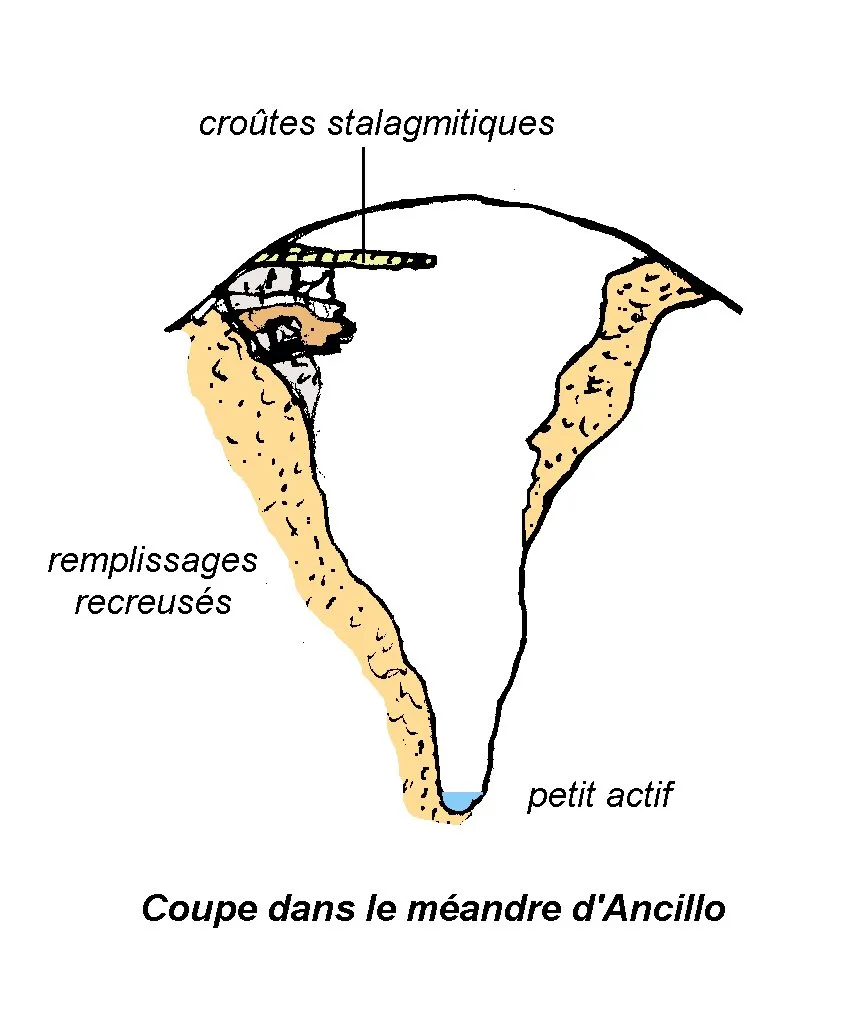
© S.C.Dijon (G. Simonnot) · CC BY-NC-SA (version not stated by the source), https://www.karsteau.org/karsteau/index.php · Karsteau: Coupe schématique dans le méandre · https://www.karsteau.org/karsteau/recherche/entree/recherche_entree.php?entree=22481
Fotos
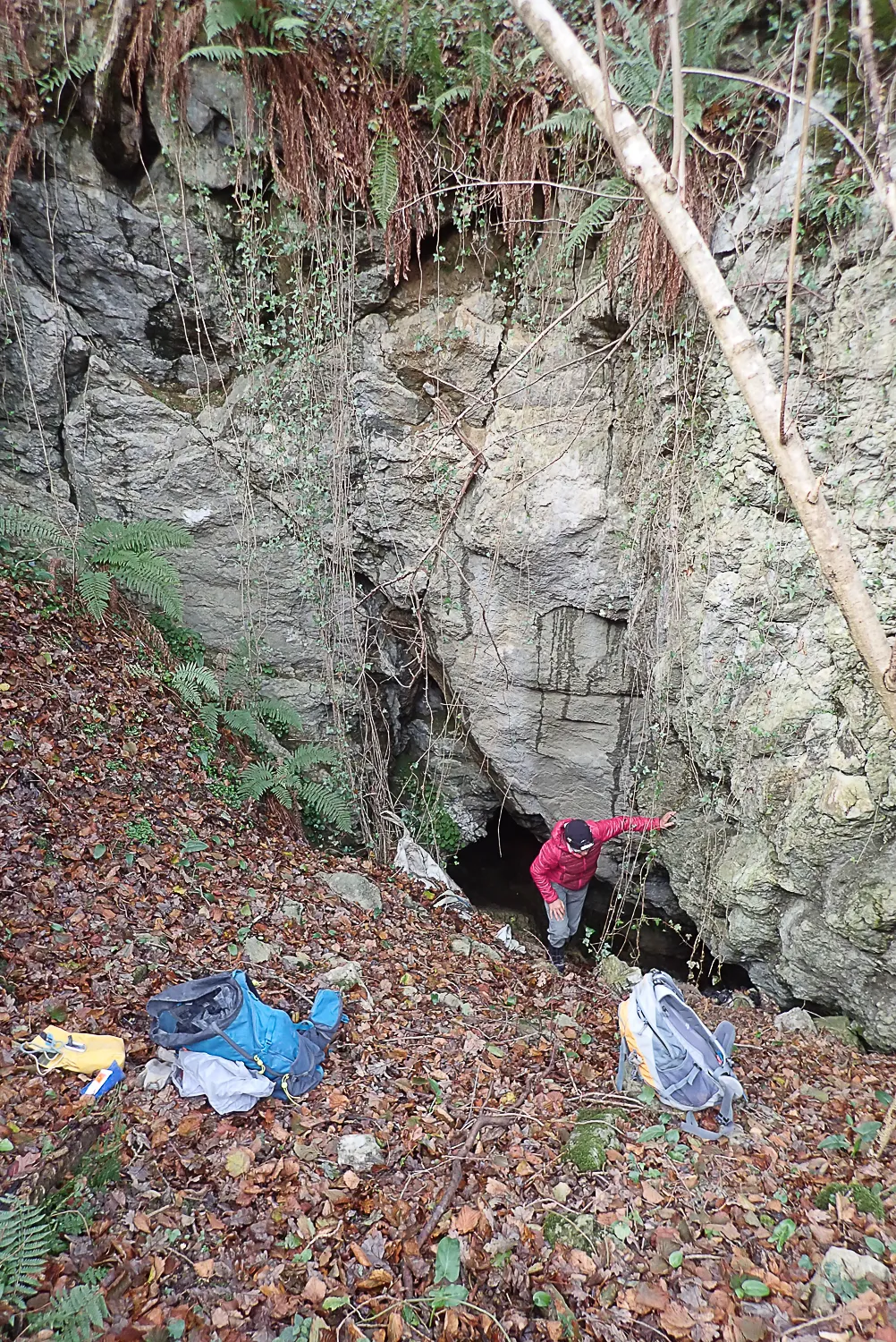
© Muriel Simonnot · CC BY-NC-SA (version not stated by the source), https://www.karsteau.org/karsteau/index.php · Karsteau: Meandro de Calero, entrada · https://www.karsteau.org/karsteau/recherche/entree/recherche_entree.php?entree=22481
Beschreibung
Morphologie
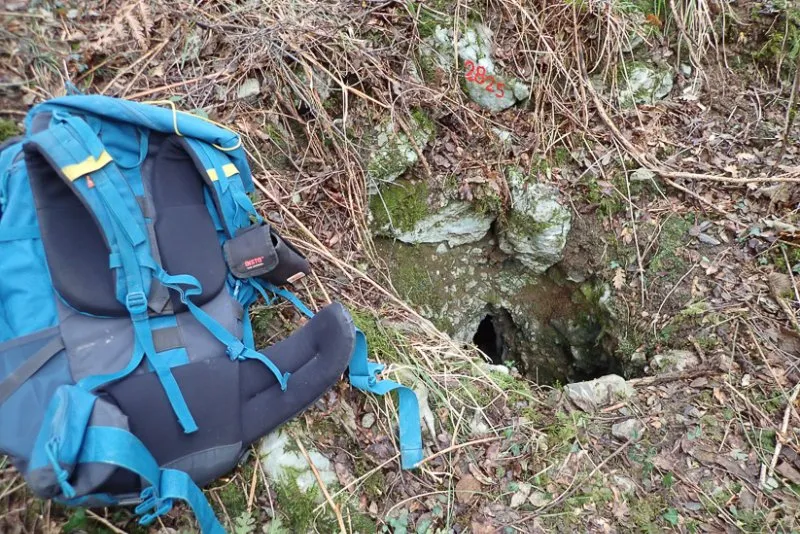
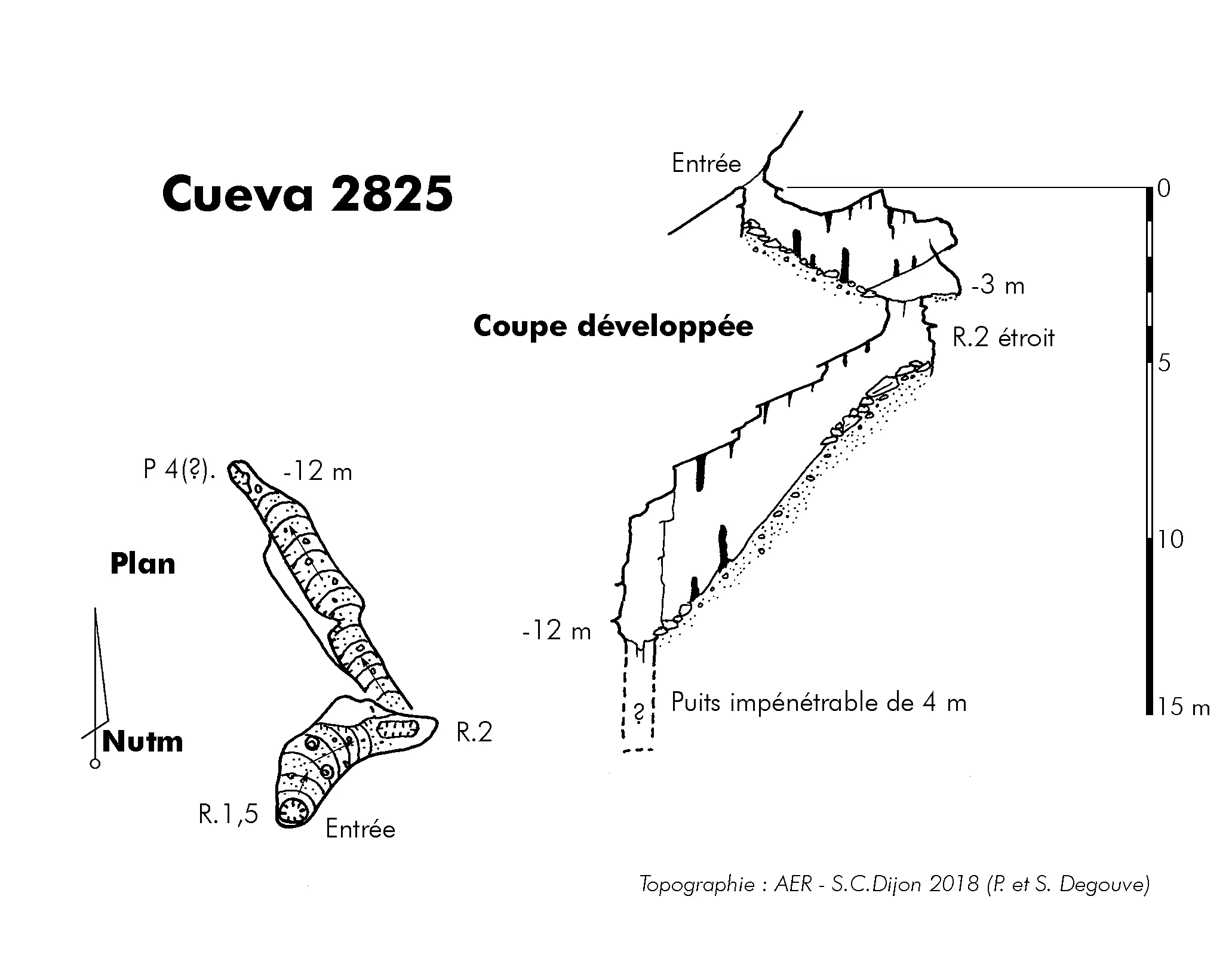
The entrance, dug in the earth, has partly disappeared owing to the fall of an old oak right in the middle of the doline. At present (11/2018), only tiny draughts remain, which would need enlarging to find the initial drain again. This drain, about a hundred metres long, consists of a meander interspersed with small steps (2, 3 and 2 m). After its confluence with another meander, it ends in a chamber due to the presence of a well-marked fracture. Further on, it is lost in an impassable conduit after receiving 2 other small tributaries on the left bank. Large fillings are visible throughout the cavity.
Hydrologie
During exploration, the stream's flow was estimated at 1 or 2 l/s.
Very weak draught of aspirating air reported during the 1986 exploration. By contrast, we detected no air movement in the draughts noted in November 2018.
Spring: Fuente Iseña?
Geschichte
The cavity was discovered and explored by the S.C. Dijon on 3 April 1986 (the Degouve and Simonnot families).
Benutzerkommentare (0)
Noch keine Kommentare.
Seien Sie der Erste, der seine Erfahrung teilt!
Registrierte Erkundungen (0)
Noch keine Erkundungen registriert.
Registrieren Sie Ihren Besuch in dieser Höhle!
Höhlen in der Nähe


Quelle: Karsteau (Fédération Française de Spéléologie et Canyon) (www.karsteau.org), verändert. CC BY-NC-SA (version not stated by the source), https://www.karsteau.org/karsteau/index.php Karsteau (Fédération Française de Spéléologie et Canyon) · Text von Karsteau (FFS) contributors · bearbeitet von Espeleoworld (normalisiert, übersetzt); die Bearbeitung steht unter der Lizenz CC BY-NC-SA (version not stated by the source), https://www.karsteau.org/karsteau/index.php · https://www.karsteau.org/karsteau/recherche/entree/recherche_entree.php?entree=22481 · Datenstand 2026