
Grotta di Pizzo Corvo
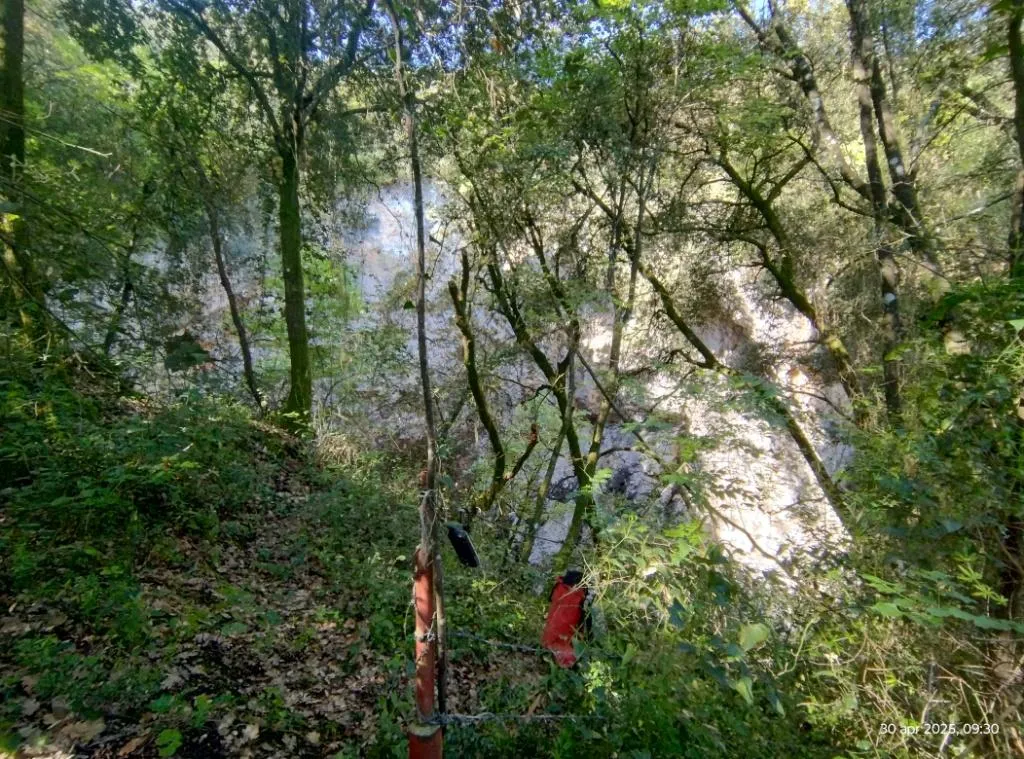
A wide collapse doline with initially vertical walls that flare out toward the bottom, formed by a thick layer of collapse boulders partly colonized by bryophytes.
EspeleoWorld
Grotta di Pizzo Corvo
A wide collapse doline with initially vertical walls that flare out toward the bottom, formed by a thick layer of collapse boulders partly colonized by bryophytes.
Narni
Länge: 48 m · Tiefe: 48 m
Aktueller Datensatz
https://espeleoworld.com/de/c/grotta-di-pizzo-corvo-narni-terni
Informationen können sich ändern. Koordinaten, Zugang, Wetter und Höhlenbedingungen vor dem Aufbruch immer prüfen.
A wide collapse doline with initially vertical walls that flare out toward the bottom, formed by a thick layer of collapse boulders partly colonized by bryophytes.
Topografie
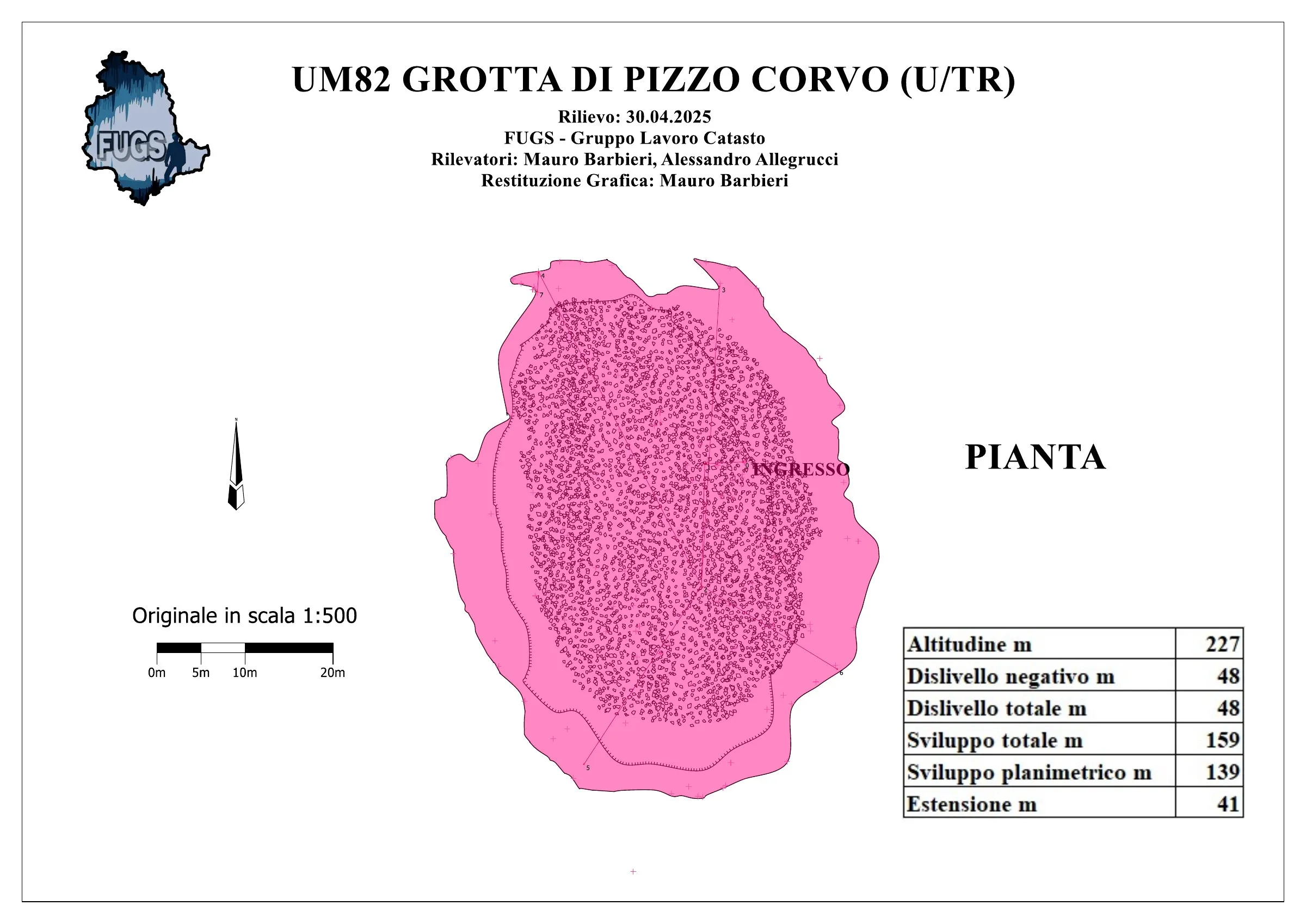

© Mauro Barbieri · CC BY-SA 4.0, https://creativecommons.org/licenses/by-sa/4.0/ · Federazione Umbra Gruppi Speleologici (FUGS), Catasto Speleologico dell'Umbria · https://catasto.fugs.it/index.php?mod=caves&op=view&id=82
Fotos

© Mauro Barbieri · LicenseRef-FUGS-media-per-item · Federazione Umbra Gruppi Speleologici (FUGS), Catasto Speleologico dell'Umbria · https://catasto.fugs.it/index.php?mod=caves&op=view&id=82
Beschreibung
Morphologie
Wide collapse doline that opens with initially vertical walls and then flares out toward the lowest portion. The bottom is formed by a thick layer of collapse boulders partly colonized by a dense population of bryophytes. Trend: vertical.
Geology: MAS Limestone Massiccio - Lower-Upper Jurassic (Sinemurian-Pliensbachian); massive limestones; massive.
Hydrologie
Hydrology and meteorology: no circulation; ambient temperature, although the scarce internal irradiation causes a cooling of the doline.
Befahrung
Traversability: experts only; recommended period: dry period. Progression difficulty: pits.
Rigging: not rigged; rigged on 3 naturals (trees). Clean well of branches and soil as it discharges a lot. Recommended use of ropes or slings "choked" so as to keep the attachment high and reduce rope friction with the ground.
Weitere Einzelheiten
Hazards: dangerous access, landslides/collapses, pits that discharge, other hazards.
Pollution: low intensity, presence of solid plastic debris thrown even since time immemorial.
Geschichte
Notes on the name: it seems that the name derives from the fact that the water is rapidly absorbed, hence the term Corbo = basket.
Bio
Other hypogean fauna: presence of a live toad at the bottom on 28/04/2025.
Hypogean botany: population of bryophytes that colonizes the highest part of the debris cone at the bottom, where solar irradiation reaches.
Benutzerkommentare (0)
Noch keine Kommentare.
Seien Sie der Erste, der seine Erfahrung teilt!
Registrierte Erkundungen (0)
Noch keine Erkundungen registriert.
Registrieren Sie Ihren Besuch in dieser Höhle!
Bibliografie
LIPPI BONCAMBI C. (1950) Sullo stato attuale del Catasto Speleologico dell'Umbria LEMMI G. (1958) Note di aggiornamento del Catasto Speleologico dell'Umbria LEMMI G. & COLETTI G. (1961) Elenco catastale delle grotte dell'Umbria ANONIMO (1962) Attività del Gruppo Grotte dell'Istituto di Geologia dell'Università di Perugia
Höhlen in der Nähe
Quelle: Catasto Cavità Umbria (Federazione Umbra Gruppi Speleologici, FUGS) (catasto.fugs.it), verändert. LicenseRef-FUGS-no-licence-stated Federazione Umbra Gruppi Speleologici (FUGS), Catasto Speleologico dell'Umbria · https://catasto.fugs.it/index.php?mod=caves&op=view&id=82 · Datenstand 2025 · Quelle: Catasto Cavità Umbria (Federazione Umbra Gruppi Speleologici, FUGS) (catasto.fugs.it), verändert. LicenseRef-FUGS-media-per-item Federazione Umbra Gruppi Speleologici (FUGS), Catasto Speleologico dell'Umbria · Datenstand 2025