
Pozzicola
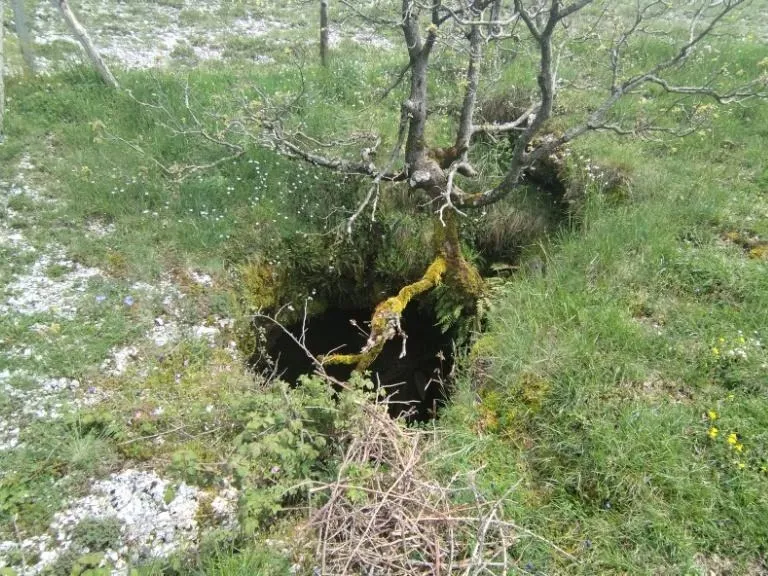
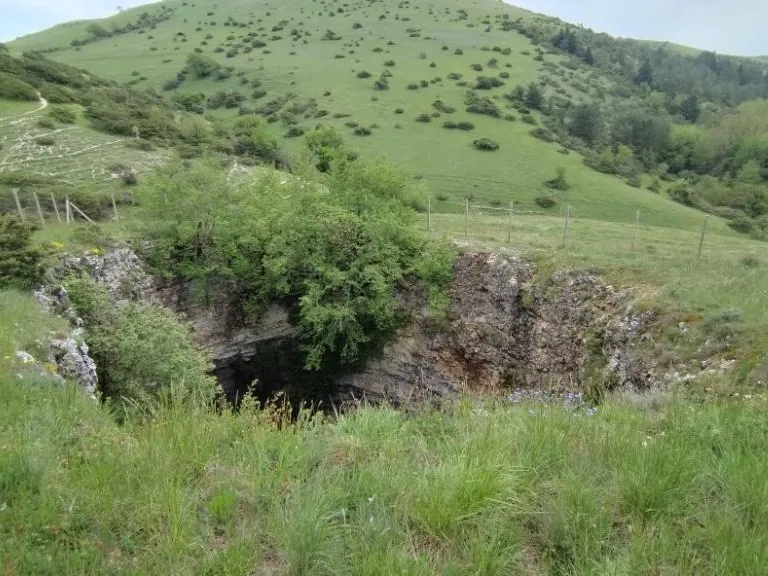
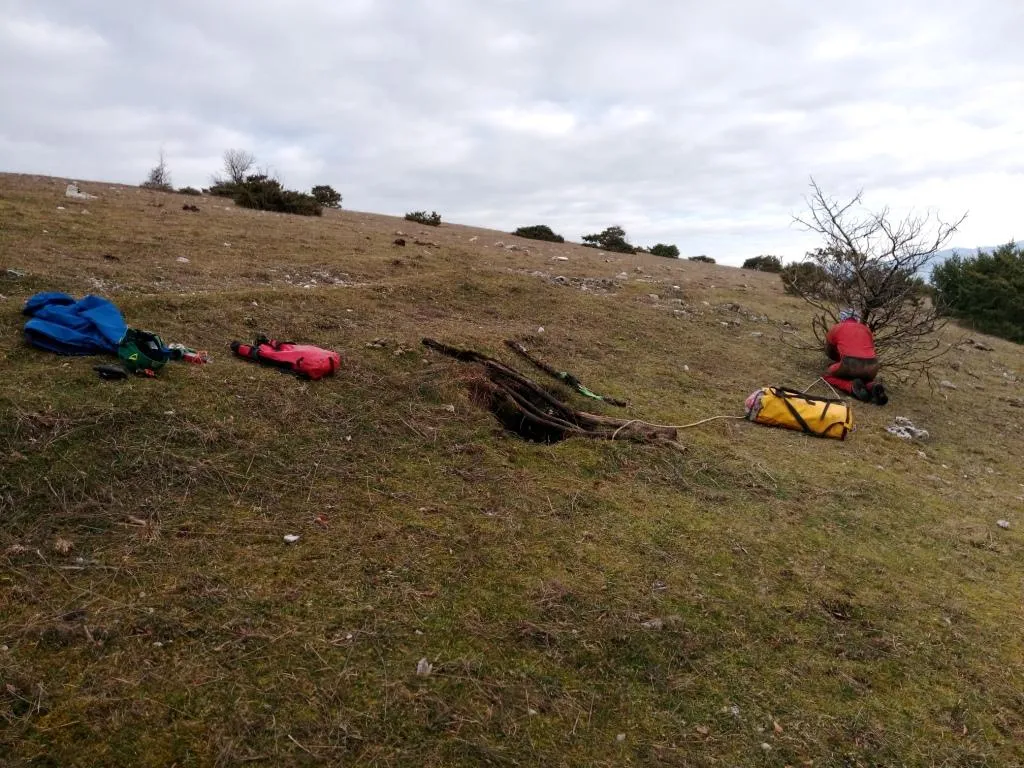
Bell-shaped pit about 8 m deep, with a predominantly vertical trend, bounded by a fence at its entrance.
EspeleoWorld
Pozzicola
Bell-shaped pit about 8 m deep, with a predominantly vertical trend, bounded by a fence at its entrance.
Spoleto
长度: 11 m · 深度: 8 m
最新资料
https://espeleoworld.com/zh/c/pozzicola-spoleto-perugia
信息可能会变化。出发前请务必核对坐标、通行情况、天气和洞穴状况。
Bell-shaped pit about 8 m deep, with a predominantly vertical trend, bounded by a fence at its entrance.
照片
© Mauro Barbieri · LicenseRef-FUGS-media-per-item · Federazione Umbra Gruppi Speleologici (FUGS), Catasto Speleologico dell'Umbria · https://catasto.fugs.it/index.php?mod=caves&op=view&id=4
描述
形态
Bell-shaped pit about 8 m deep. Trend: predominantly vertical. Entrance: cavity bounded by a fence at its entrance, about 2 metres in diameter, with a tree usable for the descent.
水文
Hydrology and meteorology: no circulation; no airflow was detected at the entrance - 2018.
行进路线
Traversability: demanding; recommended period all year round. Rigging: temporary. Progression difficulty: shafts. Hazards: dangerous access.
其他详情
Geology: MAI Maiolica - Upper Jurassic-Lower Cretaceous (Tithonian-Aptian); stratified micritic limestones; stratified; see report by Famiani & Cardinali - 2018. The cavity formed through the combined effect of the tectonic system that guided the displacements and primary fractures in the limestone formation on which the karst action was established, followed by a gravitational collapse of the vaults with the related accumulation of debris on the bottom.
历史
Notes on the name: referred to by Lippi Boncambi as Voragine Pozzicula in the 1950 Cadastral List.
生物
Other hypogean fauna: troglobitic Carabid beetle: Duvalius consortii Magrini & Degiovanni, 2006; troglobitic Carabid beetle: Duvalius andreuccii Magrini & Vanni, 1984. Bait trapping revealed the presence of two specialized troglobitic species. Studies and monitoring: entomological.
用户评论 (0)
暂无评论。
成为第一个分享体验的人!
已记录的探索 (0)
暂无探索记录。
记录您对这个洞穴的访问!
参考文献
LOTTI B. (1902) Sulla costituzione geologica del gruppo montuoso di Amelia VINASSA DE REGNY P. (1906) Appunti di geologia Umbra PRINCIPI P. (1913) Secondo contributo allo studio dei fenomeni carsici dell'Umbria (Catena dei Monti Martani) LOTTI B. (1917) Il gruppo montuoso del Monte Martano LOTTI B. (1926) Descrizione geologica dell'Umbria MONTANARI R. (1940) I Monti Martani LIPPI BONCAMBI C. (1941) La pedologia della Catena Martana (Umbria) con alcune osservazioni sul fenomeno carsico di essa LIPPI BONCAMBI C. (1950) Sullo stato attuale del Catasto Speleologico dell'Umbria LEMMI G. (1958) Note di aggiornamento del Catasto Speleologico dell'Umbria LEMMI G. & COLETTI G. (1961) Elenco catastale delle grotte dell'Umbria FAMIANI F. & CARDINALI R. (2018) Esplorazioni Monti Martani Gennaio-Febbraio 2018
附近洞穴

来源:Catasto Cavità Umbria (Federazione Umbra Gruppi Speleologici, FUGS)(catasto.fugs.it),已修改。 LicenseRef-FUGS-no-licence-stated Federazione Umbra Gruppi Speleologici (FUGS), Catasto Speleologico dell'Umbria · https://catasto.fugs.it/index.php?mod=caves&op=view&id=4 · 2025年数据 · 来源:Catasto Cavità Umbria (Federazione Umbra Gruppi Speleologici, FUGS)(catasto.fugs.it),已修改。 LicenseRef-FUGS-media-per-item Federazione Umbra Gruppi Speleologici (FUGS), Catasto Speleologico dell'Umbria · 2025年数据