
Cueva de la Orilla
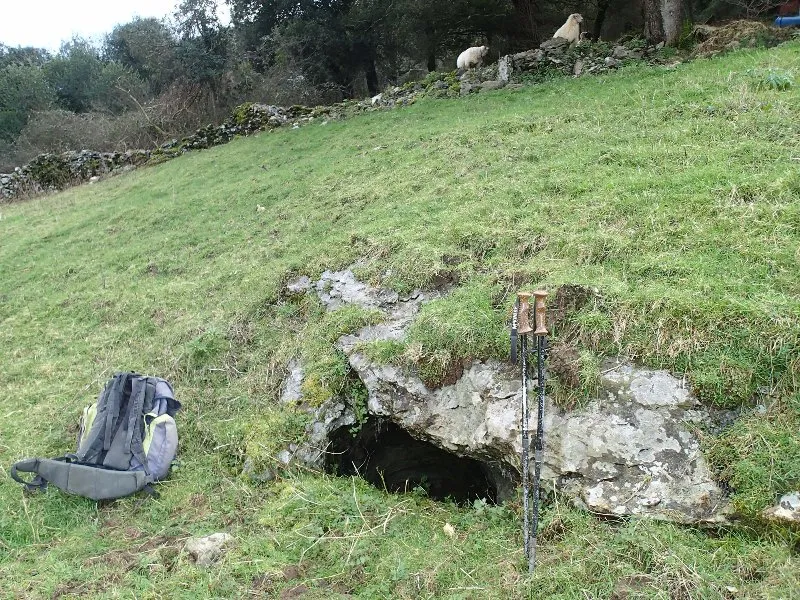
Cueva de la Orilla, a modest entrance of 1.1 x 0.5 m, extends for 46 m with a vertical drop of 7 m to a clay fill that occupies practically the entire passage.
EspeleoWorld
Cueva de la Orilla
Cueva de la Orilla, a modest entrance of 1.1 x 0.5 m, extends for 46 m with a vertical drop of 7 m to a clay fill that occupies practically the entire passage.
Ruesga
长度: 46 m
最新资料
https://espeleoworld.com/zh/c/cueva-de-la-orilla-ruesga
信息可能会变化。出发前请务必核对坐标、通行情况、天气和洞穴状况。
大致位置:此洞穴不打印地图或坐标。 数据来源将该洞口位置标记为未经核实。
Cueva de la Orilla, a modest entrance of 1.1 x 0.5 m, extends for 46 m with a vertical drop of 7 m to a clay fill that occupies practically the entire passage.
地形图
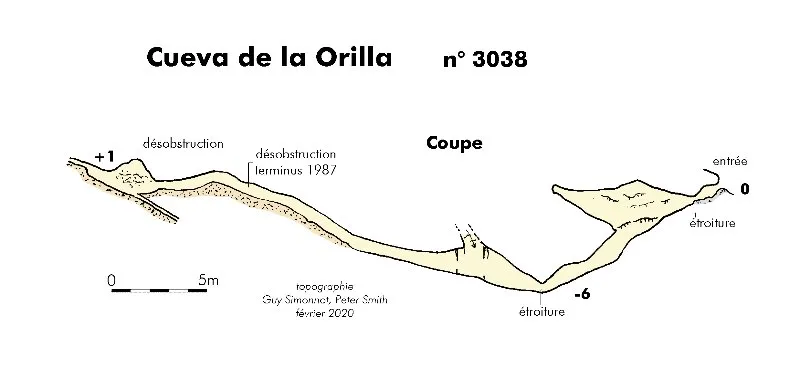
© Simonnot · CC BY-NC-SA (version not stated by the source), https://www.karsteau.org/karsteau/index.php · Karsteau: Topographie de la cueva 3038 - Coupe · https://www.karsteau.org/karsteau/recherche/entree/recherche_entree.php?entree=27333
照片
© G. Simonnot · CC BY-NC-SA (version not stated by the source), https://www.karsteau.org/karsteau/index.php · Karsteau: Cueva de la Orilla. Entrée · https://www.karsteau.org/karsteau/recherche/entree/recherche_entree.php?entree=27333
描述
形态
The entrance, modest (1.1 x 0.5 m), is at the foot of a very small limestone step running across the meadow. Just after the initial descending opening, a dug-out squeeze (1987) leads to a large inclined fissure forming a step and leading quickly to a low passage and the lowest point of the cave (-6). The passage then rises, first gently and then abruptly (chute), occupied by a substantial deposit of fine varved clay. After the 1987 terminus opened in the terrigenous plug comes a more or less subhorizontal section at about the altitude of the entrance. At the end, the fill occupies practically the entire passage and the absence of airflow does not encourage continuing tedious work.
Development: 46 m; vertical drop: 7 m.
洞穴次生沉积物
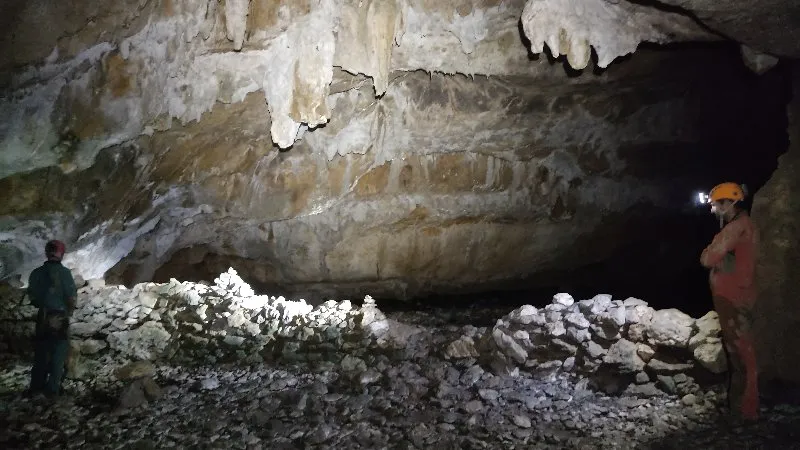
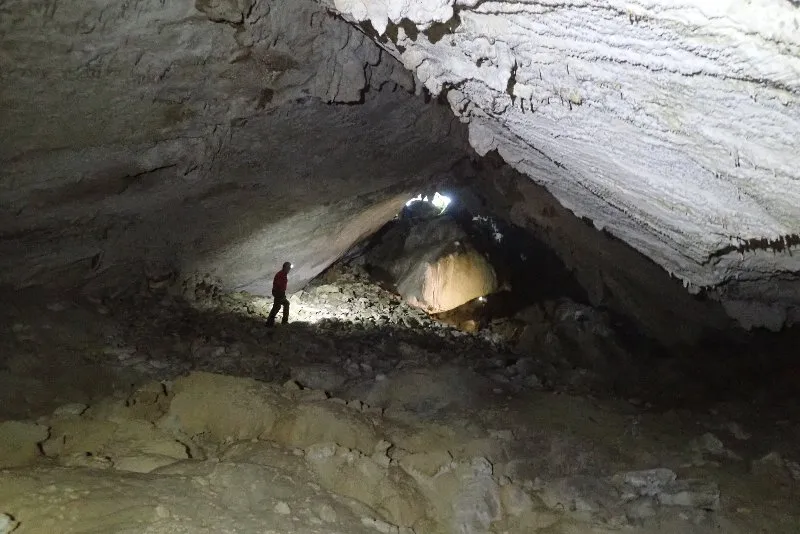
The beautiful vaults with erosion forms and the classic fine clay deposits are the evidence of an ancient flooded zone.
行进路线
Exploration history: 8 September 1964: Claude Mugnier spotted the entrance opening and noted the existence of a "shaft" beyond. 28 August 1987: the cave was explored for 34 m up to the clay chute by Guy and Maxime Simonnot (4 years old!) and then fell into oblivion. 15 February 2018: after several unsuccessful searches, the cave was found again and revisited more than 30 years later (Guy Simonnot). 3 June 2019: a dig in the substantial clay fill allowed progress of 7 m to a passage requiring a little rock to be broken. The survey was made (Guy Simonnot and Peter Smith). Sunday 16 February 2020: the narrow passage was opened and gives access over 5 m to the terminal "chamber" (Guy Simonnot and Peter Smith).
其他详情
The level of excavation (Z = 160 m) is probably more recent than that of the cuevas de la Sierra and de la Cañuela, which are higher and nearby.
Survey: Spéléo-Club de Dijon 2019-2020.
Presumed spring: ?
用户评论 (0)
暂无评论。
成为第一个分享体验的人!
已记录的探索 (0)
暂无探索记录。
记录您对这个洞穴的访问!
附近洞穴


来源:Karsteau (Fédération Française de Spéléologie et Canyon)(www.karsteau.org),已修改。 CC BY-NC-SA (version not stated by the source), https://www.karsteau.org/karsteau/index.php Karsteau (Fédération Française de Spéléologie et Canyon) · 文本作者:Karsteau (FFS) contributors · 由 Espeleoworld 改编(规范化、翻译);改编内容依据 CC BY-NC-SA (version not stated by the source), https://www.karsteau.org/karsteau/index.php 许可 · https://www.karsteau.org/karsteau/recherche/entree/recherche_entree.php?entree=27333 · 2026年数据