
Cueva de El Haza
EspeleoWorld
Cueva de El Haza
Cueva de El Haza is a karst system in the Collados del Asón Natural Park, in Soba, with a development of between 6,042 and 6,242 m according to the sources consulted.
Ramales de la Victoria
最新资料
https://espeleoworld.com/zh/c/cueva-de-el-haza-ramales-de-la-victoria
信息可能会变化。出发前请务必核对坐标、通行情况、天气和洞穴状况。
Cueva de El Haza is a karst system in the Collados del Asón Natural Park, in Soba, with a development of between 6,042 and 6,242 m according to the sources consulted.
描述
形态
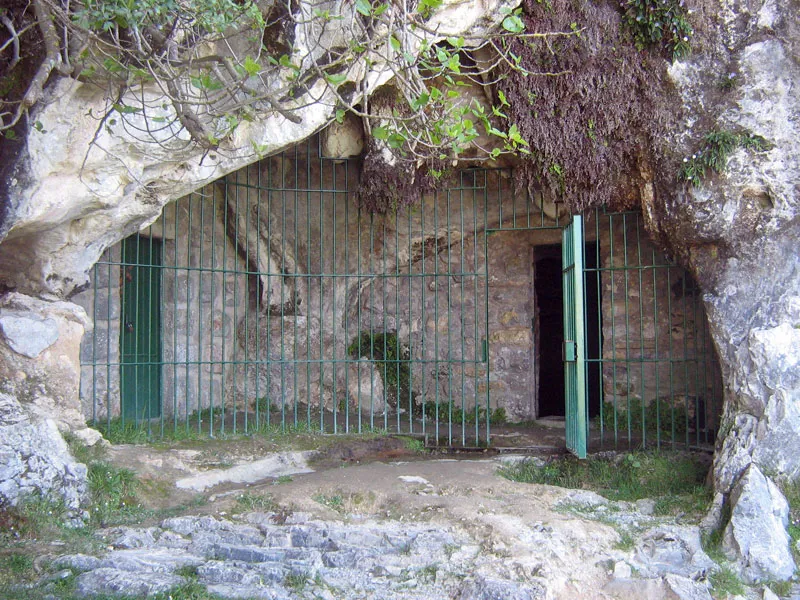
The system has three entrances: the wide rectangular portal of Cueva de la Haza, the pit of about 20 m of the Sumidero de Saco 4 and the small 10 m pit of Torca de la Gigante Roja. The entrance gallery is spacious from the outset, 4-5 m wide, and alternates with narrower meanders, such as the Meandro de los Corales. The watercourse gains volume after the Afluente del Portillón.
The active lower galleries are cut into a substrate of sandstones and marls: a compact sandstone slab of 0.7 m forms ceilings, balconies and bridges, while 3 m of soft dark marls rich in carbonates appear heavily eroded. The main entrance opens at the foot of a fault. Regionally, the Asón karst develops in a thick folded succession of limestones, sandstones, marls and siltstones from the Barremian to the upper Albian (Socueva anticline).
水文
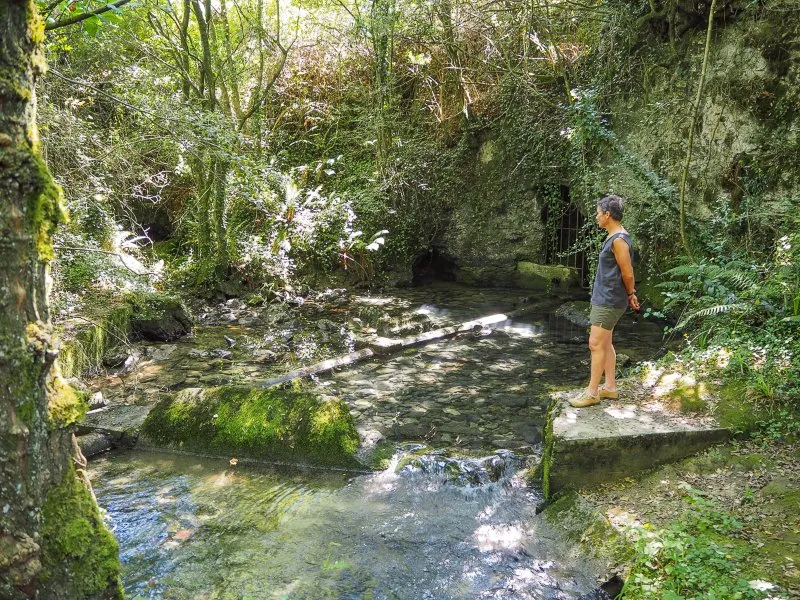
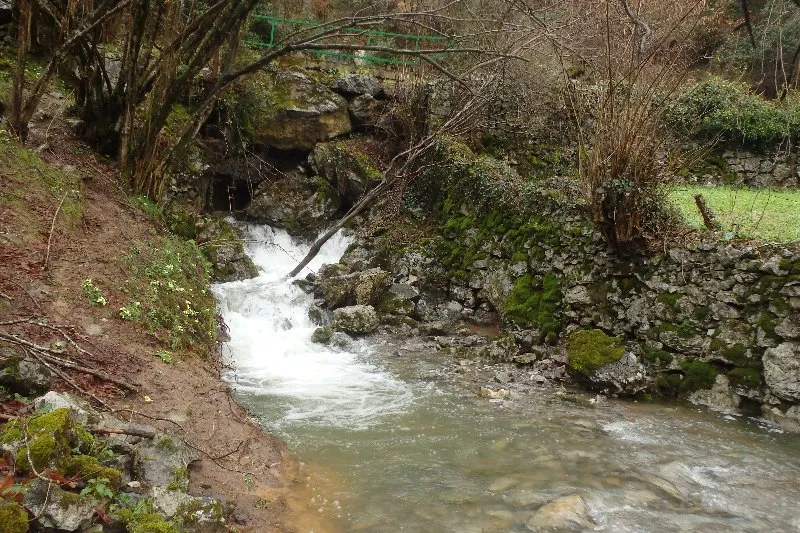
The cave drains to the northwest and the southeast, and its waters resurge at the Cascada del Asón, the spring that gives rise to the Asón river.
其他详情
In the fills of the Portillón galleries appear limonite nodules the size of an egg or a fist. In the Galería Colateral, bones were found in 1972 that suggested to the explorers that they were not the first visitors. Despite more than ten years of searches, no physical connection has been found with the adjacent system of Torca de Hoyo Grande.
历史
In 1964, C. Mugnier, of the Spéléo-Club de Dijon, located the cave on 25 and 29 July and began its exploration. In 1972, under the direction of P. Castin, the same club overcame the boulder chaos at the entrance and explored about 2 km to the Afluente de la Cascada, with 1,050 m surveyed. In 1973 the French group surveyed 2,350 m, ascended the Afluente de la Cascada (150 m) and the Afluente del Portillón (140 m), and connected the cave with the Sumidero de Saco 4, a second entrance.
In 1974 the P105 was descended and the meander at its base down to the low point of -418 m; the Meandro de las Cúpulas was also explored and the development reached 4,550 m. In 1986, the Spéléo-Club de Dijon, together with the Spéléo-Club de Chablis, discovered the third entrance, Torca de la Gigante Roja, raising the development to 5,318 m, while the depth remained at -418 m. In 1987, new explorations by the Spéléo-Club de Chablis at the base of a P100 brought the development to 5,573 m. In 1988, the Spéléo-Club de Chablis discovered and descended a new interior pit of 102 m to the Meandro de la Visión Crepuscular, bringing the development to 6,042 m.
生物
In the cave, remains of fossil corals up to 1 m long are preserved.
用户评论 (0)
暂无评论。
成为第一个分享体验的人!
已记录的探索 (0)
暂无探索记录。
记录您对这个洞穴的访问!
附近洞穴
包含来自 Grottocenter (Wikicaves)(grottocenter.org)的信息,依据开放数据库许可协议(Open Database License,ODbL 1.0, https://opendatacommons.org/licenses/odbl/1-0/)提供,已修改。 · https://grottocenter.org/ui/entrances/20311 · 2026年数据 · 本文由 Espeleoworld 根据公开资料撰写。再次使用前,请先征得我们的许可。 · 由 Espeleoworld 改编(规范化、翻译);改编内容依据 Our own text, written from public sources. Please ask us before reusing it. 许可 · 2026年数据 · 衍生数据可应要求依据 ODbL 提供: [email protected]