
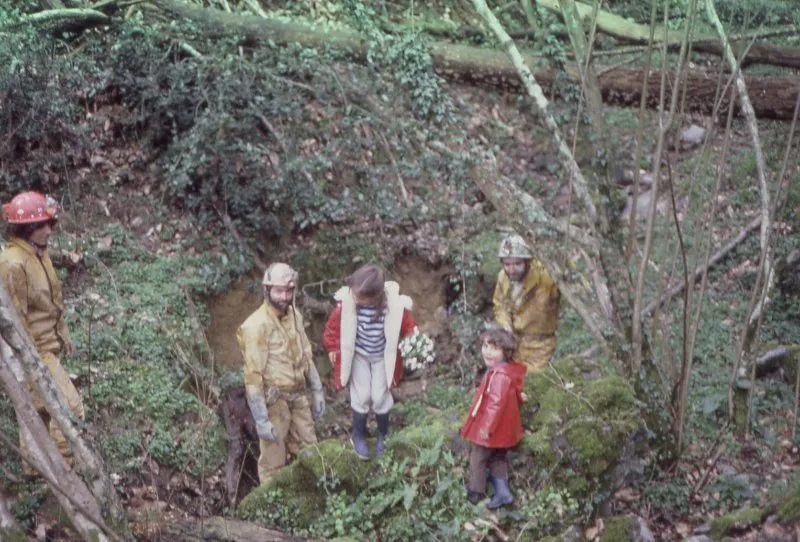
Meandro de Calero
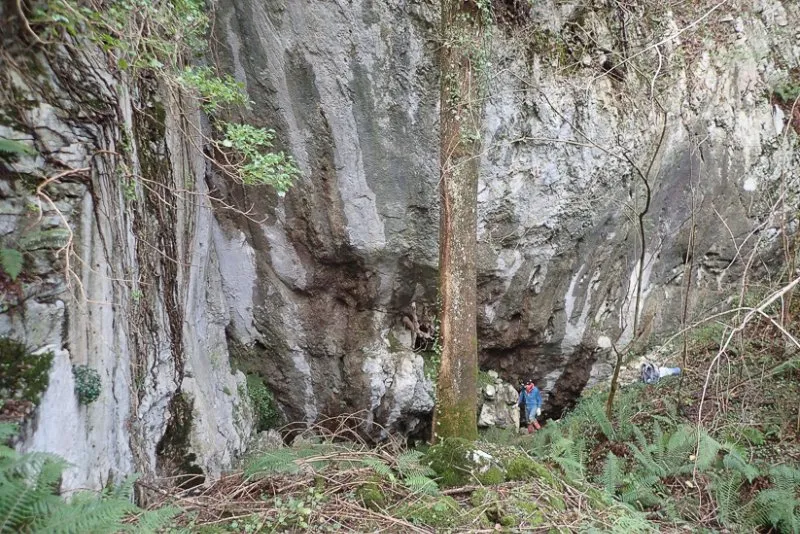
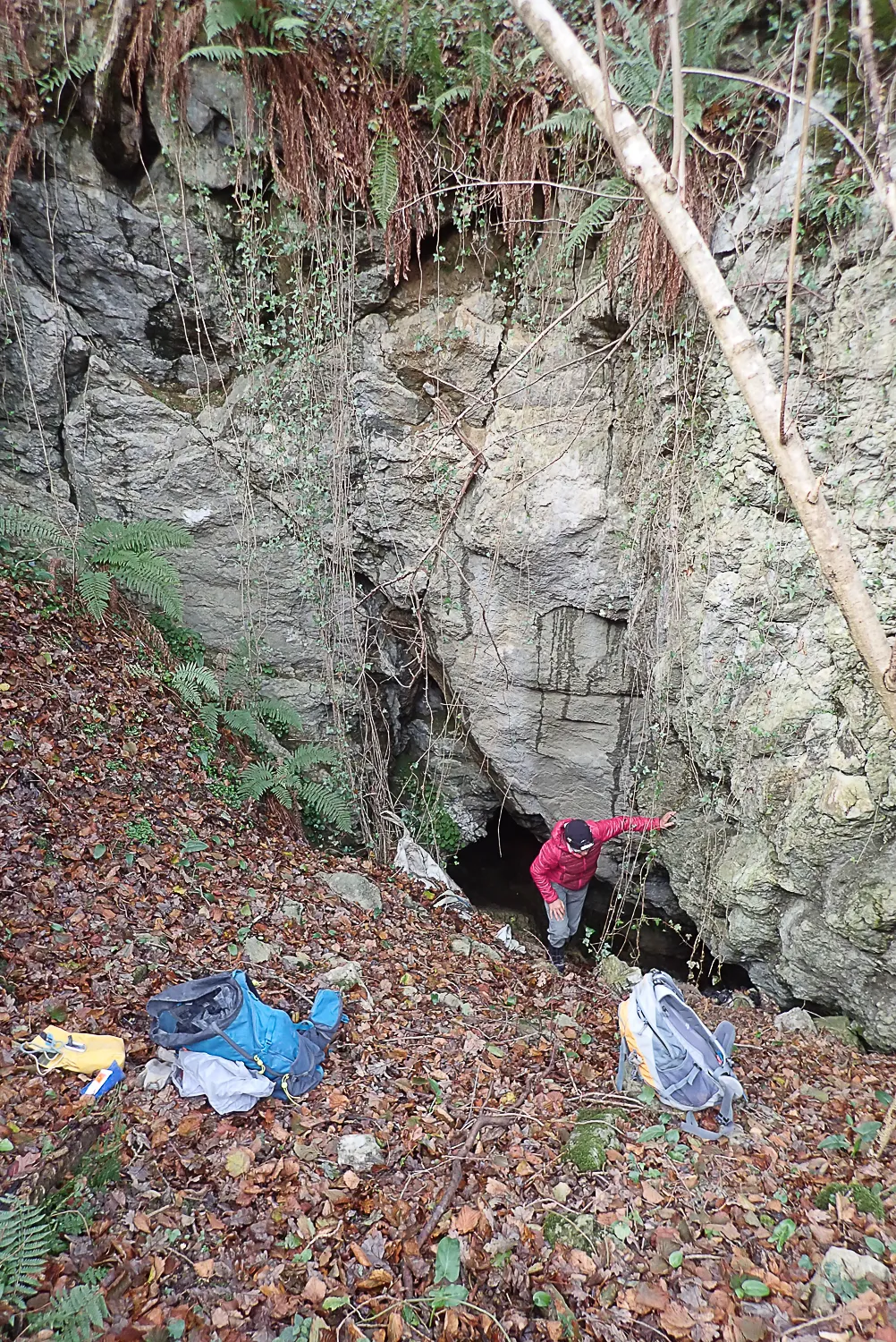
Entrance now filled in, in a small doline in the vallon d'Ancillo, whose initial drain, about a hundred metres long, is lost in an impassable conduit.
EspeleoWorld
Meandro de Calero
Entrance now filled in, in a small doline in the vallon d'Ancillo, whose initial drain, about a hundred metres long, is lost in an impassable conduit.
Ruesga
Длина: 100 m · Глубина: 15 m
Актуальная запись
https://espeleoworld.com/ru/c/meandro-de-calero-ruesga
Информация может меняться. Перед выходом всегда проверяйте координаты, доступ, погоду и состояние пещеры.
Приблизительное местоположение: для этой пещеры карта и координаты не печатаются. Источник помечает положение этого входа как непроверенное.
Entrance now filled in, in a small doline in the vallon d'Ancillo, whose initial drain, about a hundred metres long, is lost in an impassable conduit.
Топография
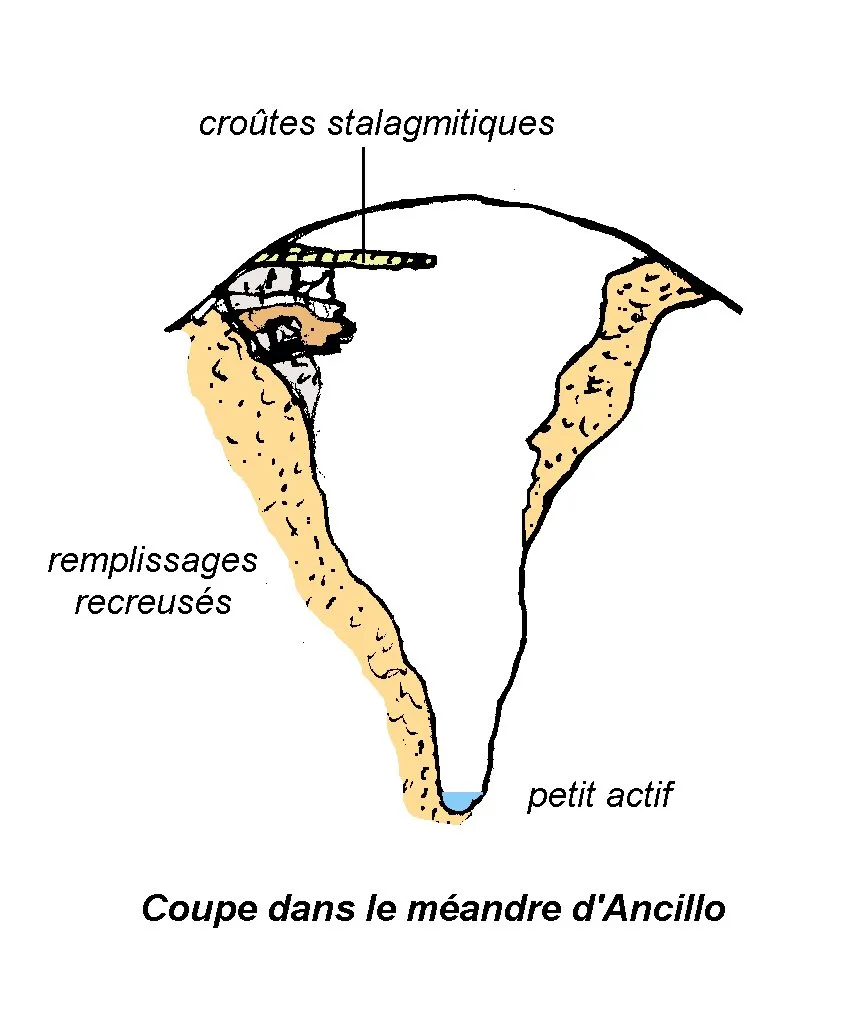
© S.C.Dijon (G. Simonnot) · CC BY-NC-SA (version not stated by the source), https://www.karsteau.org/karsteau/index.php · Karsteau: Coupe schématique dans le méandre · https://www.karsteau.org/karsteau/recherche/entree/recherche_entree.php?entree=22481
Фотографии
© Muriel Simonnot · CC BY-NC-SA (version not stated by the source), https://www.karsteau.org/karsteau/index.php · Karsteau: Meandro de Calero, entrada · https://www.karsteau.org/karsteau/recherche/entree/recherche_entree.php?entree=22481
Описание
Морфология
The entrance, dug in the earth, has partly disappeared owing to the fall of an old oak right in the middle of the doline. At present (11/2018), only tiny draughts remain, which would need enlarging to find the initial drain again. This drain, about a hundred metres long, consists of a meander interspersed with small steps (2, 3 and 2 m). After its confluence with another meander, it ends in a chamber due to the presence of a well-marked fracture. Further on, it is lost in an impassable conduit after receiving 2 other small tributaries on the left bank. Large fillings are visible throughout the cavity.
Гидрология
During exploration, the stream's flow was estimated at 1 or 2 l/s.
Very weak draught of aspirating air reported during the 1986 exploration. By contrast, we detected no air movement in the draughts noted in November 2018.
Spring: Fuente Iseña?
История
The cavity was discovered and explored by the S.C. Dijon on 3 April 1986 (the Degouve and Simonnot families).
Комментарии пользователей (0)
Комментариев пока нет.
Станьте первым, кто поделится своим опытом!
Зарегистрированные исследования (0)
Зарегистрированных исследований пока нет.
Зарегистрируйте свое посещение этой пещеры!
Ближайшие пещеры


Источник: Karsteau (Fédération Française de Spéléologie et Canyon) (www.karsteau.org), с изменениями. CC BY-NC-SA (version not stated by the source), https://www.karsteau.org/karsteau/index.php Karsteau (Fédération Française de Spéléologie et Canyon) · Текст: Karsteau (FFS) contributors · адаптировано Espeleoworld (нормализовано, переведено); адаптация распространяется по лицензии CC BY-NC-SA (version not stated by the source), https://www.karsteau.org/karsteau/index.php · https://www.karsteau.org/karsteau/recherche/entree/recherche_entree.php?entree=22481 · данные на 2026 г.