
Cueva de Llamazares
EspeleoWorld
Cueva de Llamazares
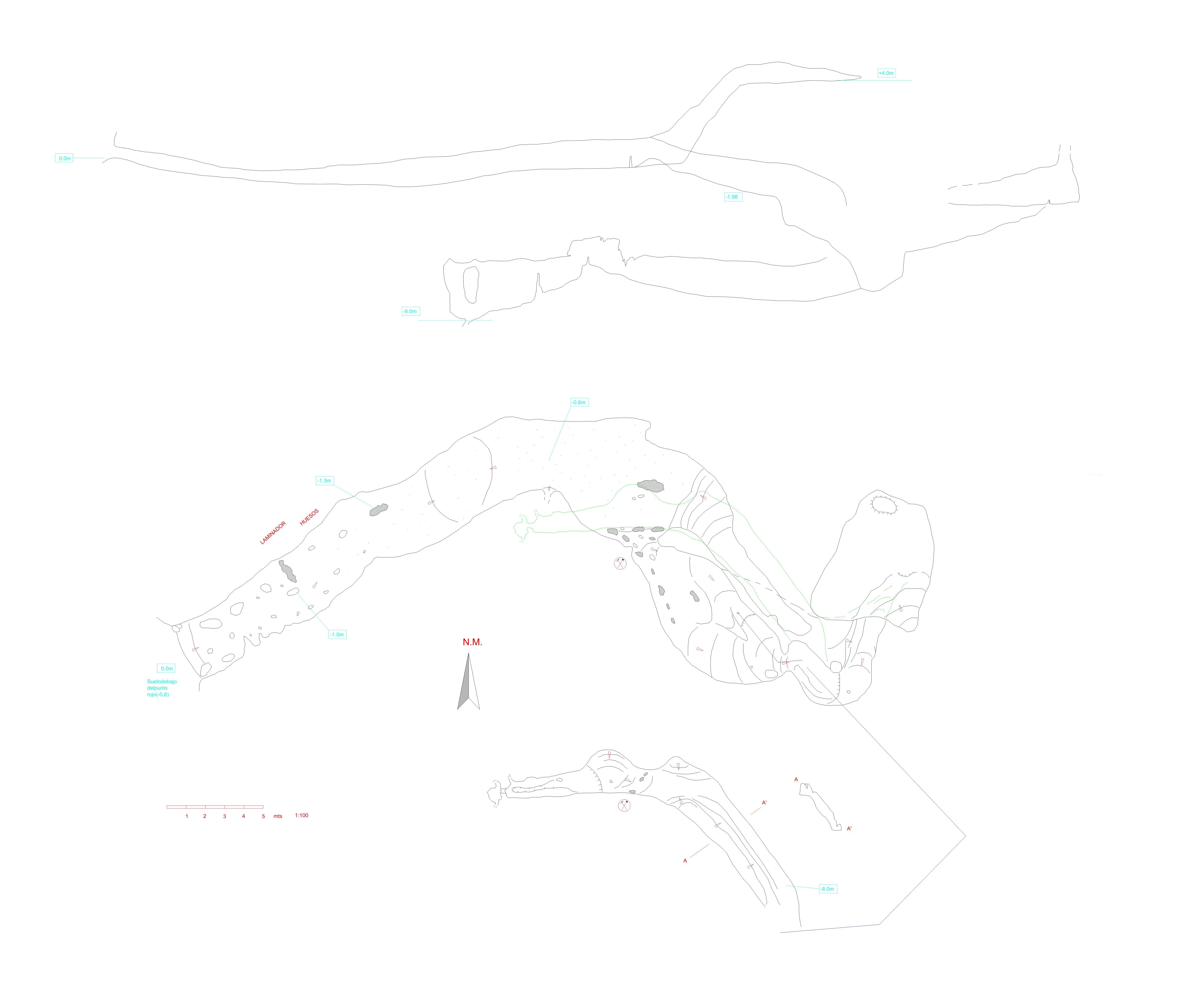
The Cueva de Llamazares is a cave entered through a small triangular entrance 2 m wide and 2 m high, with a main passage shown on tours and a second, smaller, undeveloped parallel passage.
Valdelugueros
Актуальная запись
https://espeleoworld.com/ru/c/cueva-de-llamazares-valdelugueros
Информация может меняться. Перед выходом всегда проверяйте координаты, доступ, погоду и состояние пещеры.
The Cueva de Llamazares is a cave entered through a small triangular entrance 2 m wide and 2 m high, with a main passage shown on tours and a second, smaller, undeveloped parallel passage.
Описание
Морфология
The Cueva de Llamazares is entered through a small triangular entrance, only 2 m wide and 2 m high. The tour shows the main passage of the cave, but there is also a second, parallel passage which is smaller and not developed.
Спелеотемы
The Cueva de Llamazares is famous for an abundance of cave corals. Cave corals are speleothems which form under certain conditions and look like normal corals, hence the name. But they are not real corals, formed by living animals, which build calcite shells and thus form the reef. They are formed by calcium-rich water in the cave depositing limestone in a chemical process.
This cave has numerous fossil corals in the limestone, and depending on the language and the author, both are dubbed "cave coral". So the cave has two types of cave corals, speleothems of that name and fossils of that name.
Прохождение
The full tours involve walking to the cave, visiting the cave, and walking back with some pauses, and some geology along the trail, and take 3 hours. As a result, it is visited by only 4,000 people per year. The cave is closed during rain; the hiking trail to the cave is guessed to be too dangerous during rain.
Другие сведения
The Cueva de Llamazares was named after the nearby village. It is also called Cueva de Coribios or Cueva de Coribos.
There is also an abundance of fossils in the 200 Ma old Jurassic limestones, which were formed as a sediment in an oxygen-rich shallow sea which was full of life. Many fossilized remains can be found in the limestones, but several were freed from the surrounding rock by the formation of the cave. The fossils are presented in the Museo Paleontológico (Paleontological Museum), which was created in the old school house of Llamazares. They have a great collection of over 250 spectacular items, including a 300 Ma old Lepidodendron or giant fern. Most of the local fossils are from the Triassic and Jurassic periods.
Комментарии пользователей (0)
Комментариев пока нет.
Станьте первым, кто поделится своим опытом!
Зарегистрированные исследования (0)
Зарегистрированных исследований пока нет.
Зарегистрируйте свое посещение этой пещеры!
Ближайшие пещеры
Источник: Show Caves of the World (Jochen Duckeck) (www.showcaves.com), с изменениями. CC0 1.0, https://www.showcaves.com/english/TermsOfUse.html Show Caves of the World (showcaves.com), Jochen Duckeck · Текст: Jochen Duckeck (Cueva de Llamazares) · адаптировано Espeleoworld (нормализовано, переведено); адаптация распространяется по лицензии CC0 1.0, https://www.showcaves.com/english/TermsOfUse.html · данные на 2026 г.