
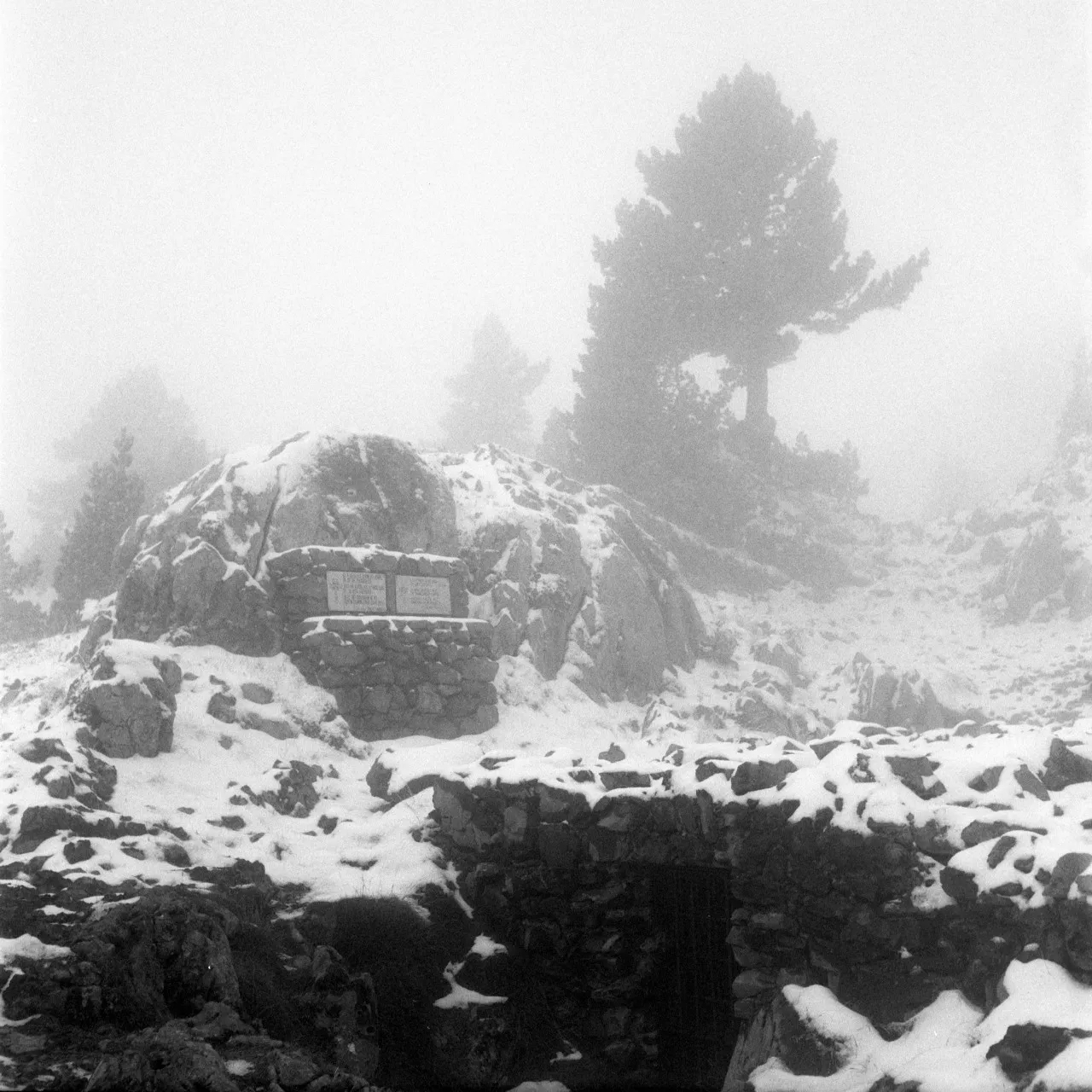
Sima de la Piedra de San Martin
In 1950, a 317-metre vertical shaft named Sima Lepineux was discovered in limestone near the collado de Ernaz, a historic landmark of speleology and of the Sistema de la Piedra de San Martin.
EspeleoWorld
Sima de la Piedra de San Martin
In 1950, a 317-metre vertical shaft named Sima Lepineux was discovered in limestone near the collado de Ernaz, a historic landmark of speleology and of the Sistema de la Piedra de San Martin.
Isaba/Izaba
Sviluppo: 80620 m · Profondità: 1410 m
Scheda aggiornata
https://espeleoworld.com/it/c/sima-de-la-piedra-de-san-martin-isaba-izaba
Le informazioni possono cambiare. Verifica sempre coordinate, accesso, meteo e condizioni della cavità prima di partire.
In 1950, a 317-metre vertical shaft named Sima Lepineux was discovered in limestone near the collado de Ernaz, a historic landmark of speleology and of the Sistema de la Piedra de San Martin.
Foto

© Jacques Bon [email protected] · CC BY-SA 3.0, https://creativecommons.org/licenses/by-sa/3.0/ · Wikimedia Commons · https://commons.wikimedia.org/wiki/File:Lepineux_1280.jpg
Descrizione
Morfologia
The discovered pit is a 317-metre vertical shaft, named Sima Lepineux in tribute to the first speleologist who descended to its bottom. The Sistema de la Piedra de San Martin consists of the following entrances: Gouffre du Pourtet M31, Gouffre du Beffroi SC3, Gouffre Moreau M3, Bassaburuko Leizea D9, Sima SL-19 (Gouffre Pascale), C150 and Pre Hus C50. It includes its famous Sala de La Verna, discovered in 1954.
Idrologia
E.D.F. (the French state electricity company) was interested in the sixties in drilling an artificial tunnel of 830 metres to reach the Sala Verna horizontally, in order to exploit the hydroelectric resources of the water fall of the 80-metre cascade.
Progressione
In 1952, at the base of the shaft, M. Loubens, when he was about ten metres up, tried to light a flare so that Tazieff could take a photo of him; then the clamp that served him as a safety device broke and he fell to the ground, dying there after a long agony. In 1991, in August of that year, the Grupo Espeleológico Mediterráneo carried out the updated rigging of the Pozo Lepineux; in 2010 the Federación Navarra de Espeleología, through the G. E. Otxola, reviewed the state of the 91 rigging on the occasion of the 60th Anniversary of the 1st Expedition.
Altri dettagli
In 1950 Georges Lepineux, Max Cosyns and Occhialini discovered the deep pit by chance. In 1952 Marcel Loubens died, to whom the inscription «Aquí pasó Marcel Loubens los últimos días de su valiente vida» is dedicated, giving rise to one of the most important historical accounts regarding its exploration and rescue in the world of speleology. One cannot speak of the history of speleology without referring to this Sima (Lepineux) as well as to the whole Sistema de la Piedra de San Martin. Since its discovery in 1950 there has been a before and an after in speleology and it has given rise to countless accounts, articles, books etc. Without a doubt it is a landmark in the history of speleology. Pax avant/Paz en adelante.
Storia
1950: discovery by Lepineux, Cosyns and Occhialini. 1951/2: first and second descent and death of Loubens. 1953: Casteret, Lepineux, Balandraux, Epelly, Letrone and Theodor, Sala Verna. 1954: rescue of Loubens. 1954: 1st Exploration of the I.P.V. 1955: 2nd Exploration of the I.P.V. 1956/59: border problem and verdict of the Court of The Hague. 1960: international exploration and IPV. 1961: drilling of the Túnel de la Verna (Electricity). 1962/63: the continuity of the Galería Aranzadi is discovered. 1964: exploration of the Spanish side by the IPV. 1966: exploration by the IPV and teams from Paris. 1972: the Excma. Diputación and the Dirección de Obras Públicas, with an IPV report of 11 September, closure and control of access to the Pozo Lepineux. 1981: chemical analyses. 1984: Depart. Geología y Geoquímica of the Universidad de Madrid. 1991: in August, the Grupo Espeleológico Mediterráneo carried out the updated rigging of the Pozo Lepineux. 2010: the Federación Navarra de Espeleología, through the G. E. Otxola, reviewed the state of the 91 rigging and the 60th Anniversary of the 1st Expedition was celebrated.
Note biospeleologiche
San Martín-Isaba: Aphaenos lubensis, Cabidochensis.
Commenti degli utenti (0)
Nessun commento ancora.
Sii il primo a condividere la tua esperienza!
Esplorazioni registrate (0)
Nessuna esplorazione registrata.
Registra la tua visita a questa grotta!
Grotte vicine
Fonte: Gobierno de Navarra – Catálogo espeleológico de Navarra (datosabiertos.navarra.es), modificato. CC BY 4.0, https://creativecommons.org/licenses/by/4.0/ Gobierno de Navarra · dati aggiornati a 2022