
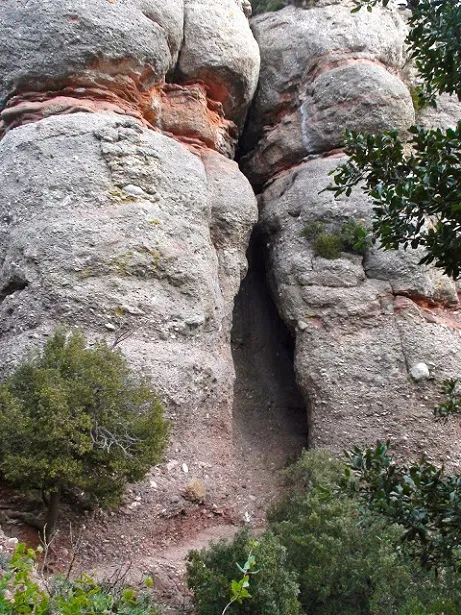
Cova del Drac
A well-known and legendary foradada in the Morral del Drac, in Sant Llorenç del Munt, N of the Mola.
EspeleoWorld
Cova del Drac
A well-known and legendary foradada in the Morral del Drac, in Sant Llorenç del Munt, N of the Mola.
Matadepera · Vallès Occidental
Sviluppo: 15 m
Scheda aggiornata
https://espeleoworld.com/it/c/cova-del-drac
Le informazioni possono cambiare. Verifica sempre coordinate, accesso, meteo e condizioni della cavità prima di partire.
A well-known and legendary foradada in the Morral del Drac, in Sant Llorenç del Munt, N of the Mola.
Foto

Espeleoindex · CC BY-NC 4.0, https://creativecommons.org/licenses/by-nc/4.0/ · Immagine © del suo autore.
Descrizione
Morfologia
This popular foradada opens at the intersection of two systems of orthogonal joints. It appears to be an ancient subterranean tàlveg, currently in a complete state of degradation due to the isolation that the monolith of the Morral del Drac has suffered.
Progressione
We do not know of any survey of the cavity and therefore we do not know exactly the length of the passage.
Storia
Known since time immemorial. There is no guide or work on the mountain of Sant Llorenç del Munt that does not speak of it.
The legend of the Drac de Sant Llorenç is also very popular. It appears in 1600 in the work of E. Barellas: “Centuria o historia de los famosos hechos del gran conde de Barcelona”. It devotes four chapters to the legend. It says more or less this:
“Around the 9th century the battles between the troops of Count Guifré (some say it was the Pilós and others that it was his father, Guifré de Rià) and the Saracens took place. These had the idea of bringing from Africa a dragon cub (it seems it was a female, known as the Vríbia). A monstrous beast to face the comital attacks. They hid it in the Cova de Santa Agnès and kept feeding it. But, of course, the beast kept growing bigger and they had to move it to a larger cave, which from then on was called Cova del Drac.
The bigger it grew the hungrier it was and of course, with the animals of the mountain it did not have enough, so it opted to gobble up shepherds and passers-by, creating panic throughout the Vallès.
The complaints and fears of the people reached Barcelona and Count Guifré decided to send a handful of his best men (well, the BRIMO of the time) commanded by the brave knight Spes. Around the Mola they found the dragon, but the spears and swords could not pierce the hard skin of the animal. In the end, Spes managed to wound it and this enraged it further, then it attacked and pursued the horses which, frightened, plunged down a cliff. Since then it has been known as the Cingle dels Cavalls.
Spes and his men arrived in Barcelona on foot and with heads bowed. Guifré must have said to them: Bunch of useless men! Leave it to me, I will go myself.
So there you see Guifré, all alone, climbing towards the Mola. Very cautiously he went towards the lair and it seems the dragon was already waiting for him. After a hard fight, Guifré managed to thrust his spear into its belly and then wound it with his sword near the heart. The dragon took flight and fled, falling dead at the Puig de la Creu, in Castellar del Vallès.
In short, much legend for so little cave.
Commenti degli utenti (0)
Nessun commento ancora.
Sii il primo a condividere la tua esperienza!
Esplorazioni registrate (0)
Nessuna esplorazione registrata.
Registra la tua visita a questa grotta!
Bibliografia
- GES-CMB (1974).-Catálogo espeleológico de la provincia de Barcelona. Vol. 2 : 198 pp. Club Montañés Barcelonés /Diputación Provincial de Barcelona.
- Valles, Jordi de (2011).- Catàleg Espeleològic de Catalunya. Vol. 5. 560 pp. Espeleo Club de Gràcia / Federació Catalana d'Espeleologia. Barcelona. (2016)
- Fotografia extreta del blog: traisantllorenc.blogspot (de Lluís R. Hernández, de Matadepera).
Grotte vicine
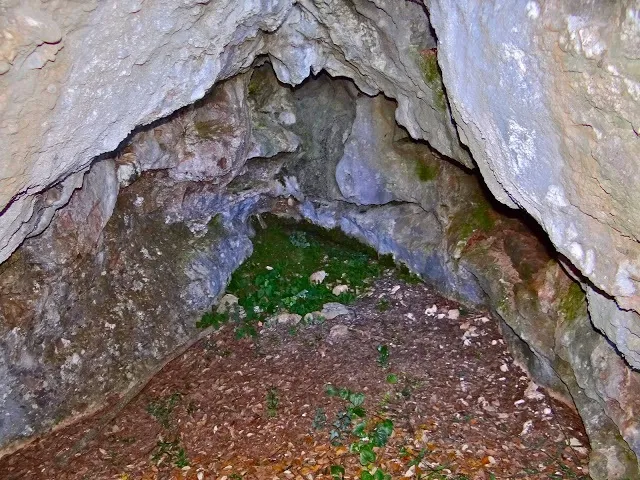
Cova de la Canal dels Bombers
0.1 km · S
Matadepera (Vallès Occidental)
1 foto
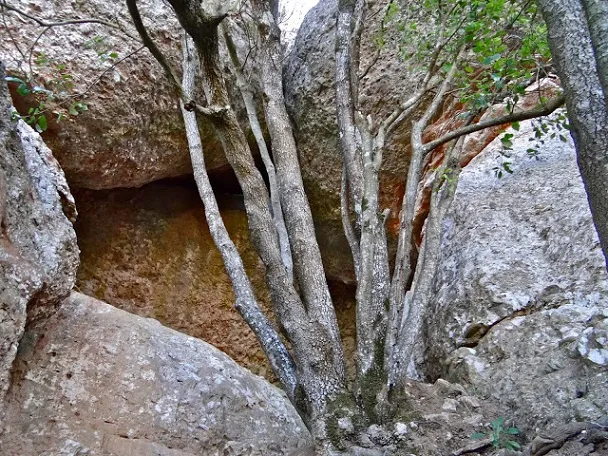
Cova de la Canal dels Boixos
0.1 km · S
Matadepera (Vallès Occidental)
1 foto
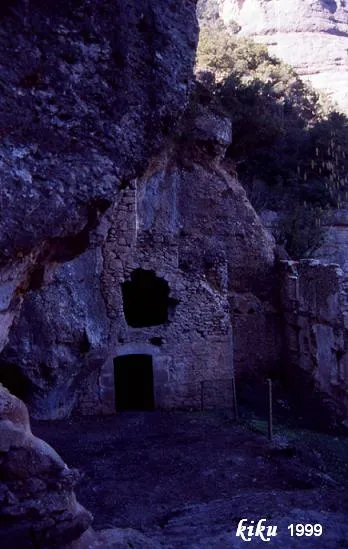
Cova de Santa Agnès
0.2 km · NE
Matadepera (Vallès Occidental)
1 topo.8 foto
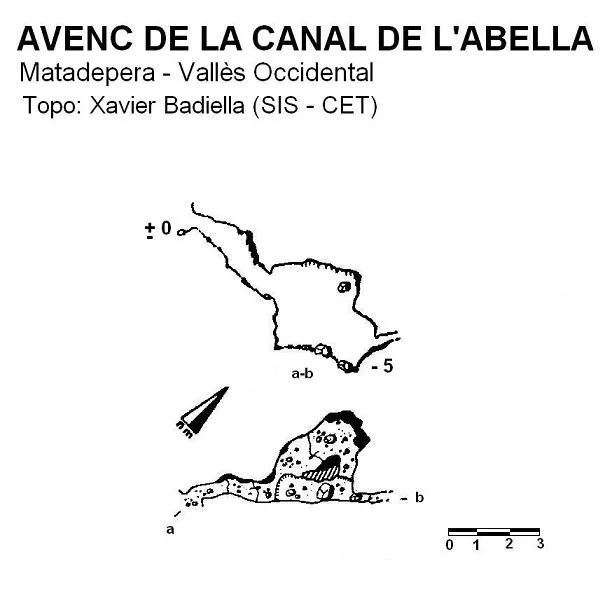
Avenc de la Canal de l'abella
0.2 km · SO
Matadepera (Vallès Occidental)
1 topo.
Fonte: Espeleoindex (espeleoindex.com), modificato. CC BY-NC 4.0, https://creativecommons.org/licenses/by-nc/4.0/