
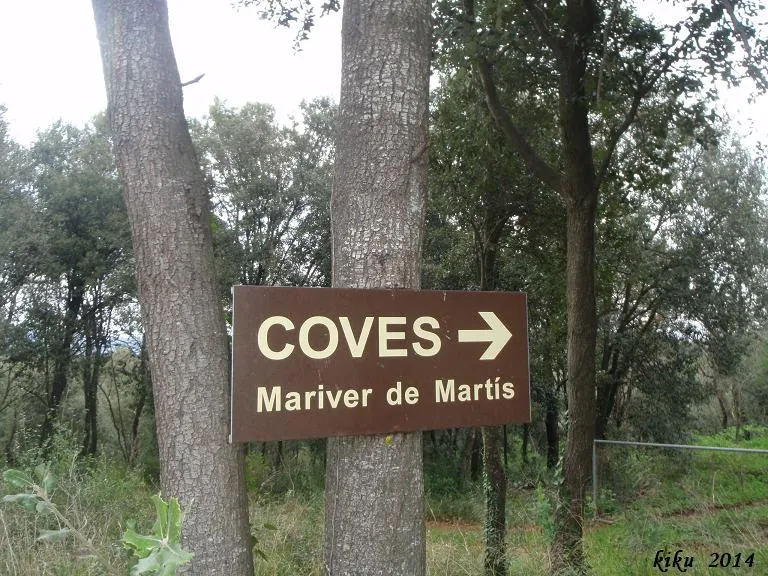
Cova de Mariver de Martís
Cave with two entrances and 110 metres of passage in Martís (Esponellà), discovered on 19 September 1952 by J.M. Verdura and two youths. Dr. J.M. Corominas named it Mariver de Martís and began excavations that year.
EspeleoWorld
Cova de Mariver de Martís
Cave with two entrances and 110 metres of passage in Martís (Esponellà), discovered on 19 September 1952 by J.M. Verdura and two youths. Dr. J.M. Corominas named it Mariver de Martís and began excavations that year.
Esponellà · Pla de l'Estany
Sviluppo: 110 m · Profondità: 10 m
Scheda aggiornata
https://espeleoworld.com/it/c/cova-de-mariver-de-martis
Le informazioni possono cambiare. Verifica sempre coordinate, accesso, meteo e condizioni della cavità prima di partire.
Cave with two entrances and 110 metres of passage in Martís (Esponellà), discovered on 19 September 1952 by J.M. Verdura and two youths. Dr. J.M. Corominas named it Mariver de Martís and began excavations that year.
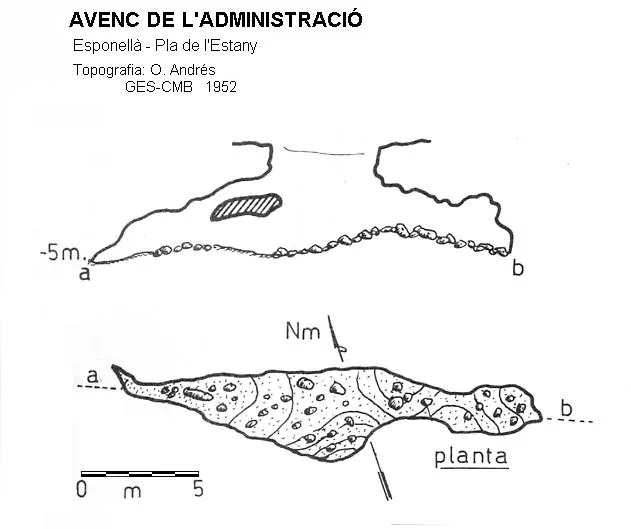
Topografia

Espeleoindex · CC BY-NC 4.0, https://creativecommons.org/licenses/by-nc/4.0/ · Immagine © del suo autore.
Foto
Espeleoindex · CC BY-NC 4.0, https://creativecommons.org/licenses/by-nc/4.0/ · Immagine © del suo autore.
Descrizione
Morfologia
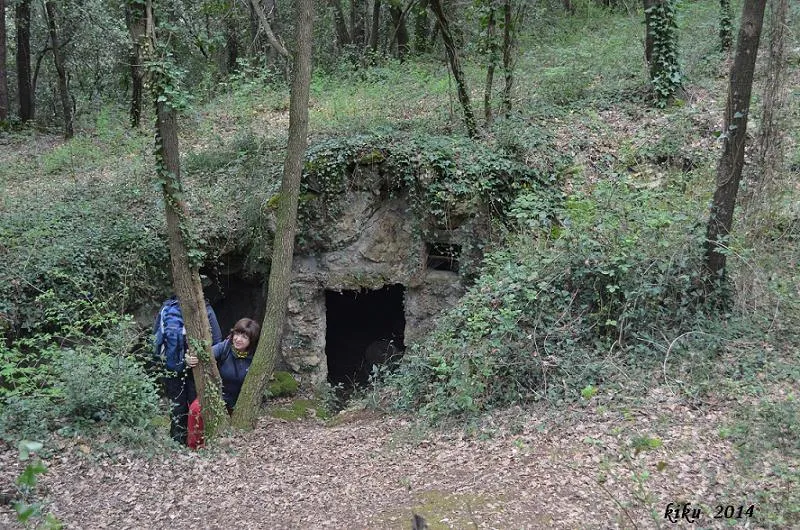
The SE entrance leads to a shaft of about 5 metres, slightly inclined and with ledges, which drops into a chamber about 8 metres in diameter, with large fallen blocks, from which two branches emerge diametrically opposite; one of them is a crawlway that begins at the foot of the entrance shaft and heads towards cave no. 2 (without connecting to it), while the other ascends among blocks and climbs to the beginning of what we could call the main gallery, formed by an elongated chamber with a flat ceiling, structured in a SE-NW direction, ending on the opposite side above a fairly steep chamber.
The floor of the gallery and chamber described is formed by cemented blocks and sediments, presenting an irregular configuration with several small chambers and lateral diverticula. Between the blocks different conduits open up, which in the form of shafts or small galleries allow access to lower corridors and small chambers.
The significant clastic morphology dominant throughout the entire cavity gives rise to a multitude of possible routes through the same conduits. This could lead some cave surveyor to assess the total length of the cave very optimistically, which could double or even triple it. In principle, we catalogue it with the 110 metres that Joan Borràs gave in his survey and which seems quite correct.
Storia
The cave was discovered on 19 September 1952 by J.M. Verdura, vicar of Banyoles, and two youths who accompanied him. Dr. J.M. Corominas named the cave with the discoverer's pseudonym: Mariver de Martís. That same year Dr. Corominas began the excavations.
On 4 January 1953 the youth Joan Masoliver together with two companions explored the cavity and made a sketch of the cave's elevation.
On 11 June 1967, the SIE of the CE Àliga carried out a plan survey, which has remained unpublished until now; it is to be supposed that the authors of this survey did not have correct information about the cavity, since they documented it as if it were the neighbouring cova de les Encantades, when in reality it was the Mariver cave.
In 1974 the GEIS of the CE Empordanès carried out a plan survey of the cavity; this same group carried out a new complete survey on 25 November 1978.
In 1981, Joan Borràs (GES-CMB), made a new survey of the cavity which appears published in volume 6 of the Catàleg Espeleològic de Catalunya.
Commenti degli utenti (0)
Nessun commento ancora.
Sii il primo a condividere la tua esperienza!
Esplorazioni registrate (0)
Nessuna esplorazione registrata.
Registra la tua visita a questa grotta!
Bibliografia
- Borràs, J;Miñarro, JM; Talavera, F.(1982).-”el Baix Empordà, el Gironès, la Selva,l'Osona, el Vallès oriental i el Maresme.” Catàleg Espeleològic de Catalunya (vol.6):84-85. Ed Políglota. Barcelona.
- Canal i Roquet, Josep; Soler i Masferrer, Narcís.(1976).-El Paleolític a les Comarques Gironines.
- Tarrús Galter, J. (1979).- La Cova Mariver. Estudi dels seus materials epicardials, montboló i bronze. Monografies del Centre d'Estudis Comarcals de Banyoles: 59 pp. Banyoles.
- Tarrús i Galter, Josep. (1982).-”L'Alta i la Baixa Garrotxa, del Neolític al Calcolític” Ausa (X/102-104):131-151. Patronat d'Estudis Ausonencs.
Grotte vicine
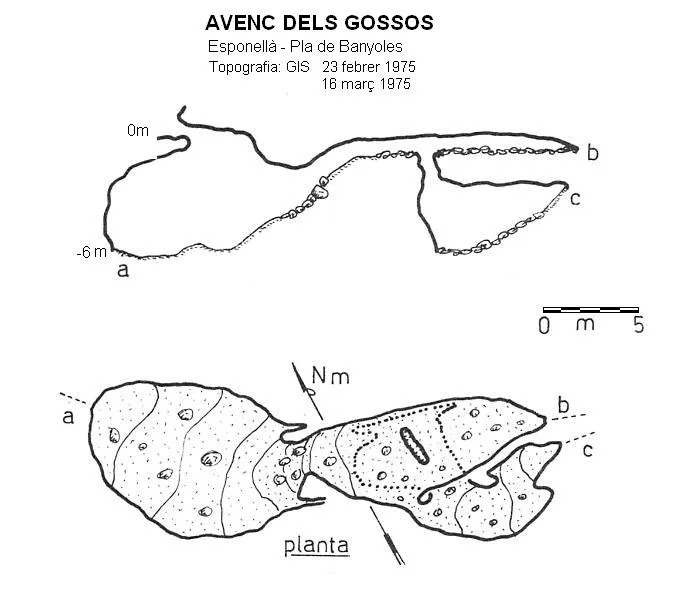


Fonte: Espeleoindex (espeleoindex.com), modificato. CC BY-NC 4.0, https://creativecommons.org/licenses/by-nc/4.0/