
Cova de les Encantades
A 865 m cavity on the south slope of Puigmal, with galleries, shafts and underground rivers, known since time immemorial and explored in 1960.
EspeleoWorld
Cova de les Encantades
A 865 m cavity on the south slope of Puigmal, with galleries, shafts and underground rivers, known since time immemorial and explored in 1960.
Queralbs · Ripollès
Sviluppo: 865 m · Profondità: 37 m
Scheda aggiornata
https://espeleoworld.com/it/c/cova-de-les-encantades-queralbs
Le informazioni possono cambiare. Verifica sempre coordinate, accesso, meteo e condizioni della cavità prima di partire.
A 865 m cavity on the south slope of Puigmal, with galleries, shafts and underground rivers, known since time immemorial and explored in 1960.
Topografia
Espeleoindex · CC BY-NC 4.0, https://creativecommons.org/licenses/by-nc/4.0/ · Immagine © del suo autore.
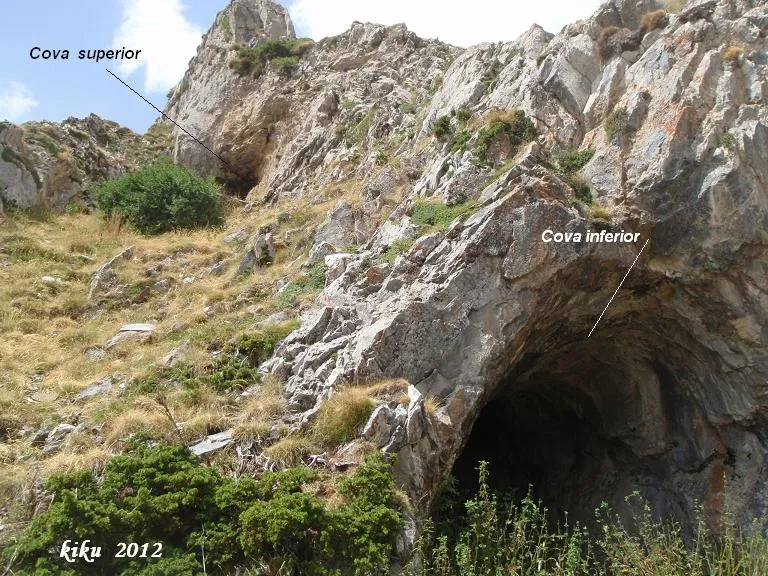
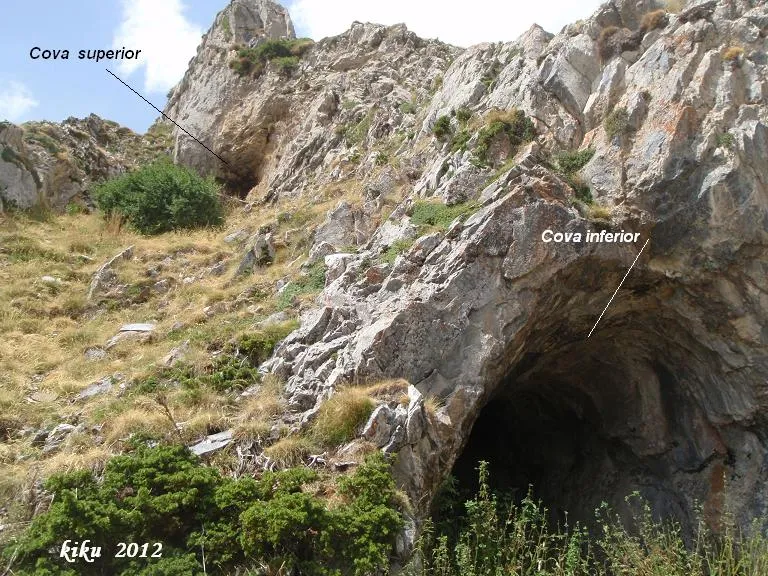
Foto
Espeleoindex · CC BY-NC 4.0, https://creativecommons.org/licenses/by-nc/4.0/ · Immagine © del suo autore.
Descrizione
Morfologia
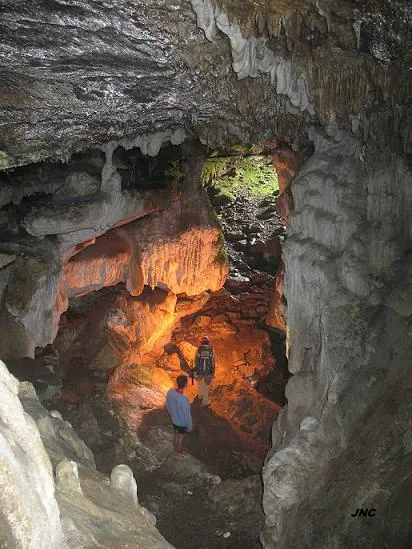
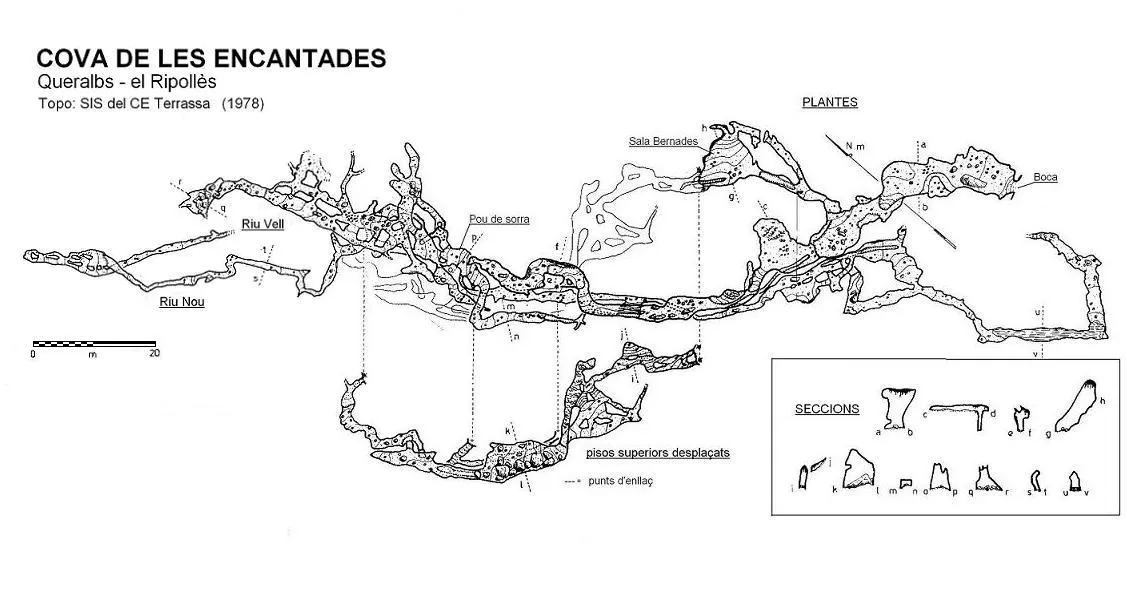
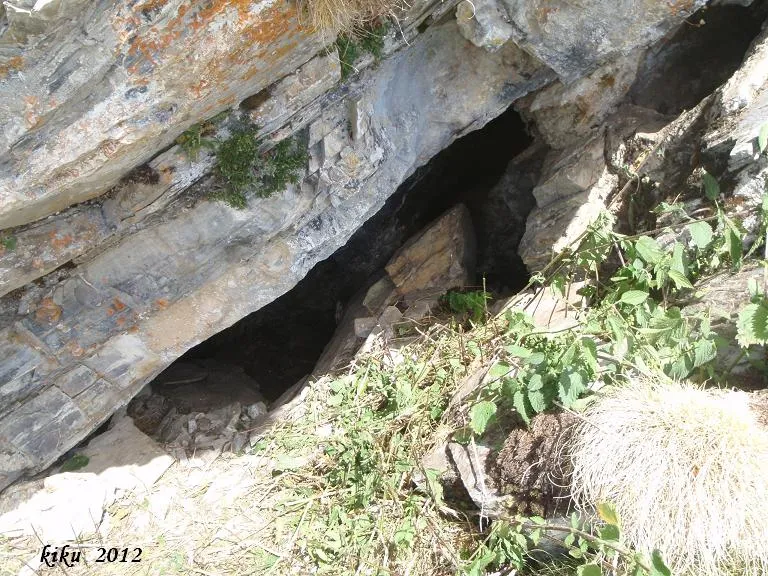
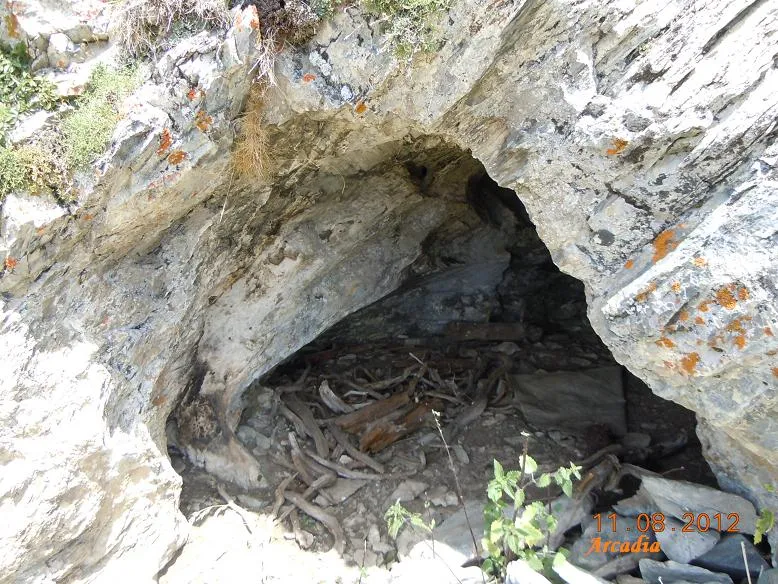
The entrance is 4 x 1.5 metres, opening at ground level; it gives way to a wide, high gallery, whose height decreases once we have climbed up a step. At 30 metres from the entrance, a narrower gallery leaves to the right and reaches the Sala Bernades, heavily decorated with formations. Continuing along the main gallery we reach a very low-roofed chamber, where we find a hole that gives way to a short but steeply sloping ramp that places us in a gallery about 2.5 metres in diameter (Galeria dels Enllaços); a fissure open in the floor will allow us to access other sectors, such as the Pou de Sand and the Nou and Vell rivers; also, a 7-metre shaft connects the fissure with the lower level.
The Galeria dels Enllaços seems to close a few metres after the fissure, but by climbing up a passage while dragging ourselves along a slippery flowstone we find its continuation, although it ends about 25 metres later; shortly before, on the left side of a small chamber, a passage between formations allows us to access a gallery of reduced dimensions that later widens and forks: to the right, in a descending stretch, we would reach the Pou de Sand. Continuing to the left we climb up a couple of steps and reach a chamber that belongs to the upper level. From both ends of the chamber continuations emerge: on one side we would reach the Sala Bernades and on the other the Riu Vell.
If we continue beyond the Pou de Sand (the accesses have already been described), we will reach a fork from which two two branches emerge that give rise to the so-called Riu Nou and Riu Vell. The Nou has a meandering layout, with clear free-circulation forms, reaching an inclined chamber from which a gallery emerges that ends at 20 metres. The Vell has a labyrinthine layout, with important clastic phenomena. After an anastomosed configuration, it ends in a small chamber occupied by blocks.
If we descend the 7-metre shaft referred to earlier, we will access the lower level, formed by a long, heavily decorated gallery that ends in a partially flooded sector.
Idrologia
We are faced with an ancient underground river that has been excavating different levels over the course of time, giving rise to the different levels that make up the cave. The cavity is structured along a band of marble running NW – SE, which was surely the outlet for the waters absorbed in the Coma de la Font Seca, a place where the marble outcrops attain a certain importance. The narrowness of the karstifiable band has caused the cavity to evolve vertically, excavating galleries that often remain superimposed on the topography; some galleries have even been excavated at the very slate-marble contact.
Storia
Known since time immemorial but absent from Catalan speleological circles until 1960.
Joan Amades records a legend in which he explains that: “A large family of enchanted beings lives there. Every night they wash a large load of laundry which, through an underground passage, they take down to the caves of Rialb and from there they take it to spread out on the large threshing floor near Queralbs, where the muleteers and pilgrims going up to the sanctuary of Núria can see it early in the morning”.
Despite possible earlier visits, of which there is almost no record except for one carried out in October 1950, possibly for biospeleological purposes, by members of the GES – CMB and where they possibly would not have gone beyond the entrance area, knowledge of the cavity as we know it now is due to the SES of the CE Puigmal (Barcelona), which explored it in June 1960 (members of the CE Àliga also took part) and made it known to the press and to the magazine “Cordada”. The following month members of the GES and the UEC also visited it, and the latter published an article in the magazine Senderos in which they wanted to ignore the explorations of those from Puigmal, creating the typical and ephemeral squabble.
But in fact, these explorations remained almost forgotten and absolutely nothing was published about it. Due to its remote location, visits are always sporadic and only, in the following years, members of the SIE – CEA carried out a series of periodic explorations that crystallised in 1967 in a first article and a sufficiently accurate survey.
The later motorisation of speleologists and the opening of the forest track facilitated a greater number of visits. In 1978 members of the SIS of the CE Terrassa carried out a new survey, more complete, which was published in the Catàleg Espeleològic de Catalunya, vol 4 (1980).
Note biospeleologiche
Coleoptera
- Parvospeonomus delarouzeii Farmaire, 1860
- Perriniella bofilli Zariquiey 1924
- Geotrechus puigmalensis Lagar, 1981 (First capture of a male specimen made by F. Fadrique in 1973)
Commenti degli utenti (0)
Nessun commento ancora.
Sii il primo a condividere la tua esperienza!

Bibliografia
- Borràs, J.; Miñarro, JM.; Talavera, F. (1980).- Catàleg Espeleològic de Catalunya. Vol. 4 (el Ripollès, la Garrotxa i l'Alt Empordà). 296 pp. Ed. Políglota. Barcelona.
- Cardona i Oliván, Ferran.(1989).-”La serralada pirinenca”. Grans Cavitats de Catalunya (Primer volum):1-198. Espeleo Club de Gràcia. Barcelona.
- Valles, Jordi de (2009).-”Berguedà, Cerdanya, Garrotxa, Ripollès”. Catàleg Espeleològic de Catalunya (vol.3):1-381. ECG/FCE.
- Victoria, JM. (1967).- “Estado actual de nuestros conocimientos sobre la cueva de les Encantades”. EspeleoSie (1): 26-29. SIE del CE Àliga. Barcelona.
- Coordenades i fotografies “JNC” facilitades per Jordi Navarro (Centre Excursionista de Castellar del Vallès).
- Fotografies facilitades per Marc Solé (www.engarrista.com) post del dia 13-11-2015.
Grotte vicine


Fonte: Espeleoindex (espeleoindex.com), modificato. CC BY-NC 4.0, https://creativecommons.org/licenses/by-nc/4.0/