
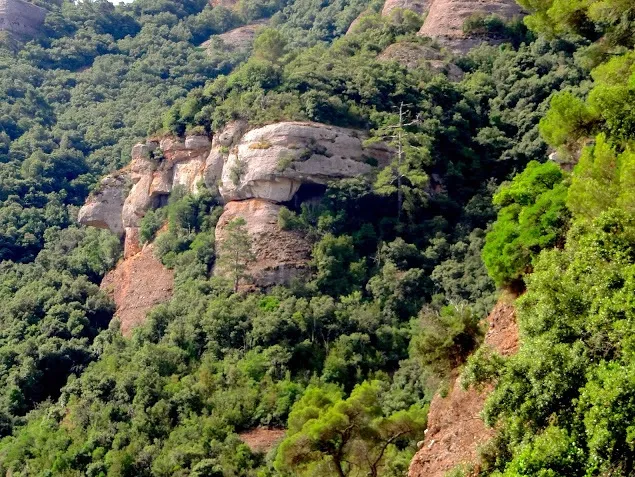
Balma de la Pinassa
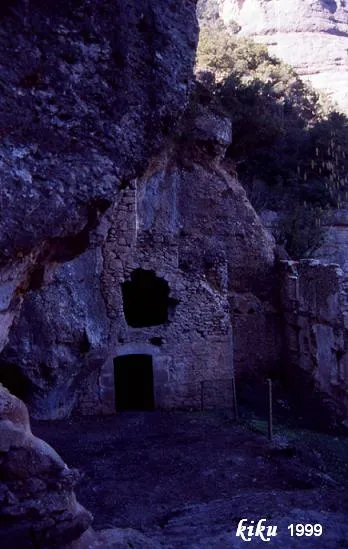
Hidden rock shelter converted into a cabin at the Canal Freda, in Sant Llorenç del Munt, about 25-30 m wide, 8 m high and 11 m deep.
EspeleoWorld
Balma de la Pinassa
Hidden rock shelter converted into a cabin at the Canal Freda, in Sant Llorenç del Munt, about 25-30 m wide, 8 m high and 11 m deep.
Matadepera · Vallès Occidental
Sviluppo: 11 m
Scheda aggiornata
https://espeleoworld.com/it/c/balma-de-la-pinassa
Le informazioni possono cambiare. Verifica sempre coordinate, accesso, meteo e condizioni della cavità prima di partire.
Hidden rock shelter converted into a cabin at the Canal Freda, in Sant Llorenç del Munt, about 25-30 m wide, 8 m high and 11 m deep.
Foto
Espeleoindex · CC BY-NC 4.0, https://creativecommons.org/licenses/by-nc/4.0/ · Immagine © del suo autore.
Descrizione
Morfologia
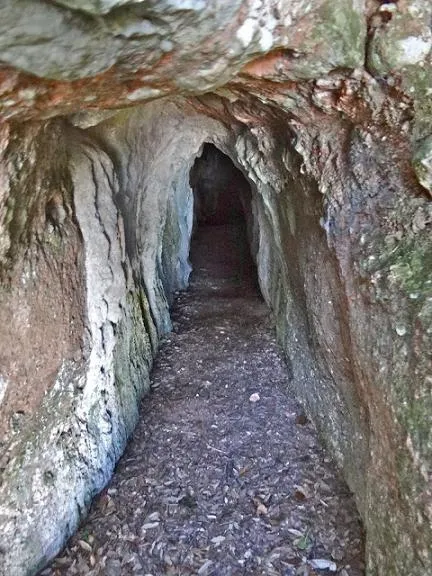
Wide rock shelter about 25-30 m wide, a maximum height of 8 m and a maximum depth of 11 m in the unbuilt area.
Idrologia
In the deepest corner there is (or there was) a small pool resulting from a tiny temporary spring.
Altri dettagli
The cavity was one of the hideouts of the civil war fugitives. Several residents of Sant Feliu del Racó, such as Florenci Santiesteban, lived there on various occasions until the beginning of 1939. These temporary occupants probably learned of the existence of the rock shelter through the charcoal burners who worked in the canal Freda from the first decades of the 20th century and who also had a house in Sant Feliu del Racó.
The location of the cavity was not made public until the year 60. Florenci Santiesteban met a group of young people from Castellar del Vallès, who asked him about corners of Sant Llorenç del Munt. Florenci told them the story and accompanied them to the cavity.
The boys, 14 years old, were members of the Secció Excursionista de l'Ateneu Castellarenc -SEAC-, predecessor of the current Centre Excursionista de Castellar. They were impressed by the place. At that time the rock shelter had no kind of wall and was smaller than it is today. The small spring of the cavity had indeed been used by the charcoal burners.
The group of young people decided that that old war hiding place should become their operations centre for Sant Llorenç del Munt. The promoters of the initiative were Francesc Serra, Vicenç Portell, Daniel Rocabert, Joan Sallent, Pere Roca and Josep Llinares. At first they only made a wall with branches, but, shortly afterwards, they decided to cut a slab from the interior of the rock shelter with the double intention of gaining space and using the rock to make a stronger wall. They also made frames for the windows and the door. With all these elements their construction acquired the appearance of a stone cabin. Inside they placed beds, a table, a chair and various tools to make their stays more comfortable.
The young people occupied the rock shelter until 1968, when they began to leave for military service.
Commenti degli utenti (0)
Nessun commento ancora.
Sii il primo a condividere la tua esperienza!
Esplorazioni registrate (0)
Nessuna esplorazione registrata.
Registra la tua visita a questa grotta!
Bibliografia
- GES-CMB (1974).-Catálogo espeleológico de la provincia de Barcelona. Vol. 2 : 198 pp. Club Montañés Barcelonés /Diputación Provincial de Barcelona.
- Valles, Jordi de (2011).- Catàleg Espeleològic de Catalunya. Vol. 5. 560 pp. Espeleo Club de Gràcia / Federació Catalana d'Espeleologia. Barcelona. (2016)
- Altres dades i fotografies extretes del blog: traisantllorenc.blogspot (de Lluís R. Hernández, de Matadepera).
Grotte vicine

Fonte: Espeleoindex (espeleoindex.com), modificato. CC BY-NC 4.0, https://creativecommons.org/licenses/by-nc/4.0/