
Leichtweißhöhle
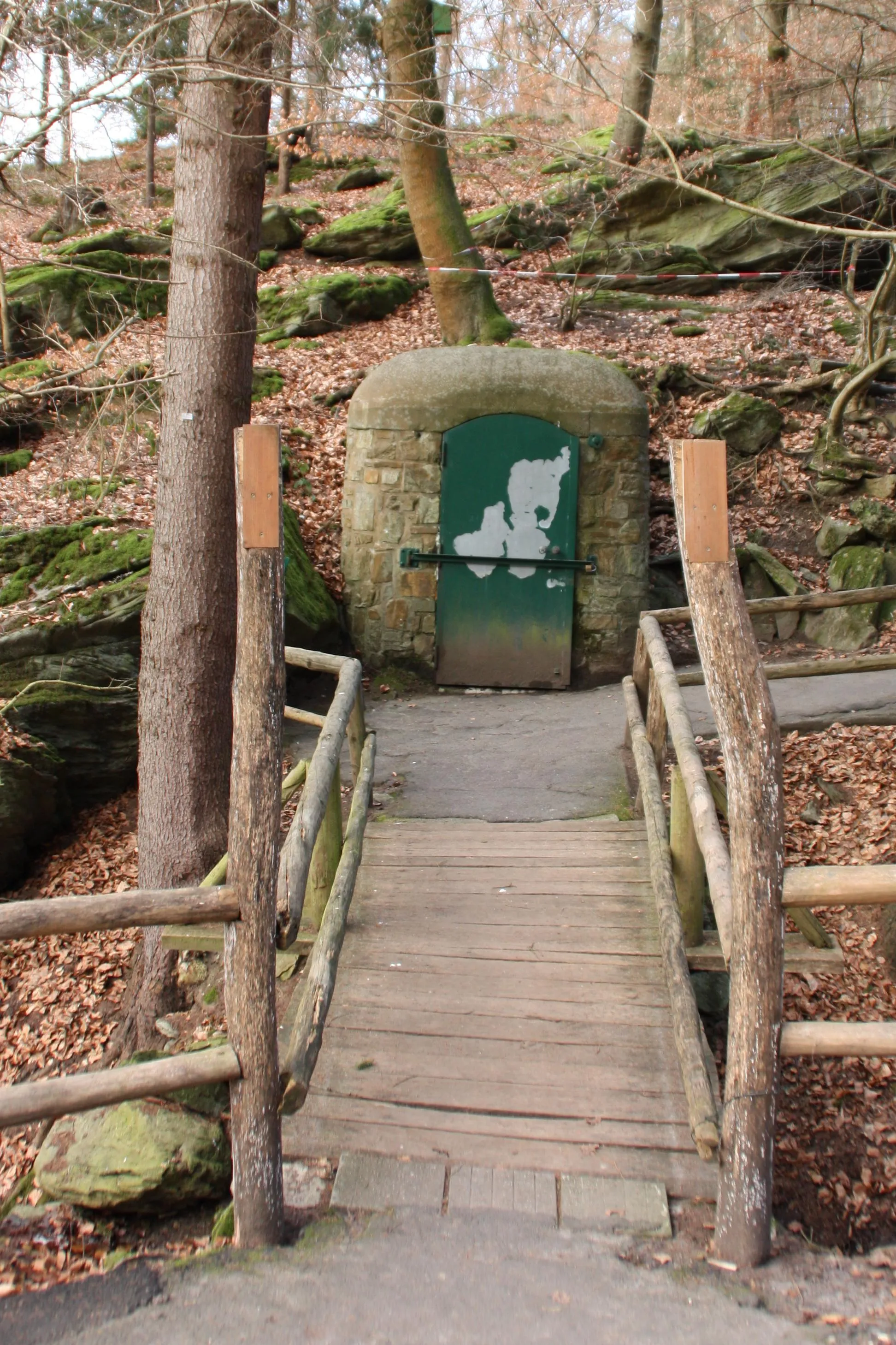
The Leichtweißhöhle in Wiesbaden's Nerotal is originally a small natural cave, hardly more than a large rock overhang, a so-called abri.
EspeleoWorld
Leichtweißhöhle
The Leichtweißhöhle in Wiesbaden's Nerotal is originally a small natural cave, hardly more than a large rock overhang, a so-called abri.
Wiesbaden
السجل المحدّث
https://espeleoworld.com/ar/c/leichtweisshoehle-wiesbaden
قد تتغير المعلومات. تحقق دائمًا من الإحداثيات والوصول والطقس وظروف الكهف قبل الانطلاق.
The Leichtweißhöhle in Wiesbaden's Nerotal is originally a small natural cave, hardly more than a large rock overhang, a so-called abri.
الصور
© Oliver Abels ( SBT ) · CC BY-SA 3.0, https://creativecommons.org/licenses/by-sa/3.0/ · Wikimedia Commons · https://commons.wikimedia.org/wiki/File:Wiesbaden_Leichtweish%C3%B6hle.jpg
الوصف
الشكل
The Leichtweißhöhle is originally a small natural cave and not much more than a large rock overhang, a so-called abri. The local slate rock is not a rock suitable for karstification. No other caves are found.
During the expansion by the Wiesbadener Verschönerungsverein in 1856, a second entrance was created, a room situated to the side and a niche padded with moss that was declared a sleeping place. These changes were so extensive that the original state is hardly recognizable today.
المياه
The Schwarzbach, which comes from the Rabengrund and runs past the cave, received an artificial waterfall, and a wooden bridge was built for crossing the stream.
تفاصيل أخرى
Its name is due to the poacher Heinrich Anton Leichtweiß, who used the cave as a shelter from 1789 to 1791. Forest workers discovered the cave and Leichtweiß because of rising smoke.
The cave fell into oblivion until Wiesbaden gained an international reputation as a spa resort and the cave developed into a popular excursion destination. It represented one of the new attractions that were to be offered to visitors to Wiesbaden. The Wiesbadener Verschönerungsverein expanded the cave in 1856. The cave was also decorated accordingly, among other things with old weapons and pictures. A romanticization followed. Above the cave an observation pavilion was created, and the access paths to the cave were equipped with railings and the cave entrance with a wooden porch.
With the decline of the Wiesbaden spa, especially after the end of the Second World War, the cave lost importance and was closed. Vandalism and lack of care took a heavy toll on the outdoor facilities. The cave was often used as a shelter. In 1983 the entrance was renewed in massive form. Since then the cave has been regularly made accessible to visitors twice a year.
التاريخ
In 1905 Emperor Wilhelm II visited the cave with his wife.
In 1934 the Gestapo used the Leichtweißhöhle as a torture cellar.
تعليقات المستخدمين (0)
لا توجد تعليقات بعد.
كن أول من يشارك تجربته!
الاستكشافات المسجلة (0)
لا توجد استكشافات مسجلة بعد.
سجل زيارتك لهذا الكهف!
الكهوف القريبة


يحتوي على معلومات من © OpenStreetMap contributors، www.openstreetmap.org، متاحة بموجب رخصة قاعدة البيانات المفتوحة (Open Database License، ODbL 1.0, https://opendatacommons.org/licenses/odbl/1-0/)، مع تعديلات. · https://www.openstreetmap.org/node/505161174 · بيانات عام 2026 · المصدر: German Wikipedia – article leads (cave descriptions) (de.wikipedia.org)، مع تعديلات. CC BY-SA 4.0, https://creativecommons.org/licenses/by-sa/4.0/ Wikipedia contributors (de.wikipedia.org), CC BY-SA 4.0 · النص بقلم Wikipedia contributors (Leichtweißhöhle) · عدّلته Espeleoworld (توحيد الصيغة، ترجمة)؛ التعديل مرخّص بموجب CC BY-SA 4.0, https://creativecommons.org/licenses/by-sa/4.0/ · الوصف · تم الحصول عليها في 2026-11-13 · https://de.wikipedia.org/wiki/Leichtwei%C3%9Fh%C3%B6hle · بيانات عام 2026 · البيانات المشتقة متاحة عند الطلب بموجب ODbL: [email protected]